Episode Transcript
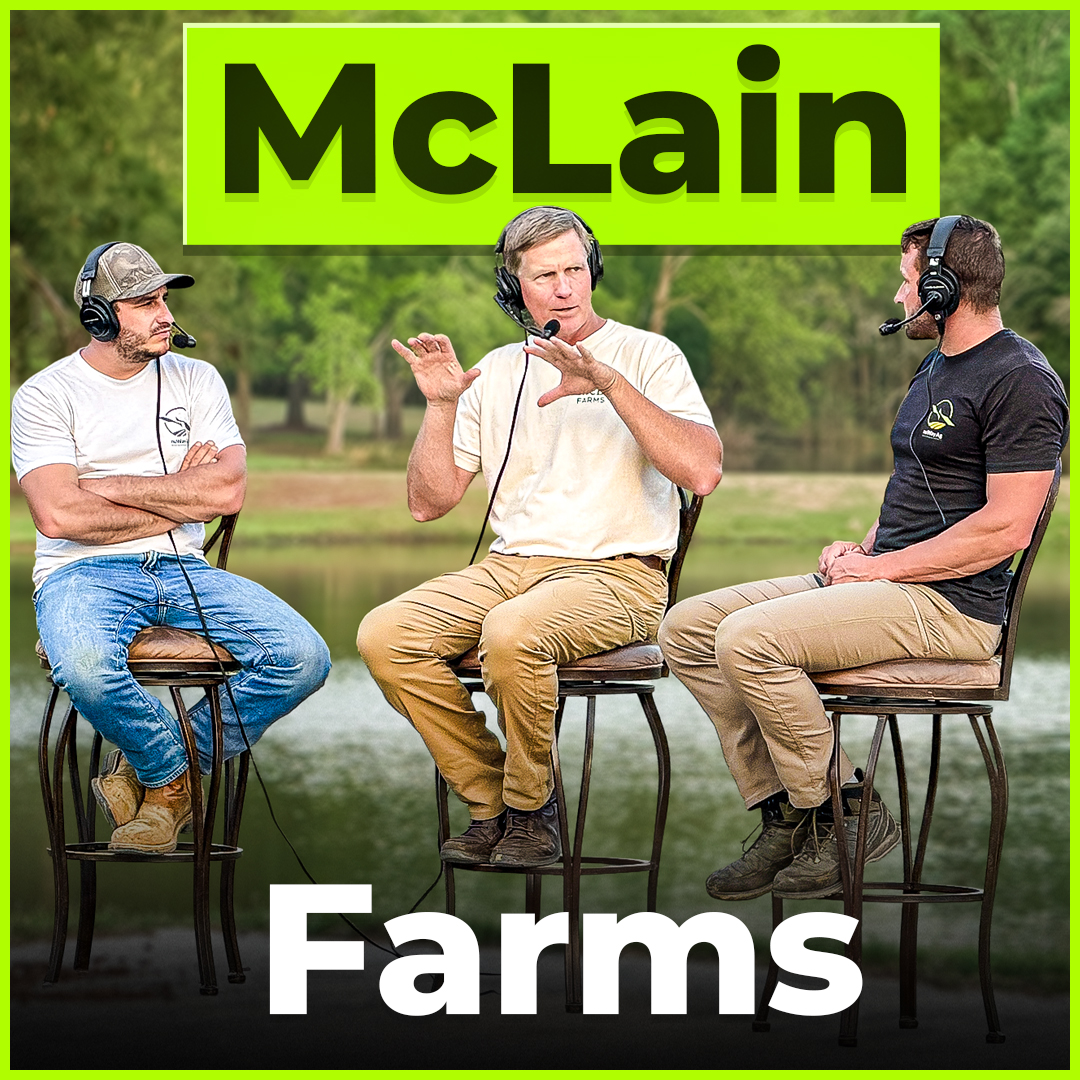
[00:00:00] Speaker A: All right, welcome back, folks, to the Drone on show. Today. We are in Georgia with one of the top Vidalian onion growers.
[00:00:08] Speaker B: For you to say.
[00:00:09] Speaker A: I was going to say, I might even say the top Vidalia onion grower, Brett McLean. Welcome to the podcast.
[00:00:16] Speaker B: Thank you, Mike. It's a pleasure being here.
[00:00:18] Speaker A: Dude. We were down here spraying today with the T1 hundreds. Just seeing how you guys do your operation down here. It's so cool.
Literally, right? We were talking in a field. I had no clue how onions get grown, but most people don't know.
[00:00:32] Speaker B: No, they don't. Yeah, now most people don't know. And, you know, it's hard when you've been here your whole life. This is all you've ever done. And it's so easy, you know, you just feel like everybody should know how to do it, but you realize pretty quick when you get out and talk to people like yourself, they just don't have any idea what it takes to bring a crop like this, especially a specialty crop. That area, onions is a specialty crop.
It's not just an onion. Like they grew out west. That's hard as baseballs. You can break a window with them.
[00:01:01] Speaker A: Are we crapping on the out west onions?
[00:01:03] Speaker B: I'm not crapping on them. It's just different.
[00:01:06] Speaker A: The out west onion growers are going to.
[00:01:08] Speaker B: Well, let me tell you a story about being out west. I went out west, spent several years ago to look at a piece of equipment. It was onion harvesting equipment. And we were out in Colorado on one of the big farms out there, and they grow onions. It was just so much different than what they do. And I was there. There was a lot of other people from all over the country, and they were looking at that equipment. So I reached down and pick up one of the onions and pull out my knife, and I cut it open. I said, well, these things are hard as a baseball, but what do they taste like?
And they all looked at me like there was something wrong with what I was about to do. I took a bite out of it. I thought, that's what you did.
[00:01:40] Speaker C: That's kind of what I did today.
[00:01:41] Speaker B: That's what we did today. It didn't work out so hot for me, y'. All. That thing was like a firecracker. It about knocked the top of my head off.
Hot. I mean, hot, hot, hot. I think I still taste that thing occasionally, but it was just so much different. And I said, man, I just can't. They said, you y' all eat your onions like that at home? I said, we eat them all the time. Yeah.
[00:02:03] Speaker A: For the guys that don't know that are listening or watching, like, the. The onion that you're growing is sweet. Like today I literally bit in it like an apple. And I was like, oh, my gosh. Well, you've never ate an onion.
[00:02:15] Speaker C: Looked at him like, what are you doing? And then I tried it and I was, yeah, super surprised.
[00:02:22] Speaker B: Yeah, it's different.
[00:02:22] Speaker C: This didn't taste like an. I mean, you could taste the onion in it, but it just was really sweet.
[00:02:27] Speaker A: It's sweet.
[00:02:27] Speaker C: Yeah.
[00:02:28] Speaker B: And you don't have the aftertaste.
[00:02:29] Speaker A: You don't have.
[00:02:30] Speaker B: You don't still taste it three days later. I mean, you want to eat it, you want to enjoy it, but then you want to be done with it.
[00:02:35] Speaker A: I will say I would have chose the conventional onion over the organic onion. And you grow both?
[00:02:41] Speaker B: Yeah, I grow both.
[00:02:41] Speaker A: So there's something there that's.
[00:02:43] Speaker B: Well, there's a niche market. The organic market is different, but it's gained a lot of traction over the last few years. So a lot of people want to eat organic. I understand that. Mr. Pesticides is the stuff that we have to use to reliably. And I guess we have to bring a crop every year because we have so many people that depend on us. I mean, we have families, lots of families that work here. And, you know, my job is to grow the crop, and if I don't do my job, they don't get paid on Friday. And it's a lot of responsibility. It's a lot of weight on my shoulders.
So some of the things that we have to do non organically is we have to apply fungicides because I just can't. I can't let disease just eat my crop up. Because we've lost crops before to disease. We lost an entire crop one time and nobody got paid that year.
[00:03:32] Speaker A: I was gonna say, how do you pull through?
[00:03:34] Speaker B: Well, you won't pull through very many of those.
You'll be out of business. So we just can't do that. But I understand the organic side of it. I do.
Organic onions are really hard to grow. We do it. I grew it because there's such a demand for it and we can do it fairly successfully. It's just you can't really depend on it.
Year in, year out, it's a crap chute.
[00:03:56] Speaker C: What percent of your crop is organic versus traditional?
[00:03:59] Speaker B: Oh, let's see. This year I've got 87 acres of organics out of 493. So you can do the math. On that, whatever that comes to. I'm not good with mental math, but that organic number is growing every year.
[00:04:13] Speaker A: So we're here because you are using spray drones. And you said you've been watching the spray drones or looking at spray drones for a long time. Two, three years. Yes, but they just weren't big enough for you.
[00:04:24] Speaker B: Not big enough. We're all about speed and efficiency. And the drones that were at the T40s, T50s, even T60s, I watched several of those fly and they do a good job. It wasn't that they didn't do the job. It was just that they're constantly coming back to the trailer and for what we need to do. And the goal I was after, I want to be able to spray my entire crop in one day.
And I know the speed is there if you're sitting still, but I have to move a lot.
So anyway, they wouldn't carry the volume of water that I was looking for. And I kept telling the guys, I said, look, you get me something that'll spray five to six acres on a tank at about a four gallon per acre rate. That's what I want.
Then I'm interested. And it kept getting there. We kept progressively getting bigger and bigger and bigger and better. And then the T100 came out and it was like, that's it. I said, we're there. I just got to watch it now. Let's make sure that there's no bugs in it, it works correctly, and watched a lot of your videos. That was super helpful. I love all the testing that you do. You guys do a great job. I mean, really, your education, you may not realize it, but you're educational and there's a lot of people like me that watched. And I really valued your opinion and I loved the things that you did. You got to let me watch and see this in real time. It's one thing to show specs on something and tell me what it'll do, but when I can see it in action in the field and flying and spraying and I know what it'll do, that was easiest for me to make my decision.
[00:05:47] Speaker C: Specs are never true.
[00:05:49] Speaker A: Yeah, specs are to sell equipment.
[00:05:51] Speaker C: It's like the most ideal condition you could ever find. Maybe it can hit those specs, but, yeah, not real life.
[00:05:57] Speaker B: It's what we need. It's a perfect fit for our operation. We're not that big. We grew up just shy of 500 acres of onions, and that's the perfect fit for us. This works great.
[00:06:09] Speaker A: So what are you seeing? That you really, really like using a spray drone versus conventional ground rigs.
[00:06:15] Speaker B: Well, there's a lot of things. The obvious thing is the speed. I love speed and I've got showed you guys around a little bit.
We've got to know each other a little bit over the last few weeks.
[00:06:25] Speaker A: Former race car driver.
[00:06:27] Speaker B: Yeah, I used to race cars and I still would be if. If Chase wasn't. Had never been born, I'd probably still be racing.
[00:06:33] Speaker A: We're giving peace signs behind the camera.
[00:06:36] Speaker B: So thank you, Chase, for taking me out of racing. But. But no, I love speed. But you know, it is so weird that people hear me talk about speed and being able to use that in. In farm, apply that into farming.
But you know, we have such a narrow window here with our.
Again, it's a specialty crop. Vidalia onions is a specialty crop. You only have a certain window of time to get them planted and then the rains come and the cold come. So you gotta beat that. But the real challenge is harvest. When harvest comes, you only got about a six, seven week window. And everything that you work for that entire year has to come inside and be harvested in a timely manner. And we also spray applications. All of these things have to be done because the weather that comes. I know a couple years ago we had the same. We had this issue.
It was raining almost. I don't know, it was raining three or four days a week. So I only had about two days a week that I could really work, get out in the field that wasn't raining. I could do something.
And between spraying and fertilizing all the things we needed to do, we couldn't get it all done. And I kept getting further behind every week. Every week, kept getting further behind. So when we got done with that season and I did what I always do, I always look at my weak areas. You know, where am I weak? Because that's the places I can build on. And I can say, okay, I need to be strong, need to be stronger here. Well, the biggest thing I needed was more speed.
And so I said, how do I get more speed as far as being to spray effectively with my ground rig, which we use a John Deere ground rig and have used it for. I think we figured up today, it's been about 12 years we've been using that type sprayer and those things are built to spray. That's a spray machine. That's all it's built for. When you're done spraying with it, you don't just unhook the spray part of it. Hook up a set of bottom plows to go break land. There's nothing else to do. That thing is made for spraying, so we've used that for so many years. But it took, with that rig is three days to get my crop sprayed. You know, we can average about 200 acres a day. Well, you know, if we got 500, I'm two and a half days.
[00:08:35] Speaker A: Yeah.
[00:08:35] Speaker B: So you might as well say it's three days. Well, I wasn't getting three days. So I said, I got to go faster. How can I go faster? So I started looking into the drones, spray drones, and the speed was there as far as, you know, just spraying acres per day. And I went into some of the demos. Some of the guys around here showed some of the demo. They was really good too. They helped me a lot.
And through watching them spray and watching the things that was going on, I said, yeah, that's going to be the way to go. But the technology is not quite where I need it yet. So I kept following. And when the T100 come out, like I said, it has 26 gallon tank. It's got the capability, it has the lift capacity. I mean, it's a big drone too. I mean, these things are big.
People that come and see them, they're surprised, they're shocked at how big they are. And boy, they do the job, though. So the first thing is speed. You asked the question of what was the best thing being able to get over my crop. And we can do it in a day. We can spray our entire crop with those drones. I have two of them. And I have your trailer, which is awesome, by the way. The new way trailer is awesome. So efficient. Everything that you did is really laid out very well, very well thought out.
And it's just, man, it just works. But we can take those things and we can spray our whole cropping in one day.
Well, hey, I'm not blowing smoke. It's true. If it was. Sorry, I'll tell you. Sorry. But it works great. You did a good job on that.
[00:09:58] Speaker A: Thank you.
[00:09:58] Speaker B: Sweet.
[00:09:59] Speaker A: One thing you said, the T100 is big. Today we seen it might be too big and heavy at a certain stage. On the onions.
[00:10:07] Speaker B: Yeah, it's blowing them down some and I've been watching that. I've been a little bit concerned about that early on in the season. I noticed that. But those onions were young and small and, you know, it's not a lot different than when we get these big wind storms and it'll blow them over when they're young, they'll bounce right back in a day or so. They're standing right back up like they should be. Now we're at the point of almost being ready to harvest, and the next are getting soft, and the tops are falling on their own. So you get a little bit of wind to go with that, and it flattens them out. I don't think it's going to be a problem. I won't know until the season ends, but right now I think we're fine because the onions that it's really blowing down are literally just days away from harvesting.
So I think we'll be fine with that.
[00:10:49] Speaker A: Yeah, guys, if you want to, you can watch the video of us here on McLean Farms using the T100 in their. In their onions. And I show it, right, Like Brett said earlier, like, I show you the downfalls of some of this equipment, and in that video, you'll see how some of the onions have been laid down. But always optimizing, always wanting to make the equipment better. So we'll try to take some of this data to DJI and make it better with that.
The droplets. Today we were walking around in the field and looking at the droplet size, and I don't understand how. How exactly it works that there's droplets getting all the way down to the neck of the onion, but we assume it's the vortices. That's.
[00:11:32] Speaker B: I think that's what it is. And I'm fanatical about coverage. You know, what our. Our specialty crop, we really have to have good coverage with our spray equipment. And that's why we've always, you know, with our ground rig, we spray 40 gallons of water per acre because we want to really just flood that in there.
We can't just spray the tips of them. We got to spray it all the way down. What I've noticed, because I'm just always in the field checking, even after we spray, days after, I'm still looking at the spray coverage. What I've noticed is with the drones and the T1 hundreds especially, we get such good canopy penetration.
And I think it's like you said, it's that swirling effect.
[00:12:08] Speaker C: And you're flying at 40ft per second, not at the full speed of the drive.
[00:12:12] Speaker B: Yeah, I'm at 40. I think that's a sweet spot.
[00:12:14] Speaker A: I think so. I think so, too.
[00:12:15] Speaker B: I think from What I've seen, 35 to 40 is the spot that I want to be in. And we're about. You know, I've been. My swath width's been all the way out to 38ft. I've settled in on about 34, 33, 34. I think that's, that's just ideal. We're 11ft above the crop and we're getting unbelievable, really surprisingly good coverage. I was shocked at what we were getting. I was a little skeptical, to be honest with you, at first when we first started because, and I told this some people when we first started, I sprayed like 100 acres with the drones. And I'd spray the other, basically 400 with a ground because you can get in trouble here. We can really get in a lot of trouble with disease pressure.
So I was really cautious up front that I wasn't screwing up.
[00:13:00] Speaker C: Yeah, that's cool.
[00:13:01] Speaker B: If I screw this crop up with something I just don't know and I'm not familiar with and maybe I'm not getting coverage and I get disease pressure comes in. I have seen disease eat my entire crop. I watched it happen. So I got to be careful about that. So I was really, really cautious. And I, you know, you're talking about wading out into the pool. Well, I waded. I didn't just do a swan dive off the diving board. I mean, I tiptoed out, but I'm just looking at coverage, really looking close at coverage. And then I got more comfortable and more comfortable. And now it's flip flop because we went from 100 acres with the drones to, you know, 400 with the ground rig. And then I went, you know, maybe 150 with the drones. But we would swap every time.
[00:13:43] Speaker A: Yeah.
[00:13:44] Speaker B: And so I wasn't spraying the same field every time with something that I wasn't confident.
[00:13:49] Speaker A: Yeah, no, that's good.
[00:13:50] Speaker B: So anyway, and now, you know, we're spraying. If it wasn't for just how easy it is using the ground rig and the drones. And we, me and Chase, we start spraying. And Chris has been spraying with us. Between the three of us, we'll start at 11 o'. Clock.
By 4 o', clock, we're back at the. We're back at the shop and we're done. It's just so easy. And, you know, 300, I think our biggest spray day so far, chase, has been 325 acres or something like that. And we did it in just over five hours.
[00:14:19] Speaker A: It's like, it's so easy, dude.
[00:14:21] Speaker B: It's such a struggle.
[00:14:22] Speaker A: Me and Jay were working our asses off to try to get 4, 500 with T40s.
[00:14:28] Speaker C: We would work 14 hour day, 16 hour days with 4 T40s trying to get 4 to 600 acres a day done.
[00:14:35] Speaker A: The biggest day we ever had was eight or nine.
[00:14:39] Speaker C: It was like 900.
[00:14:40] Speaker A: I mean, six.
[00:14:42] Speaker B: Y' all did that with a T40. That was four T40.
[00:14:45] Speaker C: It ended up being three T40s. Cuz we crashed one that day.
[00:14:49] Speaker B: Yeah. Yeah. Well, so far we hadn't crashed one. We hadn't crashed anything yet. But I'm sure it's coming.
[00:14:53] Speaker A: But it's just the efficiency with carrying more.
[00:14:56] Speaker B: Yeah.
[00:14:56] Speaker A: You know, flying faster to the spot where it starts spraying and then back. Right. People think that it just has to spray fast in a field. No, that's not just.
I mean, that is a part of it. They literally fly twice as fast as
[00:15:09] Speaker C: a T50 would to and from the field.
[00:15:11] Speaker B: See, and that's the thing that I kept saying, you know, when I was watching these demos, you know, they were. They're watching their timing.
They're what I call pit stops when the drone lands and they start their battery swap and their fill up. And then they're timing that and as soon as they get done, it's like, okay, hit the stopwatch. Well, what about the time it took for it to fly where it ran out to get here? And then it has to. Those things don't land immediately. It takes a second to get it landed. And you got to wait for those props to stop turning. Even though you want to just run in there, you better wait and then you got to get it full. You got to change the battery. And that didn't take very long. But again, these things don't just. You don't push the button and away they go. It takes a minute. And then they got a fly back to where they ran out. I said, what about all of that time? You're not counting that and. Oh, you don't. We don't worry about that. Well, you should be because that's. That's not spring.
So that's why I wanted. I wanted a sprayer that would be sprayed while they're coming back for another fill up.
I'm spraying basically, as far as they're concerned. Another tank.
[00:16:12] Speaker C: Yeah. Yeah. No, it's. I mean, you have twice as much capacity as a T50 does.
More than that. Yo. And it flies twice as fast.
[00:16:20] Speaker A: Yeah.
[00:16:20] Speaker B: Yeah. Well, that speed is. The speed is impressive.
[00:16:22] Speaker A: Yeah.
[00:16:23] Speaker B: When you can fly back at 50 to 60ft per second, which is what we're doing, man. It didn't take long. It's. It's back.
[00:16:29] Speaker C: Oh, my gosh. If you go from flying these drones to a T50 again.
[00:16:32] Speaker A: It's like it.
[00:16:34] Speaker C: We used to think they're fast, but it's like the drone isn't even moving.
[00:16:37] Speaker A: Yeah. It literally feels like something's wrong with it. Yep.
[00:16:40] Speaker B: Yeah.
[00:16:40] Speaker A: Like we've looked at it before. It's like all the settings right in the T50, it's like. Yeah, it's set at max forward speed. It just cruise.
[00:16:47] Speaker B: Well, I never flew one of those, but I actually did watch them. I watched them spray. And I'm telling you, this, this thing will run circles around.
[00:16:54] Speaker A: Yeah, yeah. I, I think there's areas where people still do fine with them, but it's just this is, it's in another category.
[00:17:01] Speaker B: Yeah.
[00:17:02] Speaker A: Like this is a heavy lift drone.
[00:17:04] Speaker B: Yeah.
[00:17:04] Speaker A: And it, for me, I try to explain in the videos, you also need to be a lot more conscious of what you're flying than you did a T50. Like battery management is a big thing with this, these heavy drones as well as, you know, you can't just fill the drone. You are because you got smaller fields, but you can't fill the drone completely full and expect it to empty the tank every time. If you're doing low volume work.
[00:17:30] Speaker B: Yeah, we learned that the hard way.
That was a bit of a learning curve. But.
But yeah, it's battery management just like you said and. But you learn that I still somebody today. You know, when we first got GPS systems on our tractors back in 2000, my first one went in in 2009, I was just, I felt like I was driving a space shuttle, you know, because the tractors drive themselves but you got to program everything in. And now, you know, we've done. It's just second nature. We get in push buttons and we don't even think about it. Yeah, same thing with the drones. When we first got them, it was foreign to us, but we were, I mean, gosh, now we've been flying them one season and it's just like, yeah, okay, it's easy. Let's go do it. There's nothing. Trust us. If we can do it, anybody can do it. We're not smart.
[00:18:11] Speaker A: So I'm curious. Obviously you're a farmer, you have your own equipment.
Would you hire in custom applicators at times or for your specialty crop? You want to control what you're doing with it. Are there farms out there that you think don't necessarily have the commitment themselves and would hire it in?
[00:18:31] Speaker B: I think so, yeah. Well, I'm sure of it. I'm sure we've got a lot of people. I say a lot. We Got some farms that, you know, maybe they don't have the younger generation. I got Chase, I got Chris, and believe it or not, I can learn myself. But you got some of the older generation that just. They don't want to. It's not. They can't learn. They don't want to learn this technology, but they appreciate the fact that it does a really good job, is fast, it's efficient, and they'd like to use, utilize that, but they're just not going to learn it. They're not going to buy.
So they would rather just pay somebody else to come and do it for them.
[00:19:04] Speaker A: Yeah.
[00:19:04] Speaker B: So there's a little.
There's a need for custom application.
[00:19:08] Speaker A: Yeah.
Out here. Have you ever used airplanes on your.
You have?
[00:19:13] Speaker B: Well, you get those. Those years, like I was saying, when it's too wet and that big old ground rig is a monster. I don't know if you've ever really seen one of those things, but it is huge and it's heavy. It carries 600. Ours carries 600 gallons of water. There's some bigger than that, carries 800, maybe even 1,000.
But that's a lot of weight.
And when you're going through these roads and you've seen our fields now you've seen our land, so y' all know what I'm talking about. And you're going around these curves and it's leaning and yeah, the tractor metal where the tires run is packed hard. It's as hard as this asphalt. But then if you get off of that by this much, that bed is 12. It's 12 inches deep. And nothing's been run out there. So it's soft and it's wet, it's boggy. And when that thing just goes off, it just drags you right off in it and you make the biggest mess you've ever seen in your life. And all the stuff you worked for and onions you planted and tried to grow, all of a sudden, now they're just mashed up and destroyed.
And we've had that happen. And you can't get in with these ground reefs, so we've had to hire out airplanes, crop dusters, and they come in to spray.
[00:20:15] Speaker A: Huh.
[00:20:16] Speaker B: So I'm not looking for. I'm not looking forward to that, to, I guess, reaping the benefits of that. Because on those rainy years, it just sucks.
[00:20:24] Speaker A: Yeah.
[00:20:24] Speaker C: Yeah.
[00:20:25] Speaker B: But if we do have that again, and we will, if we keep farming, we'll have them now. We can spray our own crop.
[00:20:30] Speaker A: Yeah.
[00:20:31] Speaker B: And I don't have to worry about sliding off the row and bogging and ruining everything. I can do it from the air, and there's no damage.
[00:20:36] Speaker A: Yeah.
[00:20:37] Speaker B: So that's cool.
[00:20:39] Speaker A: What's. What's one of the biggest challenges of being an onion farmer?
[00:20:44] Speaker B: The weather.
[00:20:44] Speaker A: Is it?
[00:20:45] Speaker B: Yeah, it's the weather. That's the one thing we can't control. I control a lot of things.
Weather is not one of them. And we get these extreme cold temperatures. You know, we had our drone demo that you were going to come down and do on January 31st this year.
Normally, it wouldn't be a problem.
January 31st turned off that evening, it got down to 18 degrees. The wind was blowing 20 miles an hour. And believe it or not, here in Lyons, Georgia, it was snowing.
[00:21:10] Speaker A: Wow.
[00:21:11] Speaker B: And the onions don't like that extreme cold. So there was some damage done that we were still seeing that damage. So. But you can't control that.
[00:21:19] Speaker C: So what time of the year do you plant the onions?
[00:21:21] Speaker B: We plant them in November. November. Early part of December. We start transplanting in November, and we're done here. I know some of the other guys, they'll go on into maybe about the 1st of January, but by then it's pretty much over.
[00:21:34] Speaker A: Huh.
[00:21:34] Speaker B: Well, so. But yeah, weather's the one thing we can't control. We can't control there. I can turn the water on with the pivots, but when it's raining, I can't turn that off. God controls that. So he turns that on and off when he wants to. I just have to deal with what he gives us.
That's the hard part.
[00:21:50] Speaker A: And it can rain too much for the onions themselves.
[00:21:53] Speaker B: Absolutely.
[00:21:53] Speaker A: Yeah.
[00:21:54] Speaker B: I'll tell you, one year, we were. We were three days away from finishing. We were harvesting about 20 acres a day. I had 55 acres left to go.
And we got up one morning and it started raining, and it didn't stop for two weeks. It rained every day for two weeks. Now, I'm not talking about Noah's flood type rain. I'm talking about just. You can't handle wet onions. You can't harvest wet onions. It turns them. They're into dirt anyway. You pick them up, they're wet, the dirt sticks to them, and it won't come off. It dries on there, and then it stains them. It's just everybody. Some of the old timers told me, you can't handle wet onions. Well, I had to see for myself, and they were right. You can't handle wet onions. They were absolutely correct.
We lost 55 acres that year.
[00:22:35] Speaker C: Oh, my goodness.
[00:22:36] Speaker B: We couldn't get in, and we couldn't harvest them in time. By the time it quit raining and we could get in, they weren't any good.
[00:22:41] Speaker A: They were rotten.
[00:22:42] Speaker B: Yeah. So you have to go fast. Speed is everything. And that gets back to racing cars and everything that me and my brother did. We race cars for all those years, and we learned how to go faster, and we do that. We still do it with farming. So right now, I wanted to go faster. Am I spraying?
[00:23:00] Speaker A: Yeah.
[00:23:00] Speaker B: I want to get done in one day instead of three days. Yep. So.
[00:23:03] Speaker A: So are you going to get the point where you're like, okay, I want to get done in three hours instead
[00:23:07] Speaker B: of five and a half, of course. Well, why stop now? Let's go fast.
[00:23:11] Speaker A: So does that mean two rigs or.
[00:23:13] Speaker B: Maybe. I don't know what it means. But, I mean, we've. Me and Rusty, we ran a lot of races. We won a lot of races. And I don't remember ever driving home from the racetrack. And he'll tell you this. He'll back this up. I don't remember ever driving home saying, man, there's nothing to change. We couldn't have been any better.
Every. Every race we won, we making notes of how we could have been faster, because you can always go faster.
[00:23:35] Speaker A: I like it.
[00:23:36] Speaker B: And it's the same here. I mean, yeah, we're doing it in one day. Now. Let's say we can't do it before lunch one day and go fishing rest of the day.
[00:23:42] Speaker A: Dude, I like it.
[00:23:44] Speaker B: You never stop. I mean, where's the fun in that? Yep. I like to have a good time.
[00:23:48] Speaker A: Yeah.
[00:23:48] Speaker B: I like to go fast. I like Ricky Bobby.
[00:23:53] Speaker A: I don't know what to do with my hands.
[00:23:56] Speaker B: That's right. I never did.
But it is. Honestly, it is a race, and it's a race every year, and we've been pretty successful.
And I'll give you an example. My crew leader, Rudy, and he's one of the best. He is the best in the business.
But they get tired. Everybody gets tired. They get tired.
But with that 55 acres, I didn't get to harvest that year because we wasn't fast enough. If we had been faster and we could have been done three days sooner, I wouldn't have lost those acres, and I've never forgotten that. So we work on speed. Everything we do, we work on speed. We want to go faster.
So it was a couple years ago. You know, you get to. You finish one field. You've seen our fields now, so you can kind of understand what I'm saying. You haven't seen us harvest yet, but when we finish a field, it's a little bit of an ordeal to move the crew and get everything moved and start the next field. So your Saturday at lunchtime, and you finish this field up, well, you got to get everybody moved, and then, you know, maybe you got four or five hours you can go start and you work in the next one.
And they were like, the reader would come to you and say, you know, what do you think about us? You know, let's just start that one on Monday. Yeah. Saturday afternoon, you know, we don't work on Sunday. I said, no, we got to get started. I said, get them moved and let's go. I said, let's work.
[00:25:12] Speaker A: Yeah.
[00:25:13] Speaker B: So. And he does. He don't argue with me. But he did. But it happened like two or three times that year. He'd come to me, you know, well, we finished this, and, you know, it's two o'. Clock. You know, by the time we get moved, it'll be three. I said, move them.
We'll start at three. And when we get done, we'll quit. When it gets dark, we'll quit. That year, there was a big rain system coming, and everybody knew it. The whole industry knew it. And we were a day away, and it was coming on a Monday, and it was Saturday, you know, Saturday evening, and we were almost done, and I said, rudy, you can. Y' all can finish up tomorrow. Y' all get done, and we'll beat this rain. So sure enough, we finished up on time. We got everything brought inside. The next day it started raining in, buddy. It was a frog strangler. And the whole industry that year that still had onions in the field. Hostel.
[00:26:03] Speaker A: Wow.
[00:26:03] Speaker B: But we didn't.
[00:26:04] Speaker A: Wow.
[00:26:05] Speaker B: Ours was inside. But I told Rudy, too. I talked to him and I said, listen, I said, you remember those days that we took off or that we. You wanted to take off a half a day? That would have put. It was three times. I said, that would have put us a day and a half behind. Yeah, we wouldn't have made it.
[00:26:16] Speaker A: Yeah.
[00:26:17] Speaker B: And he said, I see it.
[00:26:18] Speaker A: Wow.
[00:26:18] Speaker B: He said, and he's a good guy, but he just. He didn't see it, but he saw it that day. Yeah, that's cool.
[00:26:24] Speaker A: How do you become a specialty onion grower?
[00:26:27] Speaker B: Like, well, I didn't do this. I wish I could take credit for this Vidalia industry, but I didn't. We had some guys that way back, and I don't even know all the history of it was probably way back in the 60s, 70s, but they figured out that you could grow onions in this area, and they'd be sweet, they'd be mild. You know, when you ate that onion today, you said that didn't taste like an onion.
[00:26:49] Speaker A: Yeah.
[00:26:50] Speaker B: So it doesn't. It's not like what a typical onion tastes like. It's just different, you know? But they figured that out.
[00:26:57] Speaker C: So you could take that same onion and take it to Ohio and it would taste different.
[00:27:00] Speaker B: It tastes different.
[00:27:01] Speaker A: Really?
[00:27:01] Speaker B: Yeah.
[00:27:02] Speaker A: You're soil.
[00:27:03] Speaker B: Yeah.
[00:27:03] Speaker A: Because it's. It's sucking something out of the soil.
[00:27:06] Speaker B: Yeah.
[00:27:06] Speaker A: That's interesting.
[00:27:07] Speaker B: It tastes different, and it's all over the country. But this is a special Little area. There's 20 counties right here. There's 13 full counties and seven partials, but it's a 20 county area. And they figured that out and they trademarked it. The Vidalia Sweet Onion is trademarked. So you can grow an onion in Ohio if you want to, but you can't. You can't call it a Vidalia.
[00:27:28] Speaker A: What?
[00:27:28] Speaker B: Nope.
[00:27:29] Speaker A: Who owns it?
[00:27:30] Speaker B: The state of Georgia, the commissioner. Agriculture controls that. So it's a trademark deal.
But they figured that out. They did it. I didn't do anything with it. Then, you know, my dad started growing onions. And, you know, now it is what it is because of what they did.
[00:27:45] Speaker A: Okay.
[00:27:45] Speaker B: They're the heroes. That was genius. That was really good.
[00:27:49] Speaker A: Wow. I did not know that.
[00:27:51] Speaker C: Well, a lot of people said you guys used to grow tobacco.
[00:27:53] Speaker B: We did.
[00:27:54] Speaker C: Did that just kind of.
[00:27:55] Speaker B: Yeah, that fizzled out.
[00:27:56] Speaker C: Fizzled out.
[00:27:57] Speaker B: No, there's people around it, still grow it.
[00:27:59] Speaker A: But too many people quit smoking.
[00:28:01] Speaker B: Yeah, that's right. We need more people smoking. No, we need them.
We need them stop smoking and start eating more onions is what we need.
But, no, we did. We stopped. He grew that. That's how I grew up. I grew up in a tobacco patch, and I wouldn't trade it for anything. When I was, gosh, I don't know, 10 years old, and me and my other brother, we got another one. He lives.
There was three of us boys. And Rusty was younger at the time, so he wasn't old enough. He got out of it. But.
But me and my other brother, Troy, we had to work in those tobacco fields on our summer breaks. You know, everybody else is at the pool or at the river and riding ATVs, and we're working in tobacco patch.
So it was tough. And there's a lot of times I wish I could go with them, but I wouldn't undo it. I mean, it just made me whatever I am. I mean, just because of that. But the tobacco was hard. It was really hard. It was hot. And I know there's a lot of talk now, and, you know, maybe there's some truth. I don't know. I think it's just as it was just as hot back then as it is now, because I was out in it. It was 95, 100 degrees, 5,000% humidity. I mean, you know, you're just dripping wet first thing in the morning. You're sticky from all that tobacco. Tara. It was awful.
But it was work. That's all we knew. And all the people in our community, the kids in the community, that if there was a tobacco farm nearby, their kids worked there during the summer, too. So, yeah, I don't know. We did that until 80. I say 86 is when he started growing his first crop of onions. He grew his first crop of Vidalias in 1986. So we kept doing tobacco until 1994.
And when he built his first. This is my dad I'm talking about when he built his first cold storage facility. So they could extend the Vidalia season and they could put onions in cold storage and keep them at about 35, 36 degrees, and it would extend the life of them, and they could keep shipping then on into the summer.
But 1994, he built his first one.
And I remember that year. I'll never forget that year. We did tobacco during the day, and then we packed and chipped onions at night.
And I remember loading those trucks at 2:00 in the morning, and then you're back at putting it to back at 7 o' clock in the morning and loading a barn at the back, and then you go in there. That was rough.
But we taught me and my mom, we taught him after that season, you know, carefully, that we needed to look into dropping one of those. We didn't care which one, but you really should pick one and let's do one or the other, but we just can't do both. You're just killing us. I mean, the work is just too much now. He knew it. I mean, it wasn't anything he didn't know.
So he dropped out on tobacco and he went full bore onions. And it's been that way ever since.
[00:30:45] Speaker A: So did tobacco get sprayed like onions get sprayed?
[00:30:48] Speaker C: Oh, yeah.
[00:30:49] Speaker B: Oh, I did it. Listen, all these people talk about the chemicals, and I know there's truth in it. You got to be very careful with chemicals. But I've had that crap Running. Literally running down my arm.
He had. This is no joke. There was one particular chemical. I won't call the name of it, but I still remember. But we didn't have mixing tank. You know, on your spray trailer you have a mixing tank. When you pour your stuff in there and it gets mixed for you. Well, you know what? Our mixing tank was a five gallon bucket.
[00:31:15] Speaker C: Oh, boy.
[00:31:15] Speaker B: Yeah.
[00:31:16] Speaker A: And your arm in your arm.
[00:31:17] Speaker B: That deep?
Yeah. And it was a powder.
So you stick your arm, you stir it with a piece of PVC pipe. And then to make sure you had all the lumps out, you stuck your arm in there. And you feel right at the bottom. And if you feel the lump, you mashed it up between your hand while it's in the bucket so you could make sure you get an angle.
[00:31:36] Speaker A: Oh, my gosh.
[00:31:37] Speaker B: So you know your arm will be.
[00:31:38] Speaker C: And you still don't have any cancer.
[00:31:40] Speaker B: Well, when I learned how to read, I was about 22 years old and I learned how to read. And I could actually read those labels. And Rusty was doing it. One day I came by that spray dock and there he was there with his arm in the bucket.
I said, get your arm out of that bucket. Don't you ever put it back in there. It's gonna fall off.
[00:31:58] Speaker A: But, oh, my God, our arms did. But that was just common practice for everybody here.
[00:32:04] Speaker B: It was. I don't know what it was everywhere else, but here that was common practice.
[00:32:07] Speaker A: I was in farming.
[00:32:08] Speaker C: I don't.
[00:32:09] Speaker B: It was that way here.
[00:32:10] Speaker C: That is crazy.
[00:32:11] Speaker B: Yeah. But we're still alive. My arm's still intact.
[00:32:14] Speaker A: So do you think the drones would have changed anything in the tobacco?
[00:32:17] Speaker B: Probably, yeah. Because I'll tell you how I sprayed it. We sprayed it with a big. It was a funky looking thing. We called it a three wheeler. And it was. It had three wheels on it. But the big tire in the middle is what drove it. It had two little. I call it satellite wheels in the back. All they do is hold the thing up. And it drove off this big tire in the front. And you set up there on top of this thing.
And there's no cab. Back then we didn't have air conditioners, wouldn't have cabs. You set it there with a giant steering wheel and the spray boom was right behind you.
And that thing would haul butt. And you were spraying, man. And you come to the end of the road and it was like today, if the wind was blowing, the wind was with you. And you got down the road, you got covered up and you just you get down like this. But I mean, it just. It just coach you.
[00:33:01] Speaker C: Oh, it did them all.
[00:33:04] Speaker B: I mean, we did it for years,
[00:33:05] Speaker A: but surely you weren't spraying, like, skull and bones type stuff.
[00:33:09] Speaker B: Well, I had it on the job.
I mean, I absolutely did.
[00:33:17] Speaker A: How old are you?
[00:33:18] Speaker B: Well, I'm 56 now. I don't know how much more I'll make it.
Starting to wonder about myself and get nervous here.
[00:33:28] Speaker A: Oh, yeah, we'll cut that part so your life insurance won't drop off.
[00:33:33] Speaker B: That's right.
[00:33:33] Speaker A: Oh, wow.
[00:33:34] Speaker B: But, yeah, that's what we did. But your question was, would the drones have changed anything? But absolutely, it would have kept me out of that crap because that's one of the biggest things now, you know, with Chase coming up now and him being, you know, he's young, he's 21 years old, and I assumed this is what he was going to want to do. I hope so. Now I think it's a good life. But I want him out of those chemicals. I was in them I've been exposed to my whole life. But I don't want him exposed to him. You won't.
You know, you got kids. You want your kids to have better life than you have, you know, and to be more protected than you know. So anyway, I don't want him in that. So I like the fact that we can get way away from it.
[00:34:10] Speaker A: Yeah.
[00:34:10] Speaker B: And the trailers way away. And the drones are way over here spraying.
You gotta be smart.
[00:34:15] Speaker A: Yeah.
Dude. If the equipment is available, then figure out how to utilize it.
[00:34:21] Speaker B: Absolutely.
[00:34:22] Speaker A: We did.
You remember that swamp job where we sprayed in. In Millersburg?
[00:34:28] Speaker B: Yeah, yeah.
[00:34:29] Speaker C: Oh, yeah.
[00:34:29] Speaker B: Yeah.
[00:34:29] Speaker A: Like, they were literally gonna go in there with backpacks and walk through it in a line with dye and walk through it and spray.
[00:34:36] Speaker B: Oh, wow.
[00:34:37] Speaker A: Yeah.
[00:34:38] Speaker B: And they don't have to.
[00:34:39] Speaker A: No. Well, they didn't know. They literally didn't know.
[00:34:41] Speaker B: Yeah. Yeah.
[00:34:42] Speaker C: And then they, I don't know, seen a YouTube video or something.
[00:34:45] Speaker A: Yeah.
[00:34:45] Speaker C: And call us, and we came out. We ended up spraying like, 50 acres in a swamp. Took us like, I don't know, two, three hours maybe.
[00:34:53] Speaker A: Yeah.
[00:34:54] Speaker C: And she said it would have taken a crew of eight people.
[00:34:57] Speaker B: Yeah.
[00:34:57] Speaker C: Like a week.
[00:34:58] Speaker A: Yeah.
[00:34:58] Speaker C: To do. I mean, I think she said they could have done a crew of eight people, five acres a day, I think
[00:35:03] Speaker A: is what she said. It was ridiculous.
[00:35:05] Speaker B: But you did it safely.
[00:35:07] Speaker A: Oh, yeah.
[00:35:07] Speaker B: I mean, you're not supposed to it. You're way back away.
[00:35:10] Speaker A: Yeah.
[00:35:10] Speaker B: The drones are doing all the work, so that's impressive. That's a. That's a huge benefit to it.
[00:35:15] Speaker A: Yeah. No, I agree.
You got a beautiful farm down here.
[00:35:19] Speaker B: Thank you.
[00:35:20] Speaker A: Thanks for inviting us down here.
[00:35:21] Speaker B: I'm glad you came, man. It's been a blast. I told you the first time you come, I said, you know what I tell you, you need to relax.
Don't fret about nothing. Don't worry about anything. We're gonna have a good time.
[00:35:31] Speaker A: Yep.
[00:35:31] Speaker B: And if we get having fun with what we do and we have a blast, I mean, we cut up, we play all the time, we work and we're serious about our job, but we have a lot of fun along the way, so it's been fun.
[00:35:42] Speaker A: What would you tell a farmer that is thinking about getting into equipment?
[00:35:45] Speaker B: Don't do it.
[00:35:46] Speaker A: Don't get the equipment.
[00:35:47] Speaker B: I get the equipment. I thought she was talking about getting into onion Farm.
A farmer looking to get into trying to make the decision about the spray drones and getting the equipment, I'd say. I said, do your homework. Make sure. I don't know what kind of crop you have. And it may not be perfect for every scenario, but I can't see one really that it's not going to be good for. With the coverage we get, the penetration we get with the prop wash and everything, with it really pushing the product down into the canopy and the way it swirls.
[00:36:18] Speaker A: Yeah.
[00:36:19] Speaker B: That's amazing. We saw some of the videos today, and I can see it, but I can't always capture it. But that, that spray just gets pressed down, it pushes down and then it comes back and then it goes down again.
[00:36:29] Speaker A: Yeah.
[00:36:29] Speaker C: You see it get thrown out.
[00:36:32] Speaker B: If you want the penetration and you want the speed, the coverage, all of the things, then you need to look into the drones because they're super impressive and they're very efficient, they're fast.
I don't see a downside to them. Now. They're not perfect, obviously, there's this still relatively new technology and there's a few bugs, but you're doing a great job with taking this information back to dji, giving them. I saw you today making notes and talking about, we need to tell them this. We need to tell them that they need to work on this. That's what we need. We don't need somebody. And that's what I like about New Way. They didn't just sell me the equipment and say, best of luck.
They've been following up with the equipment. You know, how's it working out? What do we need to change? What needs to be better? What do we need to do. And the fact that you're here, that says a lot.
And wanted to come spray with us so you could see for yourself. And then taking that information back and making it better. Because this is. It's like everything else. There's a learning curve, but there's a lot of things that you can improve on. It's just like those race cars. You win races, but you can always be faster.
Even though this, this is great equipment and it's doing a great job. And we, We've actually come a long way with our program this year. We're just getting started the first of the year, and I can already see by next year we're gonna be even better. Yeah, we're gonna make some changes again. Yeah.
[00:37:55] Speaker A: So what I liked is how you. I, you know, we said this is what we spray in, but we're spraying corn and beans. Yeah. That's not necessarily what your crop or somebody else's crops gonna.
The parameters. I'm talking about the parameter. That's not necessarily what you're gonna run in. And I, I just thought it was so cool how you. Yeah. You took that information, but then you. You have to figure out exactly what is the best parameter for the crop that you're growing to get the maximum coverage.
[00:38:25] Speaker B: Yeah.
[00:38:26] Speaker A: And so you played around with speed widths.
And was there something else?
[00:38:32] Speaker B: Droplet size. We probably droplet size and you know, we experimented with different kits. The two nozzle kit that come standard on them, and then the 4 nozzle kit, which is called the Miskit orchard kit. And then the one you brought today, which I think you called the row crop kit, which I think is probably our best. That's going to be the best one. Just because you have so much flexibility in droplet size. Yeah, but. Yeah, I mean, it's just things that you gotta. You gotta figure out what works best for you and your crop and your farm. But the only way to do that, you can't read a book and you can't have somebody else tell you what. You got to get out there and see for yourself. Or I do. I want to see it for myself.
[00:39:07] Speaker A: No, I. I heard some guys that have sugar cane and they did the same thing. He's a farmer like yourself that's really particular. He wants to do the best application possible. And they did exactly that. Slow the drones down, do this, change some things to figure out what is the best for that canopy penetration to get the coverage everywhere. And it's actually. So somebody has a secret, whatever the heck that word that they will not tell us what the exact parameters are that they figured out for sugarcane, because sugarcane is everywhere. And if everybody runs with the same parameters, they're all going to do a really good job.
[00:39:46] Speaker B: I get that to some extent, but I don't know, I'm just wired different. I want to help.
If I can learn something and I can help somebody else that's getting into it, if I can help them learn, I'm all for that. I mean, along the way, I didn't learn everything I knew by myself. I had other people that gave me hints and pointers along the way, and some of the older guys I know. Dad had a. Way back. He had prostate cancer, so he had to have the surgery. And he was out for a while. He was out and he had a heart attack. So that put him on for a while. And I was really young and I didn't know what I was doing. But I had some guys in the industry that were friends of his. They were great guys, and they helped me. They told me some things to look for. You need to watch for this. You need to, you know, here's what you need to spray for this. And, you know, if this is happening, this is what you do. So I had a lot of. I had a lot of outside help besides what he had taught me, and just kind of want to give that back. So if I can learn the parameters for onions and I can learn what I think is the best, I'll share it with everybody. I mean, anybody that's running these things, they need to know what they're doing, and I don't want them to get them and, you know, make a mess of their crop. Yeah, that didn't help anybody. Didn't help our industry. It doesn't help them. I mean, it's just. We want to put a good product on the shelf. I want to see everybody put a good product.
[00:40:58] Speaker C: The drone's gonna do a good job
[00:40:59] Speaker A: if you set the right parameters.
I usually tell people. And it's not a. Not a saying I come up with, but a rising tide raises all.
[00:41:08] Speaker B: Yeah, absolutely.
[00:41:09] Speaker A: If we all just.
[00:41:10] Speaker B: Yeah.
[00:41:11] Speaker A: Do our best, it's going to be best for everybody.
[00:41:13] Speaker B: Absolutely.
[00:41:14] Speaker A: Yeah.
Anything else you'd want to add into this?
[00:41:17] Speaker B: What else you got?
[00:41:19] Speaker A: You got.
[00:41:20] Speaker C: I've never seen onion fields before, so.
[00:41:23] Speaker A: That was super field.
[00:41:25] Speaker C: Oh, yeah. I've never seen it before. I never. I didn't realize how they get grown.
[00:41:28] Speaker B: Yeah.
[00:41:28] Speaker C: And the biggest thing to me is, like, you plant every single one of them by hand.
[00:41:33] Speaker B: Everyone.
Yeah.
[00:41:34] Speaker C: I was telling them If I'd have to show up out here at this field and look at this huge 75, 80 acre field and think, I have to plant this sucker by hand.
It'd be tough.
[00:41:44] Speaker B: It'd be tough.
[00:41:45] Speaker C: It'd be tough.
[00:41:46] Speaker B: Menu never get it done.
We'd still be planting, but no, that's amazing. Well, and that's the thing. There's so many people don't know and they don't know what goes on, you know, behind the scenes. They don't know what it takes to bring a crop. And I don't care if it's onions, I don't care if it's potatoes, sweet corn, doesn't matter what it is. There's a whole lot of work that goes into that.
And then to see that show it just magically appear on the store shelf, that's what most people think. Well, it just. It just grows here. Well, yeah. There's a lot more to it than that.
[00:42:13] Speaker A: Yeah. No, and I am one of those people. I'm guilty. I had no clue how onions get grown. But that's why I want to go explore and go see these places in the States where these things are grown so we can shoot videos, so we can talk to farmers like yourself. Because maybe there's somebody that will stumble across this and be like, holy smokes. I'm going to check out how onions are grown. And then they see your farm and then you have a different appreciation of an onion.
[00:42:38] Speaker B: Yeah.
[00:42:39] Speaker A: Like when I go and I pick up an onion at a store, I can know that that thing was. Somebody handled it.
[00:42:45] Speaker B: Yeah, yeah. Now you know, legit.
[00:42:47] Speaker C: Somebody handled that.
[00:42:48] Speaker B: Somebody actually put that thing in the ground for it to start growing. And you wait till you see the harvest because it's all. It's hand planted, but it's hand harvested as well.
[00:42:56] Speaker A: That is.
[00:42:57] Speaker C: That's amazing.
[00:42:58] Speaker B: So they'll pick them up and they'll. I showed you today. They'll take the little shears and they'll cut the roots off. They'll cut the top, drop it in the bucket, it goes in the bin. Then you've seen the warehouse. But you or the shed, what we call the shed.
Yeah.
[00:43:09] Speaker C: He told me this morning when we pull in there, this is the shed.
[00:43:11] Speaker B: He asked when he was here before he. Why you call it a shed? I said, I don't know. I'm looking for like a little red
[00:43:16] Speaker A: barn shed, lean to back here.
[00:43:18] Speaker B: That's just what we call it. But there's a whole lot goes on and that's a whole different Animal. And you got to see that part.
[00:43:24] Speaker A: Oh, I did see it. Rusty runs that.
[00:43:26] Speaker C: Is that shut down right now?
[00:43:27] Speaker B: Yeah.
[00:43:28] Speaker C: Okay, so it shuts down.
[00:43:29] Speaker B: They shut down for a couple months to make repairs and get everything tuned up. And then we'll start. That thing will start running hard. April 13th. That's our opening date. That's the date we can start shipping. That's when all the packaging goes in.
So. Yeah, and it's a.
[00:43:45] Speaker C: So you guys start harvesting?
[00:43:47] Speaker B: We'll start harvesting next week. We'll probably. We're gonna start Monday.
[00:43:50] Speaker C: And then you'll store those until the.
[00:43:52] Speaker B: Well, they'll go into the dryers and they'll be in the dryers for four days.
He'll get them dried down, cured out. He'll take them out. He'll go ahead and do some pre grading and separating. He'll get them all bend up and ready to go. Because opening day normally is a big day for us. Yeah, we'll shield quite a few on opening day. There'll be a lot of where we were out at the other day doing the demo. All that'll be full of semis on it today. Yeah, it'll be full.
So it gets pretty wild, huh?
[00:44:19] Speaker A: So where can people buy the onions that you grow?
[00:44:22] Speaker B: Well, you can buy our onions if you want. Our McLean Farms onions, you can go online. I mean, look at our website. And we do a lot of farm to table. We can ship them directly from our farm right to your door.
We can do that. Ups, we ship ups. Or if you want to go to all your major retailers, we ship all of those now. We ship under our friends. Real sweet. They ship under that label, that real sweet label.
We ship Kroger, Publix, Foodline, BJ's, Wholesale, Walmart, all the major retailers, they ship those. So if you see that real sweet label, there's a chance that those are some of our onions.
I think there's about three of us maybe that ship under that label.
So those could be ours. But if you want to make sure that they come from here, just order them online, we ship them out, UPS get them right to your door in two or three days.
[00:45:14] Speaker A: Have you guys been doing E commerce for a while?
[00:45:16] Speaker B: We have. We've done it for a long time. But we really started going a little bit bigger this year. We get, I don't know, take a little bit bigger swing at it. There's just a big demand and a big push for that farm to table thing. And this is a, you know, this is a family farm.
My Parents started this and now it's me and my wife and then my brother and his wife and our family. And my mom's still here and she's a consultant. And believe it or not, she still keeps us straight.
[00:45:47] Speaker A: Does she work in the shed?
[00:45:48] Speaker B: No, she didn't work in the shed anymore. But she comes through the office and she catches. She keeps me straight.
That's a handful too. Keeping me straight.
[00:45:56] Speaker C: How many people do you guys have
[00:45:57] Speaker B: working in the shed when it's running inside that shed? I'm really not sure. I have about 90 people in the field with me.
[00:46:03] Speaker A: 76.
[00:46:04] Speaker B: 76 in the shed or most. Wow, that is here. So 76 people that are there. I have about 90.
[00:46:09] Speaker A: Rusty that's running the shed is behind the camera. Maybe we should have him on. I think you should see how wild it gets in.
[00:46:15] Speaker B: There you go. That's what.
[00:46:17] Speaker A: It gets crazy. When you bring the onions in, they also have to get dried.
[00:46:21] Speaker B: Yeah, that's the easy part. Yeah, they get sorted.
Sorted.
[00:46:25] Speaker A: Different sizes and different bags.
[00:46:27] Speaker B: I bring them in dirty and nasty and when he gets done with them, they look like a car that's been to the detailer and they're shining. They look. They look great. He does a great job with it.
That's cool.
[00:46:39] Speaker A: This is good. Okay, social medias. Can they follow?
[00:46:42] Speaker B: Yes, yes, you can follow. We're on all the social media sites. I think we're on facetube and that's a joke. Facetube, Facebook. You can go there. You can see us on TikTok, YouTube. I will tell you this. We've been doing a YouTube series and we started this back last summer showing the behind the scenes stuff. And we're just showing. We're trying to educate people just like we're talking about today on what actually goes into producing the crop. And we started with fixing all the washes and doing all the dirt hauling and the grading and leveling all the stuff that the hurricanes and the big rains did to us. We fixed all that.
We went as far as showing the seed when we actually plant the onion seed. Those things are so tiny, but we plant those and you get to see them grow and then you get to see the field preparations and then you get to see the transplant where they pull them up out of the seed beds, move them to the field and plant them one at a time, plant them by hand. You'll get to see all that process.
We've been doing the whole series and then the fertilizing, the spraying, the drones. You see a lot of the drone footage.
And then you can see the harvesting.
[00:47:46] Speaker A: They just search McLean Farms.
[00:47:48] Speaker B: Just search McLean Farms. It's there.
[00:47:49] Speaker A: Alrighty.
[00:47:50] Speaker B: Yeah, get. See it all.
[00:47:51] Speaker A: There you go, guys. Check them out on YouTube, TikTok, Facebook, probably all social media.
[00:47:56] Speaker B: Yeah.
[00:47:56] Speaker A: Instagram, I think so. Sweet. Well, thanks so much again for having us at the farm.
[00:48:01] Speaker B: Thank you for coming. It's been a blast. And I always like to make friends. Everywhere you go, we make friends. And that, y' all just. I don't know, just kind of clicked as soon as we met you. So really nice meeting you. And you too. I mean, I love you, too. Great. And, yeah, these are great guys. If you're thinking about buying a drone or a trailer, a new ag. You can't. You. You won't go wrong.
[00:48:23] Speaker A: Sweet. I appreciate it. That's all we got for you guys on today's episode. Make sure to subscribe to the channel on YouTube and if wherever you're listening to this podcast, I appreciate it, and we'll catch you guys next week.