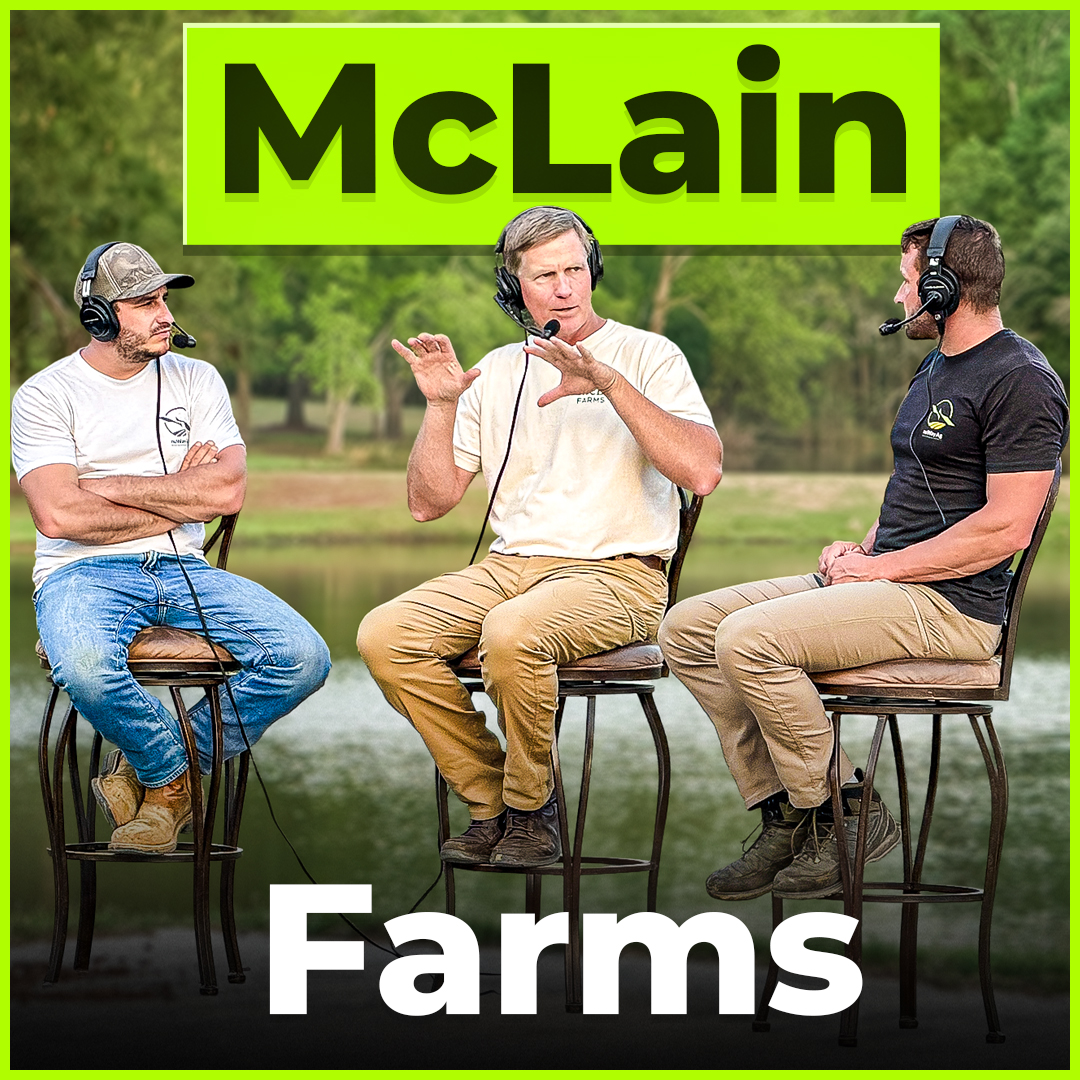
Episode Transcript
[00:00:00] Speaker A: We had the plans. I had everything packed in the truck already. I said, screw it, I'm heading.
So I drove and I got about halfway and. Well, I said, should say about eight hours into it, I stopped and got an energy drink. And I don't really buy them. I've had monsters, I've had Red Bulls. Well, I found this one. I'm like, oh, this has got BCAAs, and this looks good. And it was a rain.
And I thought, well, this is maybe healthier because I knew what BCAAs were. And I'm like, okay, whatever. So I, I sip on the thing for a couple hours, hit a wall, I stop it 12 hours in, and I get a hotel room. And I go up to the hotel room. I'm like, oh my God. I'm just laying there like bouncing. And my buddy gets in the truck the next day and he's like, well, how'd you sleep? I said, not worth it.
And he laughed because I showed him. I said, well, I had this energy drink. He's like, that's like maximum caffeine and you should take 300 milligram in a can. And so.
[00:00:58] Speaker B: But you felt, you felt tired, but then you wanted to sleep, then you weren't tired.
[00:01:02] Speaker A: That's right.
[00:01:03] Speaker B: Oh my gosh. So duck hunter. How serious of a duck hunter are you?
[00:01:07] Speaker A: Oh, I, I enjoy. That's what my hobby is outside of work.
[00:01:11] Speaker B: I don't think I knew that. Yeah, but not a deer hunter, right?
[00:01:14] Speaker A: No.
Never could shoot bow worth of crap when I was a kid, so I never picked up a bow. And actually growing up, I had rabbit dogs and my buddy had coon dogs. So we'd rabbit hunt during the day and then coon hunt at night with the dogs and.
[00:01:30] Speaker B: Nice.
[00:01:31] Speaker A: Never really got into deer hunting too much and then picked up duck and goose hunting.
[00:01:37] Speaker B: Sweet. Guys, we're just rolling right into it. Welcome back to another episode here on the Drone On Show. We got Aaron Clark with us today. Little back history between you and I. It all started because of friggin elk getting out, remember?
[00:01:53] Speaker A: Yeah, that's right. Think about it pretty often.
Yeah.
[00:01:56] Speaker B: Dude, was that three years ago? Four years ago. Oh gosh, that was fun. Landon, were you. You were not with the company yet? No.
[00:02:04] Speaker A: Yeah, I'd have to think back. Tell us every bit of three.
[00:02:07] Speaker B: Yeah, tell us how that went down because I don't even remember how the whole connection got made between you contacting me.
[00:02:14] Speaker A: Yeah. So my uncle has a high fence deer farmer because Shockton county and a windstorm came through tree had fallen on the fence and popped a gate. Not didn't tear down the fence, didn't knock anything down, but popped a gate.
[00:02:28] Speaker B: Oh, it probably like pulled the pole in or something.
[00:02:31] Speaker A: Well, just the. We, we think the tension on, on the fence and then just falling kind of popped the gate.
[00:02:39] Speaker B: Yeah.
[00:02:40] Speaker A: And had nine elk get out.
[00:02:43] Speaker B: I forget were they two bulls or how many?
[00:02:47] Speaker A: Boy, you know, I don't remember because I think they only got like two of the nine. We darted and ended up getting back because we chased those things for a full day.
[00:02:56] Speaker B: Yeah.
[00:02:56] Speaker A: And then the sun started to go down and we're like, what are we going to do? So then that's when we said, well, let's call the drone deer guy, the thermal guy and got a hold of you and you came down and.
[00:03:06] Speaker B: But you didn't know who I was. You just seen content, but you're not a deer hunter. So how the content come across your feed, do you think?
[00:03:15] Speaker A: I don't even know. Probably just YouTube. I mean, I'm fairly active on YouTube.
[00:03:18] Speaker B: Okay. But yeah, so you, you've seen the content and these elk were out and you're like, well, maybe this would help. So you guys got to. Before you called me, right?
[00:03:28] Speaker A: I think so, yeah. Because we were really close at one point to we were going to try and corral them and figure out a way to get them back in a trailer.
[00:03:38] Speaker B: But these massive animals, they come on, they become wild.
[00:03:42] Speaker A: So yeah, they're in a high fence, 300 acre, but they're still nearly wild. You know, you can't pet them or we see these farms that have bottle fed deers and things like that, but not these things. And so we were really close at one point and had them crowd and somebody made a wrong move and then they just bolted and then it was game over from there.
[00:04:03] Speaker B: And I remember you called me. I think we came down there like that evening yet.
[00:04:08] Speaker A: Yeah.
[00:04:08] Speaker B: And we started flying.
[00:04:10] Speaker A: Yeah. We went late into the night.
[00:04:12] Speaker B: Like we were able to find them pretty easily with the, the thermal drones. But the issue was moving in on them.
[00:04:17] Speaker A: Yes. Because you would. I, I vividly remember Kevin was with, he was filming and. Oh yeah, he followed me behind.
You had found the elk, spotlighted it. And we didn't turn the spotlight on until we tried to get close enough and you had spotlighted the thing and that was about the only shot we got on one of them.
[00:04:39] Speaker B: And did we get it? No, we didn't.
[00:04:41] Speaker A: No, we didn't. I don't think we got.
We found him every time.
[00:04:45] Speaker B: Yeah. And yeah.
[00:04:46] Speaker A: Cuz.
[00:04:46] Speaker B: So that first night, I remember we just kept on him. But it was the actual closing the distance that was hard. And then we came down.
[00:04:54] Speaker A: Wasn't it next morning?
[00:04:55] Speaker B: The next morning, yeah.
[00:04:56] Speaker A: We were out till 12 o' clock and you guys were back 6, 7 o' clock in the morning.
[00:04:59] Speaker B: Is that. Did I go get Braden. Braden Price, or was that later then? I don't remember this. Like, I felt like the video never got the views that I thought it might because it was interesting. It was a lot of work to try to get these things.
And that's probably the problem is we weren't able to show on the video of how difficult and how wore out everybody was. Yeah, there were a ton of guys out there.
[00:05:22] Speaker A: Oh, yeah. We widespread area chasing these things. Yeah. For days. I think you guys came back probably twice, two more different times because we just. We couldn't get close.
[00:05:33] Speaker B: And yeah, I remember that was one of the first days that I flew my drone for 12 hours consecutively. It was like we had the charger system and it would do it. But just once you found him, you just stayed above him to try to help guys come in. But it was still just so difficult.
[00:05:49] Speaker A: Yeah.
[00:05:49] Speaker B: At some point, you and I were at the truck. You probably had enough of running after him. And then you and I were talking about you. You mentioned something. You're going to get a spray drone. I was like, oh, now you got my attention. Because I was literally just.
[00:06:03] Speaker A: You're on the cusp.
[00:06:04] Speaker B: Yeah, I was literally just thinking about doing it as well. And that's when I first bought my xag. And you said you were buying Helios at the time. And I was like, well, okay, well, let me know how it goes.
[00:06:14] Speaker A: Well, then I called you because the Helios didn't come in in time. And you sprayed wheat for us that first spring. So we're coming on spring of 26. That was.
Well, that was probably 20.
[00:06:26] Speaker B: Had to be about two years ago.
[00:06:28] Speaker A: Yeah, 22.
[00:06:29] Speaker B: No. Okay. It was 23. It was in the spring of 23. Okay. Yep. Because I started drone deer recovery in 2022.
[00:06:37] Speaker A: Okay.
[00:06:38] Speaker B: Don't hold me to that. It's probably something like that. Yeah, yeah. And then at that point, I had the xag. I thought this thing was sweet. And it was. For as far as the hardware, I will say XAG has built a good hardware drone. The software, the user interface. Holy smokes. That thing was miserable. Sometimes it would work, next time it wouldn't. But I Did come out and do. Do some wheat. Not a whole ton.
[00:07:00] Speaker A: Couple hundred anchors.
[00:07:01] Speaker B: Yeah.
[00:07:02] Speaker A: You remember you crashed when you were spray. That was.
[00:07:05] Speaker B: You were with me, weren't you? Like, okay. Because it wouldn't terrain follow. And so I shut the radar off and then it would terrain fall fine. But I had built a boundaries too close to the trees because you couldn't manually fly it like you do the DGI's now. And so I just kind of guessed where the boundary would be. And you. And I remember we're up on the hill kind of looking down and it was coming up to the trees. And you're like, that's kind of getting close. I was like, yeah, you just got to trust it. Next you hear it.
[00:07:34] Speaker A: Yeah.
[00:07:36] Speaker B: I forgot you helped me haul that thing out of there. I felt so bad because. And I tell guys this all the time. When you mix up a farmer's chemical. It's now mixed up.
[00:07:45] Speaker A: That's right.
[00:07:46] Speaker B: Whatever happened to that?
[00:07:47] Speaker A: We probably just put it in the spray rig and. Because he ended up coming out and spraying himself with his ground machine, crushing all his crop. Yeah.
[00:07:56] Speaker B: Shucks. I apologize for that.
[00:07:58] Speaker A: It happens.
The amount of crashes we've had since and corn crop and different things. It happens.
[00:08:07] Speaker B: But dude. So it started for me. It started with the xag.
You. You did not get your Helios in time for the spring run.
[00:08:14] Speaker C: That's right.
[00:08:16] Speaker B: How long, like you ordered yours. How long did it take till you got them?
[00:08:20] Speaker A: I can't even tell you. I think we probably.
Because we had done tons of due diligence and we had several calls with both DJI folks. It wasn't specifically with dji, but guys that dealt them. Yes.
[00:08:33] Speaker C: Yeah.
[00:08:33] Speaker B: That was before New way.
[00:08:35] Speaker A: That's right. And then we kind of got sold on the Helios and the software that that was the route we wanted to go. And so we ordered them probably January, February time frame.
And I don't think we got them until June.
[00:08:51] Speaker B: So you did have them for the corn.
[00:08:52] Speaker A: We did have them for the first corn run. Yeah.
I should have looked. I was going to that first summer. I want to say we did 2500 acres, give or take with two. Was two Helios had two 1-30s. So they were the eight gallon machines.
[00:09:06] Speaker B: Okay.
[00:09:07] Speaker A: Yeah.
[00:09:07] Speaker B: How was that whole experience?
[00:09:10] Speaker A: It was rough. Yeah. So got through that first summer. Big learning curve. Multiple crashes.
[00:09:17] Speaker B: I think I'm going to pick them up to speed here. Okay. So I got the xag, you got the Helios. I quickly said the heck with this XAG because it just wouldn't work consistently enough. And then I went to dji, which is what I was running, doing thermal stuff. And then I think you and I were talking a little bit during the corn run that you were having some helio issues. Did I do some corn for you that year?
[00:09:41] Speaker A: I would guess probably, yeah.
[00:09:42] Speaker B: Because that, that year. No, I bet I didn't because I was in Indiana. I had the T40s.
[00:09:47] Speaker A: You caught some of the tail end for me.
[00:09:49] Speaker B: Okay.
[00:09:50] Speaker A: I'm pretty sure.
[00:09:50] Speaker B: Yeah.
[00:09:51] Speaker A: Because I was just.
[00:09:52] Speaker B: Yeah. They weren't flying for you? No, they liked, you know, they like the ground sometimes.
[00:09:58] Speaker A: Yeah. The software was fairly user friendly. The mechanical portion was tough. Radars were atrocious. I don't know what kind of improvements they've made since, but obviously fast forward to the following year. So 2024, we started that spring on our own, got through wheat and then got into the corn run. And it was just. We had two machines, but we were lucky to have two in the air. Yeah. And so from a user standpoint and obviously on the other side, obviously learn to work on them, wrench on them without fault. We just had to figure it out. Because at that point, they had no dealer network in Ohio yet. It was still Texas based and they were working on it, but at the end of 24 yet, they didn't even have inventory built up in parts. They announced some dealer networks east of the Mississippi finally. But we were still having to order everything out of Texas, so overnighting parts and they'd still be two, three days later, just based on freight and different things. So that was a, a big struggle to, to keep them moving. And we had one in the air and our productivity in our terrain east of 71 here, I mean, we were 15, 20 acres an hour.
[00:11:11] Speaker B: Oh, geez.
[00:11:12] Speaker A: With one machine and two of them swarming. We didn't double. We were probably 25 just based on. Because we had not only the trouble with the mechanical from the radar components and different things, but then batteries was a big issue. They would get really hot, charge fast. Two batteries per trip. You know, it was, it was a
[00:11:34] Speaker B: little bit of a struggle.
[00:11:35] Speaker A: It was a struggle.
[00:11:36] Speaker B: I got to give it to you, though. Like, you hung around much longer than I would have when I lost money on the xag. You did try. You tried for almost two seasons.
[00:11:46] Speaker A: Well, we did, yeah.
[00:11:48] Speaker C: We.
[00:11:48] Speaker A: We went through the 20 corn run, got through 24 wheat and got halfway through. I didn't realize it, but I look back, you brought me the first T50 on July 19, because it was my birthday, and I didn't even pay any attention to it. But I looked back at the invoice date, and it was on my birthday. It was mid corn run of 25.
[00:12:08] Speaker B: Did I bring it to the field or.
[00:12:09] Speaker A: Excuse me, 24. Yeah, yeah, you brought it to me on a Saturday morning.
[00:12:14] Speaker B: Oh, yeah. It was like, up toward Mansfield or something.
[00:12:17] Speaker A: Yeah. And I had enough. I just could not get anything done. And we were just bleeding and turning acres away.
[00:12:25] Speaker B: Yeah. I mean, so that first. That first season, I remember you had an enclosed trailer. It felt like, you know, back then, when everybody was gone, we felt like we need to keep our stuff all inside. And now, since then, you've built your own flight deck trailer. It's pretty crazy how quickly things have evolved in the spray business as far as efficiency goes.
[00:12:47] Speaker A: Oh, yeah, you learn. I remember when we were building that thing, we talked to a couple different folks, and everybody's got their own opinion. They have their own ways of how they want to do some things, and we just made do with what we had. We glued some plywood up on top of that trailer and.
[00:13:04] Speaker B: Oh, you're talking about your flight deck.
[00:13:05] Speaker A: The enclosed trailer. No, closed trailer.
[00:13:07] Speaker B: Okay. Okay.
[00:13:08] Speaker A: Because we needed to keep visual line of sight right early on, and so we had somebody up top and just scab some stuff together and made it work and learned.
[00:13:18] Speaker B: So you were unloading your drones every time, pulling the and mixing inside. I remember
[00:13:26] Speaker A: when you have to move in again. In our terrain, we're average field size, 15, 20 acres. So if you have to move any bit, we had to fold the things up and carry them in, carry him back out, move down the road 100 yards, carry him back out. And we were in the dirt, on the gravel roads and on the dust. Oh, man, it was brutal. And yeah, dude, it's like people that
[00:13:49] Speaker B: get to start now, they're so much further ahead. And some of the struggles that we went through, I went through wasn't even what some of the guys before me started with like. But I quickly found out as well, like, flying from the ground, no bueno. I'm not interested in that. I don't care how clean your ground ground is, it's going to get dusty and things are going to be blowing around.
[00:14:10] Speaker A: Oh, yeah. And traffic. I mean, we're, you know. Yeah, we're on dirt roads, back roads, but it doesn't matter. You're. You're flying these machines, and people are driving by, gawking at you, just in awe of what's Going on because they've never seen them before. It's new equipment, new technology. And not to mention somebody's flying this thing that's 100 plus pounds of.
[00:14:29] Speaker B: Yeah.
[00:14:29] Speaker A: Spinning fury that could take out tree branches.
[00:14:32] Speaker B: You know, it's like a sky blender, just small.
[00:14:35] Speaker A: Yeah.
[00:14:36] Speaker B: Who told you about spray drones or what made you want to do spray drones?
[00:14:40] Speaker A: Yeah. So that it all started just from demand. Talked a little bit here beforehand, but my full time job in ag retail, selling seed chemical fertilizer. I've been in the business for 10 years now, since I graduated college. And I was thinking on this before today.
[00:14:56] Speaker B: So do you have a degree?
[00:14:57] Speaker A: I do, yeah.
[00:14:58] Speaker B: Are you an agronomist?
[00:14:59] Speaker A: A bachelor of agronomy, yeah.
[00:15:01] Speaker B: Wow.
[00:15:01] Speaker A: Agronomous by trade. But when I started right out of college, I moved to Valparaiso, Indiana, Northwest Indiana, corner of the state up there. And I remember the agronomists there talking about doing a fungicide trial. And I was learning lots. Very new to the industry.
[00:15:16] Speaker B: Yeah, yeah, yeah.
[00:15:17] Speaker A: And they were doing fungicide trials with airplanes up there. They had fields big enough, square enough, no problem. Multiple tanks, different loads, you know, sure thing. Well, fast forward five years, I'm working in eastern Ohio, quote, unquote, home for me and the customer demand. Customer demand was there. We had a small, I wouldn't say a small percentage, but really what it boiled down to was ability to get it done. We were dealing with airplanes and everybody wants to stay out west wide, bigger fields, productivity, no fault to any of them. So then we transitioned to helicopters. Had opportunity for helicopters to come in and what the struggle with that was, they want productivity as well. No different than anybody.
[00:16:04] Speaker B: Yeah.
[00:16:04] Speaker A: Can't blame them. But for me, in my territory, I'm fairly spread out north to south east of 71 here. So from Ashland county down to Perry county they said, okay, well we're going to start in your south stuff and we're working north. Turn it all in because we're coming and we're hitting your run and then we're going back. Because they had bigger jobs.
[00:16:26] Speaker B: Yeah.
[00:16:27] Speaker A: People jumping up and down wanting them to get their stuff done. Well, we want our stuff done too here. You know, we're paying customers and we want it done. So it was getting done, but it was early, late. Ready or not, here we come.
[00:16:39] Speaker B: Oh, okay.
[00:16:40] Speaker A: So it wasn't like they were bouncing around, starting here and working.
[00:16:45] Speaker B: Yeah.
[00:16:45] Speaker A: Shuffling.
[00:16:46] Speaker B: It was because with the fungicide you got to. You have a window, you don't want to put it on too early, don't want to put it on too late.
[00:16:52] Speaker A: That's right. Yeah, yeah.
[00:16:53] Speaker B: And these guys were, hey, this is our schedule. We're just going to hit it and we're coming.
[00:16:57] Speaker A: You got majority of it. We're going to hit the majority of it. And if you want something done, turn it in because we're not coming back.
[00:17:03] Speaker B: Huh.
[00:17:04] Speaker A: Type of thing.
So let's see. You sprayed our wheat in 23. It would have been 21 was the first summer we had somebody.
It was a guy with a T30.
[00:17:16] Speaker B: Okay.
[00:17:17] Speaker A: Expressed some interest in availability and so he came and sprayed.
[00:17:22] Speaker B: Was that a guy from Worcester?
[00:17:23] Speaker A: Yeah.
[00:17:24] Speaker B: Ruck.
[00:17:24] Speaker A: Yeah, yeah, yeah.
[00:17:27] Speaker B: That guy's been in it. So he was early.
[00:17:29] Speaker A: He was a beginner for me.
[00:17:30] Speaker B: I don't understand like how he hasn't like. Well, but I don't think he really wants to have a huge application business. But he could have a big, big application.
[00:17:41] Speaker A: Oh yeah, he was, he was founder for me. So he, he really helped me out. He probably did about 500 acres or so that summer for me. And when I saw that, I mean, I was like, this is it. This is, this is what we're going to do. And so the following summer, Scott said, well, I can do some, but I don't think I can commit to doing everything for you.
[00:18:01] Speaker B: Yeah.
[00:18:02] Speaker A: So I had another guy had expressed some interest and he did some acres for me, but kind of the same thing. He was a little bit further south, didn't want to come all the way north and would commit to helping us out, but didn't want to over commit under deliver type of thing and no fault to him. So that's what led us to make the decision to get into it because we had the demand. Demand was growing because we could get it done. So we were doing more farms instead of select with airplane helicopter, we had to select the biggest fields in the area. And that's, that's what was getting done. Well, these drones allow us to spray a 20 acre field. And even if we trim in the outside 16 rows, 32 rows because of wildlife, we're still maximizing that interior. It's not efficient or necessarily desirable to do that everywhere. From a drone standpoint, no different, but we were still able to get it done.
[00:18:53] Speaker B: Yeah.
[00:18:54] Speaker A: So that's what drove us to get into it and, and try and help the customers out.
[00:18:58] Speaker B: Right? Yeah.
[00:18:59] Speaker C: So just a quick question before we move on. You said that the window was being missed. How many days on either side? You know, too early, too late. What kind of window are we talking about here for people that might not be as familiar with it, is it two days or were they like two weeks out?
[00:19:13] Speaker A: Well, it depends. That's the famous word in agronomy is it depends.
It always depends. So what it depends on is what you're trying to target. So there's what we call broad spectrum products.
So those would be a premix of multiple modes of action on the chemistry side. And you have a 10 day, two week window to hit that. And there's newer products coming that have allowed us to stretch that even a little bit wider. So call it a two week window to try and get everything done. Whereas on a narrow spectrum, what we battle over here in our environment and it's amplified from the livestock farmers using corn for feeding, we get a disease called vomit toxin. And to combat that with fungicide, it's about a five day window, really a three day window sweet spot. But you have about five days when that corn hits green silk. So tassel comes out first and almost consecutively, silks start to come out. When those silks emerge out of that ear, that's what they call green silk. They're really spongy, absorbent, wet. Yet we use a specific chemistry at that specific timing to combat that disease. How that disease infects it. Actually they call disease triangles. So you have to have susceptible host corn, proper time and disease present. And so that disease actually goes down the silk tube, the pollen tube in that kernel and infects kernel by kernel. So we are spraying that product to protect those silks at that time. And if you're past that five day window, you're too late and are subject to infection.
[00:20:57] Speaker B: Dude, I want to show you some corn pictures. I'm no agronomist like you and I, you know, I'm learning about this farming stuff and I think it's cool, but I sprayed some stuff in Kentucky and he wasn't able to tell me if, if it was a higher yield, but he was able to send me these pictures and he said his corn was a higher quality corn.
Like, look at that, one side is sprayed with fungicide and the other is not. Yeah, the cob doesn't look that much bigger, but it looks fuller and just healthier.
[00:21:29] Speaker A: So what you're seeing there is kernel depth, kernel size. So when we're spraying these fungicides, we're keeping these plants healthier longer. A corn leaf is nothing but a solar panel. It's capturing sunlight, which again, photosynthesis converts to food.
So the longer we can keep that plant healthier the more time, the more sunlight it's capturing and filling that kernel. If it dies prematurely, it's not reached its maximum potential. And so with these products, we're keeping them alive and enable, allowing to maximize.
[00:22:06] Speaker B: Here's another one. He's. This was in the same field. So I don't know. Is this mold on the corn?
[00:22:11] Speaker A: Yeah, that's an ear mold.
[00:22:12] Speaker B: And then.
So that was no fungicide. And in the same field he had that corn.
[00:22:17] Speaker A: Yeah.
[00:22:18] Speaker B: We'll have to maybe try to throw these up there.
[00:22:20] Speaker C: Yeah.
[00:22:20] Speaker B: So they can see. It's just crazy to me that like he said, I can't tell based on tonnage or, you know, bushels, but he said my corn quality looks so much better.
[00:22:31] Speaker A: Yeah, yeah. Not to get too much into the weeds, but on our research side, different corn hybrids have different fungicide response. So it's a range based on hybrid. So breeding technology, they've bred disease characteristics or disease
[00:22:50] Speaker B: resistance.
[00:22:51] Speaker A: Resistance. Yeah. Would be a good term. So hybrid A would only show a, a non responsive product. A non responsive hybrid might only show you a 5 bushel return, which if we do the math, today's market, you're going to need probably 8 to 10 bushel to be, to break even.
[00:23:10] Speaker B: Yeah.
[00:23:10] Speaker A: Whereas other products might be super offensive, but they lack disease characteristics and they're going to respond to a fungicide. 20 plus bushel, 25 bushel. And so different.
[00:23:23] Speaker B: So you brought something up. Say I'm a new guy that's wanting to get into this business.
Sounds like there's a business to be had here because there is disease. But you just said that there's, you know, there's corn being bred to have resistance against this stuff. Do you think they'll get to the point where they make corn and it does not need fungicide whatsoever?
[00:23:43] Speaker A: Mother Nature is going to win.
Oh yeah. I mean it's going to combat. We can breed everything that we want and there's very strong products that do very well. And these companies, that's where they're investing their R and D.
They spend millions of dollars in developing these products and bringing them to market. And think from their standpoint, if a farmer doesn't get fungicide on and it's a complete failure, well then that pro, that farmer is going to say, well, I'm wiping my hands from that. I'm never using that one again. So they have to bring products to market that won't fall on their face in a absence of a fungicide application. Now there's some that we know. Hey, if you use this product, use this hybrid, just know that it has its hole is gray leaf spot or. And so you brought up, will they ever get to that point? Tar spots, the newest one and it's moving from the west to the east here to the eastern corn belt. They've been battling it for multiple years out in the west. And the seed companies are trying to breed resistance to tar spot. But again, right environment, right conditions, it'll blow up and there's nothing they can do about it. Even if you have a disease resistant.
[00:24:55] Speaker C: So is it accurate to say that we will always be responding to like we're never going to get ahead enough? Kind of, kind of to play off of what Mike was saying. Like, like you said mother Nature always wins. Right. Like it's just as much as we are adapting and creating in, in creating something, Mother Nature is always adapting as well.
[00:25:17] Speaker B: So you think you're saying mother Nature might also be adapting. Mother Nature is like, hey, you got my tar spot figured out? Well, I got tar spot this now.
[00:25:26] Speaker C: Yeah, well, it's a similar thing like you always get like flu vaccine or something like that. Every year it's changing 2% in order to evade and to get around similar thing. And that's, that's what I took your comment to mean. Mother Nature wins because she's always adapting.
[00:25:44] Speaker A: That's right.
[00:25:45] Speaker C: And adjusting to the protections that we're creating.
[00:25:47] Speaker A: Oh yeah, disease. Well, disease resistance, weed resistance, you name it. These things evolve. And disease is no different than weeds or to your point, the flu or a virus or something, it changes and we, we throw these things and create these things but then there's another curveball coming or we have to be good stewards of the product. No different than a flu shot. You don't get a half rate flu shot or take a half rate dose of vitamins to, and think you're going to be fine. If we go out and we misapply these fungicides, these companies do research and they say, okay, at this rate, this has suppression of this one or control of this one. And if we call space, get cheap and say, well, I don't want to spend $20 an acre, I want to spend 10 or 15 and I'm just going to trim that rate back. Well that's fine until it isn't because that disease, something's going to live, something's going to reproduce and it's, it's evolution or that's how we breed resistance and we battle it in weeds. We, we're going to battle in diseases
[00:26:49] Speaker C: that's a very interesting comment. That's how we breed resistance. Yeah. So half assing it could actually be hurting you in the long run, five to 10 years. So if you get cheap on it and you don't apply to spec. Right. As, as the, according to the label. That's right. Right. Then you could be hurting yourself and
[00:27:11] Speaker A: the farmers around you.
[00:27:12] Speaker B: I didn't think of, of it like that because basically say, say we do a half a dose, you might kill three quarter of them but the, the, the other quarter kind of was like took it like a boss. Took it like a boss and now they're. Their offsprings are going to have a little bit of that in them.
[00:27:30] Speaker A: That's right.
Yeah.
[00:27:32] Speaker C: That's really interesting.
[00:27:33] Speaker A: Yeah, that's, that's just what we battle. And so Tar Spot is the newest thing for us.
[00:27:38] Speaker B: To me to the east and to me it seems like this is just what we deal with because of the fall of man. Like.
[00:27:43] Speaker A: Yeah.
It just. Everything is a factor. Right. It's cost, it's. Well, some is better than none. Right. Because I'm, I'm doing something but if I do it all or full fledged or spend the full money, well it might not be in business very long because economics didn't, didn't return or overspent the budget or it didn't rain. We spent all this money and it didn't rain so we didn't get the yield. So I mean it's, it's, it's, it depends. Right? It.
[00:28:12] Speaker C: Yeah, it just very, it's a very good. Yeah, very good comment.
[00:28:17] Speaker B: It depends, huh?
[00:28:19] Speaker A: Yeah.
[00:28:19] Speaker C: So, so that really kind of when you, when you look at it like that, the, the farmer that is the one that is taking all the risk and taking the hit and putting in the work, the energy, the money, the capital, all of that really could have his hands kind of tied certain times depending on where he's at economically or whatever and do the best that he can and because he's not able to, to do it per spec. Right. From whatever limiting conditions, you know, could kind of take him out of the game. Right. Losing the family farm. And that's where all the great dramas come from and you know in the movies. But there's also real things that happen to, to great farmers, you know, on tough luck that have real repercussions.
[00:29:01] Speaker A: It's. It's real life. Absolutely. Yeah. So. And that's no shot at them, right? It's no, it's just at all. It is what it is. And if you without getting into it. Budgets are ugly right now, too. Based on commodity markets. Input cost, equipment cost. Yeah, everything. These budgets are tight and folks are looking at this.
[00:29:25] Speaker B: Why do you think our commodity prices are what they are?
Let's speculate. Yeah,
[00:29:34] Speaker A: that's beyond me, man. It's.
[00:29:36] Speaker B: Well, it's just wild because when I started, when I. My first spray season, corn was like $8 a bushel. Yeah, it's less than half that now.
[00:29:44] Speaker A: We go in these cycles. So when I started, and I'm talking fertilizer here, but I can remember starting out selling a load of 28%, which is liquid nitrogen, they said, we sell it by the ton, and it was $180 a ton. Well, in my cycle that I've been, we went from 180 all the way down to $135 was the cheapest. I sold 28. And now today we're at 300 a ton, almost $400 a ton.
[00:30:13] Speaker C: 300.
[00:30:14] Speaker A: Almost $400 a ton. And back when corn gets to $6, that 28% was 5, $600 a ton, dude. So these, these things, it's ebbs and flows and in cycles and I mean,
[00:30:28] Speaker B: I thought crypto was bad. Volatility wise, I would say that corn prices are about as bad.
[00:30:34] Speaker A: Well, it's just wild. I mean, the. The markets are the markets and we don't have control over them. You know, we watch them and we. We adjust the best we can. But. And that's not even my realm. Right. I'm not a grain advisor. I'm an agronomy advisor by trade. But I follow it because I'm involved with it.
[00:30:52] Speaker B: But I could not believe how many fields were not planted last year just because it literally cost them more money per acre to put the seed in the ground than it did to collect insurance.
[00:31:03] Speaker A: If you thought last year was bad, wait till you see this year, because it's even worse right now.
[00:31:08] Speaker B: Oh, yeah.
[00:31:08] Speaker A: Oh, yeah, it is.
[00:31:10] Speaker B: Can you tell. Can. Can you explain to the audience if they've never heard about how this crop insurance works, how farmers do that? Because I think I understand it some, but I was like, holy smokes. The farmer basically made more money by doing no work. Now, a farmer doesn't want to do that because the weeds absolutely can take over and annihilate.
[00:31:32] Speaker A: Well, so not only is it weeds, but farmers are very prideful people.
99% of your farmers are. They take pride in what they do, and they want their crops to look good. They pay the landlord rent, and that landlord doesn't Want to look at a field of weeds so that farmer feels obligated. I got to go out and I got to plant this crop. I got to do a good job or I might not be able to farm that field because farmer Joe down the road is going to come in and pay $50 more an acre and claim that he's going to do a better job. So they might lose it.
I'm not going to touch too much on the crop insurance thing because I'm not, I'll be honest with you, I'm not in tune with it. But from a prevent plant standpoint, that's what they call it. They made money, they, they paid a premium, they bought insurance. Okay. And if the environment did not allow to get that crop in the ground, there's insurance date. So you can't plant before March 15th. We'll call it an arbitrary date. Corn and soybeans might be March 20th. And then if you don't get it planted by June or July corns, June timeframe. Beans would be July timeframe. If you don't get it planted by then, you're out of the window. You're not going to get crops. So then you collect the insurance and you just.
[00:32:44] Speaker B: And the insurance you collect usually. And I'm sure there's policies that range would be of years prior that they would have yielded.
Yeah, yeah.
[00:32:55] Speaker A: And it varies by to your point policy and coverage and levels. There's different things and I'm not super privy.
[00:33:02] Speaker B: And there's government subsidies to try to help farmers, right?
[00:33:05] Speaker A: That's right.
[00:33:06] Speaker B: Usually. But it's like it's never enough. It seems like, yeah, dude, I just can't believe like that the farmer is the last person that makes the money. Everything else rolls. But then it always.
The farmer is the dude that pays for it. At the end it's. It's just like these drones that I'm going to bring it up because it's such a hot topic all the time. You know, in the beginning it was about ban dji, ban him. Well now we figured out that, you know, the FCC is saying ban all foreign critical components that go on a drone for new models coming. For new models coming. To me I'm like, you know, who's going to pay for that? At the. In the end it's the farmer himself. Because currently you can buy a T100 a complete kit for 34,000. Maybe if we wouldn't have that china equipment, the next stuff that's coming, dude, it's probably going to be 80,000 and somewhere that cost has to go.
[00:34:07] Speaker C: Yeah.
[00:34:07] Speaker B: It's either it's going to cost you more per acre to get your crop sprayed, or maybe it's a farmer that wants to buy his own equipment before he could buy it for this price. Now he has to buy for this price because our government decided, you know, it's a national security threat.
[00:34:21] Speaker A: Yeah.
[00:34:22] Speaker B: Farmer pays for it.
[00:34:23] Speaker A: Yeah.
[00:34:23] Speaker B: Jacked up.
[00:34:24] Speaker A: It's brutal.
[00:34:25] Speaker C: This is one of those points where I feel like capitalism is what has really developed the US to, to where it currently is. But when. Whenever there's investors and people making money that are determining decision making when it comes to insurance and, you know, when you, for example, like John Deere. Right. They build their new tractors and farm equipment to where only they can legally work on them, the farmer can't go in and fix it himself. There are things like that. And, you know, we're talking about the drone situation, foreign components, the end user that. That gets hurt the most is the farmer, where he has to, you know, take all the risk. And there's people that are kind of sticking their necks out, but really there's a lot stacked against them.
[00:35:11] Speaker B: Yeah.
[00:35:11] Speaker C: In my opinion, that's what it feels like.
[00:35:13] Speaker B: I agree. I would say if there's a farmer that I was ever thinking about getting the equipment, there is no better time than right now, because he's going to get into that equipment for much less than what his neighbor might in the next three to five years.
But, you know, budget.
[00:35:31] Speaker A: That's right. Yeah.
[00:35:32] Speaker B: He can't even swing right.
[00:35:34] Speaker A: Yeah.
But, oh, man, opportunity is there. We know it. We see it.
[00:35:39] Speaker B: 100.
[00:35:40] Speaker A: Can't even get everything done, yo. And. And we work hard.
[00:35:43] Speaker B: Yeah.
[00:35:44] Speaker A: And so, yeah, it's a. It's a good thing, yo.
[00:35:47] Speaker B: So you switched over from helio to the DJIT50. Or was it 40?
[00:35:52] Speaker A: No, 50.
[00:35:52] Speaker B: So 50.
[00:35:53] Speaker A: We went from 2.230s or 130, 230 helios to one T50. That first year, we sprayed more with a T50 at the end of our corn run than we did with the two Helios. That whole year, I think we were 5,500 acres or so total. And that T50 sprayed 3,500 of that.
[00:36:15] Speaker B: Oh, wow. It is. You know, I love dji and some people can call me a fanboy, but their equipment just seems to work.
[00:36:24] Speaker A: It's incredible.
[00:36:24] Speaker B: It just works. It's that simple.
[00:36:27] Speaker A: Yeah.
[00:36:27] Speaker B: You know, they set the bar. Jason said it yesterday. They set the bar, and the other folks have to try to catch up. That's just the way it is.
[00:36:34] Speaker A: Yeah. And that's a good thing because that's driving innovation, that's driving competition. We don't like it all the time, but that helps people. You talk about budgets, you talk about capitalism. It is what it is. So that. That drives those things. But when you're on the wrong side of that, it's not fun because we felt it, we battled it. You know, we pulled our hair out trying to get something done. And we were, I shouldn't say forced to go that route, but we. We made the decision. And you talk about a game changer for us. I mean, just the relief that it was to send my guys out and know that they were going to get something done. Yo, not have to call me. Not have to order this part or. Or worry about fixing and not let alone fixing, but getting done. The commitments that we had made. Somebody calls you and asks you for a commitment. That was the worst part of the battle, was trying to fulfill the commitment that was made. These people are willing to pay you a premium price for a service that they had not gotten done. Now they see the opportunity to get it done. And then we couldn't get it done.
[00:37:36] Speaker C: It was like, so keeping your word is really important.
[00:37:39] Speaker A: Oh, my gosh.
[00:37:40] Speaker C: The right tools allow you to be able to do that and do it well.
[00:37:43] Speaker B: Yeah. But then on the. On the flip side of that, if you are a different drone manufacturer and you're trying to keep up with this technology that we're using to DJI system just to be able to sell enough equipment to get enough people to use it to make their product better. It's hard. Yeah, it's. But it's like that in any business. That's right. It's. If somebody's here, you're trying to get there. Well, by the time you get to where they're at, they're already, you know, that far.
[00:38:14] Speaker A: Yeah.
[00:38:14] Speaker B: Ahead of you already.
[00:38:15] Speaker A: Yeah.
I, again, I. I hope that it comes and I want to see the American people succeed. No different than anybody else as an American. We are American. Right. That's what we want.
But we have to be successful. And what we had was not cutting it and learn firsthand.
[00:38:34] Speaker B: Dude, I just.
I don't know. I probably get shit of the. For this, but the China people, they build some good stuff.
[00:38:42] Speaker A: That's right.
[00:38:43] Speaker B: Like not just spray drones, other things as well. Like, they just build good stuff. It's like, okay, you want to brag on something that we build really good airplanes. Nobody freaking competes with, you know, United States Manufacturer on airplanes. Look at every dog on airplane that flies over yet 30,000ft. It's either an Airbus or a Boeing. Is that simple. And that's all across the world, Right? Some things you're just better at than other people.
[00:39:09] Speaker A: So my uncle has nothing to do with agriculture. And I told him I was going to get into this spray business and he's like, oh, what are you, what are you doing with that? What are you, what are you asking me questions? And I said, well, we're going to buy this American drone. And he said, boy, I'd buy the Chinese drone if it were me because they're better at technology than we are. And at that time he was right. Yeah, yeah. So I laugh about that because he made that example and I won't forget that.
[00:39:33] Speaker B: Yeah, no, it's true. The huge company Anduril that builds, you know, military grade drones, he specifically said on a, on a news interview that no, we do not have as good of drone technology on the space that you and I are in as China. And it's just because companies, back when DJI A started innovating, people didn't think that drones would get to this point and be such a vital tool in almost everything from security to spraying your crops like they're used every day.
[00:40:07] Speaker A: Yep.
[00:40:07] Speaker B: And then all of a sudden you see how much or how big the industry can be, then you start trying to bottleneck it to slow the flow of their products that are coming into the States down so people can innovate. But the problem that I am seeing right now is nobody's getting into the space that we're agricultural and enterprise series drones. Everybody wants to do the military stuff and I don't blame them because they can charge 15 times more for a drone that isn't as good. Yeah, yeah. It's just a cycle.
[00:40:40] Speaker A: That's right.
[00:40:41] Speaker B: I would say somebody that doesn't compete with something that we build in, in the States right now is SpaceX. I mean, you tell me what other country is sending this amount of rockets into space? Oh yeah, yeah. So we can be proud of a lot of things that we've made.
[00:40:56] Speaker A: That's right.
[00:40:56] Speaker B: There's just some things that we need to try to figure out how to catch up.
[00:41:00] Speaker A: Yeah.
[00:41:00] Speaker B: So you were, you started with your T50 after July. You did three quarters more than you did with the, the Helios last year would have been a full year with your 250s.
[00:41:11] Speaker A: That's right.
[00:41:12] Speaker B: How much did you get done?
[00:41:13] Speaker A: Well, we started with one. And because there again we Tried to make it work. So we had two. We went from two to one.
Had great success. So we thought we'd start out with one and see what we could get done.
And made it through wheat, no problem.
Had a few hiccups, hit a, hit a wire and wheat and then had one crash in corn. But there again the commitments and the opportunity was there. So we got behind again. Even with one T50 we just, we were spraying more acres that have historically been turned into the airplane or the helicopter. So then that's what drove us to demand. We purchased the second T50 Midstream last summer to, to keep up. So we sprayed about 7,500 acres last.
[00:42:00] Speaker B: 7,500. So every year you did end up spraying more acres. 7,500 acres. Yeah, you had called me. Was it mid season? You weren't sure about doing another 50 or a 60. And at that time you had already started saving all your fields into the DJI software and the 60 was not compatible with that.
[00:42:18] Speaker A: Right.
[00:42:19] Speaker B: Even though you could have got more done. Now you're running two 50s, the T100 is out. I think you've already made up your mind, you're not upgrading.
[00:42:26] Speaker A: That's right.
[00:42:27] Speaker B: Why is that?
[00:42:28] Speaker A: For us again we have fields that the 100 would just rip, as you would say from. We're talking 100 plus acre fields. Whereas in the 50 will handle it. It's just not going to be as efficient. But we have enough of those 15, 20, 30 acre fields that I think the 50 and not to mention I feel, and I'm sure that the LiDAR is much improved. But the 50, even though it's slower, just handles our topography really good. And I've already got the chargers, I've got.
[00:43:01] Speaker B: Yeah.
[00:43:02] Speaker A: The setup. So for now I think we're going to stay put.
[00:43:06] Speaker B: Unless you get a bunch of acres rolling or something. Then you might upgrade.
[00:43:10] Speaker A: Yeah, yeah.
[00:43:11] Speaker B: Because we're trying to figure out. Guys have been asking me, can I get the same amount of acres done with one T100 that I could with two T50s? I can't say 100% for sure that you can, but if you set the parameters at what DJI tells you that you can do. But you know, I don't recommend going exactly what they tell you. You would think you could. Did you see the, the two gallon work video? 90 acres. I mean that's insane.
[00:43:35] Speaker A: Oh yeah. But well, for us, you know, we're probably averaging 35 acres an hour with two drones. With two. And again, that's average. Right. So we get into big stuff, we're pushing 45ish.
[00:43:48] Speaker B: Yeah.
[00:43:49] Speaker A: Whereas across the board, and I'm talking real life average for everything that we sprayed, we're probably 35, 40 acres an hour, give or take. So to your point. Yeah. 90. That's double.
[00:44:00] Speaker B: Yeah.
[00:44:01] Speaker A: If not more.
[00:44:02] Speaker B: But isn't it crazy how fast the drones grew? Like size wise, you started with an eight gallon drone.
[00:44:08] Speaker A: Yeah.
[00:44:09] Speaker B: And now we're at a 26 gallon drone.
[00:44:12] Speaker A: Yeah. And you've met a couple of the guys that I worked with pretty closely and they made the comments.
You'll never catch it. And I, I don't know if we're quite there yet. I've had a couple conversations with some different folks about size wise because it's just like, well, where does it end? Right now it's like exponentially every year. Capacity, capabilities, battery improvement, those things are just driving it.
[00:44:35] Speaker B: Yeah.
[00:44:37] Speaker A: But when we started, we're like, oh, every year something bigger, faster, better is going to come. So how do you manage it?
[00:44:43] Speaker B: Yeah. And when you meant you never catch it, it's like, guys are like, well, should I wait till next year? It's like if you wait, you're, you're literally always going to be waiting.
[00:44:52] Speaker A: Yeah.
[00:44:53] Speaker B: Since we're talking about big drones, I think, I don't know this for sure, but I think we might run into some issues where the crop will be injured because of how big the drones are. So the T100, if it has 26 gallons in it and it comes to the end of its row and it slows down, there's a lot of down force.
I don't know, like the wheat that'll probably stand up again if it gets pushed down. But guys were saying something online about corn snap. They call it corn snap.
[00:45:24] Speaker A: Green snap.
[00:45:24] Speaker B: Green snap.
[00:45:25] Speaker A: Green snap.
[00:45:25] Speaker B: What, what is, what does that mean?
[00:45:27] Speaker A: So essentially that plant, when it's at that stage in its life, it's, it grows so fast, so rapidly, its cell walls are a little bit thinner. And we don't battle that over here in the east.
[00:45:39] Speaker B: Okay.
[00:45:40] Speaker A: Because we don't have the high winds out west where they're flat. You know, we got the beauty of the hills and the trees to knock the wind down here out west where they're just flat tabletop. That wind comes ripping it. It just, it can't handle it.
[00:45:53] Speaker B: Okay. So but they're talking about the drone snapping the corn because as it's coming to the end of its row, it really forcing that wind down in there.
[00:46:02] Speaker C: Yeah.
[00:46:02] Speaker B: And there's some softwares trying to combat that one is before it gets to the end of its row. It's kind of, it kind of climbs before it completely stops to bleed off some of that energy.
[00:46:14] Speaker A: Sure.
[00:46:15] Speaker B: And then it's also higher when it makes a turn, so I guess we'll see. But it's something that I was like, I didn't really think of that. Although when you are standing next to that drone, when it's. It's loaded up a lot of weight.
[00:46:26] Speaker C: Yeah. I mean, on that takeoff, you really feel it. And Mike, I think a gentleman that was on the podcast was describing what you're talking about, and he was saying how he runs his drones out past the end of the field. So they're slowing down and not making that breaking action on the last 15, 20ft where that, that wind is happening the most. So he said he's running it out past.
[00:46:48] Speaker B: Yeah, they have like big square fields in Louisiana where they'll go past the field and then turn around, come back here. That's not gonna work.
[00:46:56] Speaker C: No, no, that's. That puts you right into the trees.
[00:46:58] Speaker A: Into the trees or the power wires around here.
[00:47:01] Speaker B: Yep.
[00:47:02] Speaker A: Houses and everything. We battle.
Yeah. I don't, I don't know. To be determined, I think on that from my standpoint, it's, it's not something. So when we think airplanes and helicopters, to your point about them, I mean, when they get to the end of the run, they're picking up and, and they're swooping 100, 200ft up.
[00:47:21] Speaker B: Yeah.
[00:47:21] Speaker A: You know, so they're not touching. When you think of the weight and the speed that those machines are flying because, you know, helicopters carrying 100 gallon plus.
[00:47:30] Speaker B: But I don't think a helicopter forces the air down like the drone does.
[00:47:33] Speaker A: Not as tight.
[00:47:35] Speaker B: Yeah.
[00:47:35] Speaker A: Because they're, they're, at least in our area, they're having to maintain some height to navigate the hills and such. But yeah, it's, it's, It'll be interesting to see.
[00:47:46] Speaker B: Yeah. Yep. So do you have the same amount of acres lined up already this year?
[00:47:50] Speaker A: Yeah.
[00:47:51] Speaker B: You do?
[00:47:51] Speaker A: Yeah.
[00:47:52] Speaker B: How many of those customers like are just a repeat guaranteed. And then others are more like, hey, I'll let you know in, in July.
[00:47:59] Speaker A: We certainly have a few. And again, back to the budgets piece. Everything.
[00:48:04] Speaker B: It.
[00:48:05] Speaker A: It'll. If we get a run in some commodity prices, that'll alleviate some pressure off of some guys. So that'll allow for a little bit more. I want to call it luxury spending, but more money to invest in the crop because they don't have to make that as much of a payback as an ROI, if we get that. So I would say 75% of my stuff would be return or year over year stuff. And then there's always a few. That kind of a game time decision and nice. Let the crop dictate what, what, what the weather is. I mean, even if we don't get a commodity run, but the crop looks really good, they feel better about investing in it if it's, if it's dry. If stuff went in tough and it looks pretty rough, they're not as apt to, to invest in it. Yeah, because it's harder to get the return out of that.
[00:48:54] Speaker B: So, so you went to college for crops and so you talking to the farmers, you just kind of had that lingo probably because you understood the agronomy side of it. What do you think would be one of the most challenging things, things for somebody that would want to get into a spray drone business? Just on top of it, you know, you're thinking, what would be the challenging?
[00:49:16] Speaker A: From my perspective, it's trying to sell the service because the farmer wants it done and they know that they want it done. But it's still a relationship business. They have to trust you. They're not going to just let some Joe Schmo walking off the street, hey, I got a couple of drones, I'm ready to spray. Well, who are you? Where are you from?
How many years you've been doing it?
Do you know the area?
Are you going to do it right? Because mixing is a huge thing.
If you mix it wrong, you can have a big mess. And we're talking a jug, a two and a half gallon jug. That's thousand dollars a jug. And if you mess that up, just improper mixing or something, they've got to trust to know who they're hiring to do something is going to do a good job. So that's where I'm building the relationship. Building the relationship.
[00:50:13] Speaker B: How does somebody do that though? Like just an absolute newbie, like have no clue what you're doing. But you want to do this business, is it just going to have a casual conversation, not try to sell the guy?
[00:50:24] Speaker A: Yeah, I mean they got to, they got to learn. We know that there's demand for it. But does that farmer really want it done or what? What are they trying to accomplish? Everybody's selling something in this world, right? It doesn't matter if you're selling drones or I'm selling seed or Landon sound is photography stuff. We're all selling something. But they still have to Be confident in what they're buying.
[00:50:47] Speaker B: Yeah.
[00:50:48] Speaker A: So to your point about how does somebody cut their teeth? Yeah. I mean they got to go out early, they got to talk to some folks and it's going to take multiple times. They can't just walk on the farm and expect somebody say, yeah, come and, yeah, come and take care of it. Because it's, you talking about an investment at 30, 40, $50 an acre when you start throwing some micronutrient stuff in. And I mean it's big, big spending and critical. Right. We talked about that window, we talked about that time frame. And there again, if they sell it in May, June time frame, they're working with somebody that they might not know. Is this guy really going to show up? Is he going to get it done?
If I, if he doesn't, what does that cost me? Because we Talked about a 20 bushel advantage, sometimes 10, 15. 20 bushel. 20 bushel at $4 a bushel, you do the math. That's big money.
[00:51:36] Speaker B: Yeah.
[00:51:37] Speaker A: So they've got to be confident that who they're working with is going to get something done, get it done, get it taken care of.
[00:51:43] Speaker B: Yeah.
[00:51:44] Speaker A: So, yeah, it's tough. I have looked at that and I, I am blessed with the customer base that I have because they have trusted me to get this done for them. And thankfully we've seen the evolution of this and the ability of that, these drones have brought us to get it done in our market.
And so I'm very fortunate, very blessed to have that opportunity. And.
But yeah, it's no small task.
[00:52:11] Speaker B: Yeah, yeah, that's my, my big thing is when somebody asks me about doing this business, understanding the equipment is one thing. Knowing how to run it, you know, that's the easy part. It's the connection between you and the farmer that's going to be the hardest part. Like, we have to be honest, that's going to be the hardest part because without acres, without somebody trusting you to spray their acres, you're not going to make any money.
[00:52:34] Speaker A: Yeah.
[00:52:35] Speaker B: Having this nice beautiful rig sitting in your front yard is not going to pay the bills. You got to be covering acres. But how are you going to cover acres if nobody trusts you? You just got to start like doing what you're saying.
[00:52:47] Speaker A: Yeah. And social media is one way for them to show the younger generation of farmers is certainly on social media. But then there again, farmers talk. So if somebody comes out and does a bang up job, does a, a great job, they're more likely to recommend you.
[00:53:03] Speaker B: Yeah.
[00:53:03] Speaker A: To a neighbor or Somebody like that. But you got to be careful because if you make a mistake and cost somebody, you.
[00:53:10] Speaker B: They'll also, they'll also talk about that.
[00:53:13] Speaker A: That, that shows worse than that shows more so than.
[00:53:16] Speaker B: Yeah.
[00:53:16] Speaker A: Than somebody doing and, and getting a referral because you cost somebody some money or some livelihood. So it's critical.
[00:53:24] Speaker B: Yeah.
[00:53:24] Speaker A: I heard a story the other day about a guy that was supposed to spray crop A and he put chemical for crop B in instead and killed crop A.
And so there again, it's, it's mistakes. Mistakes happen. Right. And we carry insurance. We do all the right thing. But you might not get an opportunity to go back on that farm when you do something like that. And it's, it's tough.
[00:53:50] Speaker C: And I feel like a lot of the image that comes to my head is at the local diner, breakfast spot. The farmers are there at 5:15 every morning drinking coffee, you know, shaking hands and you know, swapping stories. Hopefully. Hopefully for the better and not for the worse of, you know, how things have gone and their experience with, with certain things.
[00:54:11] Speaker B: Yeah, yeah. But even with all that said, I think if a guy has the right attitude, has the right personality.
[00:54:19] Speaker A: Drive.
[00:54:20] Speaker B: Drive.
Grit.
[00:54:21] Speaker A: Yeah, Grit.
[00:54:22] Speaker B: Like it's not easy work. Like, you know, guys looked at or watched some of the videos and they're like, holy smoke, Mike made all this money. Yeah. But it was hard. Like it's like out in the hot weather, working all night sometimes it's messy, it's dusty, it's dirty. You got to work for it.
[00:54:38] Speaker A: Yeah.
[00:54:39] Speaker B: Got to want it.
[00:54:40] Speaker A: Yeah.
[00:54:40] Speaker B: That's what I tell guys. If you don't, if you don't go in there wanting it, like knocking on doors, just going out on the road and scanning farms, I just don't know that you're going to make it.
[00:54:51] Speaker A: Well, that's the other thing. You have to be willing to travel if you're, if you think you're going to stay in a 10, 15 mile radius, certainly in our, in our market, it ain't going to fly. There might be opportunity to the west, into the south and in capture more acres locally, but you better be willing to put some miles on to your point, you're gonna have to get up. There's early mornings and late nights and you're gonna have to grind.
[00:55:14] Speaker C: And, and we are talking about the area that we live in. Mike, we were chatting with some gentlemen who said they've never been further away than like 30 minutes. Right.
And they're busy. What were they explaining? Was that sugar cane?
[00:55:27] Speaker B: Oh yeah. Was that In Louisiana, I believe it was. Yeah, it's like some operators, huge.
[00:55:32] Speaker C: You know, 30 minutes is the farthest, farthest that they've traveled. And that's like, we just get, we travel that just to get to like local hardware.
[00:55:41] Speaker B: Yeah, yeah, yeah. But we just, we don't want to lead people astray and make them think that this is going to be easy if you happen to be that guy that you don't have to go further than 30 minutes. Hats off to you, dude. I'm glad that's right. But you shouldn't go into the business thinking that.
[00:55:59] Speaker A: Yeah.
[00:56:00] Speaker B: Like, and I think if you do, you know, you go into the business thinking this is going to be difficult, but I'm going to push through. You're going to, you're probably going to make it.
[00:56:07] Speaker A: Yeah.
[00:56:08] Speaker B: It's that simple. That's how I feel about it.
[00:56:10] Speaker A: Yeah. And you got to manage your cost manager, your repairs as best you can. I mean, there's some things that are fixed and there's some things that are variable, but it can be done.
[00:56:20] Speaker B: Yeah. Any other words of wisdom for a young guy or, or an older farmer that wants to buy the equipment and start doing it himself?
[00:56:27] Speaker A: Be open minded. That's the first thing that comes to my mind. I mean, technology can be intimidating for some guys, but to your point, the DJI platform, super simple, anybody can do it. And especially a guy that can drive a 3/4 million dollar combine with all the technology in there, that's, that's there today. And I, again, not everybody has that level of equipment, but they can drive equipment, they can fly a drone.
[00:56:53] Speaker B: I never thought of that.
[00:56:54] Speaker A: It, yeah, they can operate it, they can do it. So yeah, be open minded to that, to that older generation and in the younger generation as we are in this dip, this brings them the ability to diversify. Yeah, they can because there's several folks that are off the farm or farming part time but then have to maintain a full time job because the farm can't support another family or another mouth.
[00:57:21] Speaker B: Yeah. You got it.
[00:57:21] Speaker A: Brings an opportunity.
[00:57:22] Speaker C: Generations all trying to make something go.
[00:57:25] Speaker A: Yeah.
[00:57:26] Speaker C: With the same farmland.
[00:57:27] Speaker A: Brings opportunity for them to come back and diversify the operation and still be integrated.
[00:57:33] Speaker B: Yeah, dude, we'll end it with that. I would say if somebody is thinking about it, like I said earlier in the podcast, there's no better time than now because if you're going to wait till maybe the equipment gets cheaper or better, I don't think it's going to do either one of those. As far as get cheaper, it will get better. But I do think that costs will go up with just some of the new rulings and stuff like that. But thanks so much for coming on air. I appreciate it. It was fun. Sure. And hopefully you get a lot of acres done and those T50s rip for you.
[00:58:03] Speaker A: Yeah, we'll do what we can do.
[00:58:05] Speaker B: All righty. That's all we got for you guys. Thanks so much for tuning in this week. We'll catch you guys on the next one.