Episode Transcript
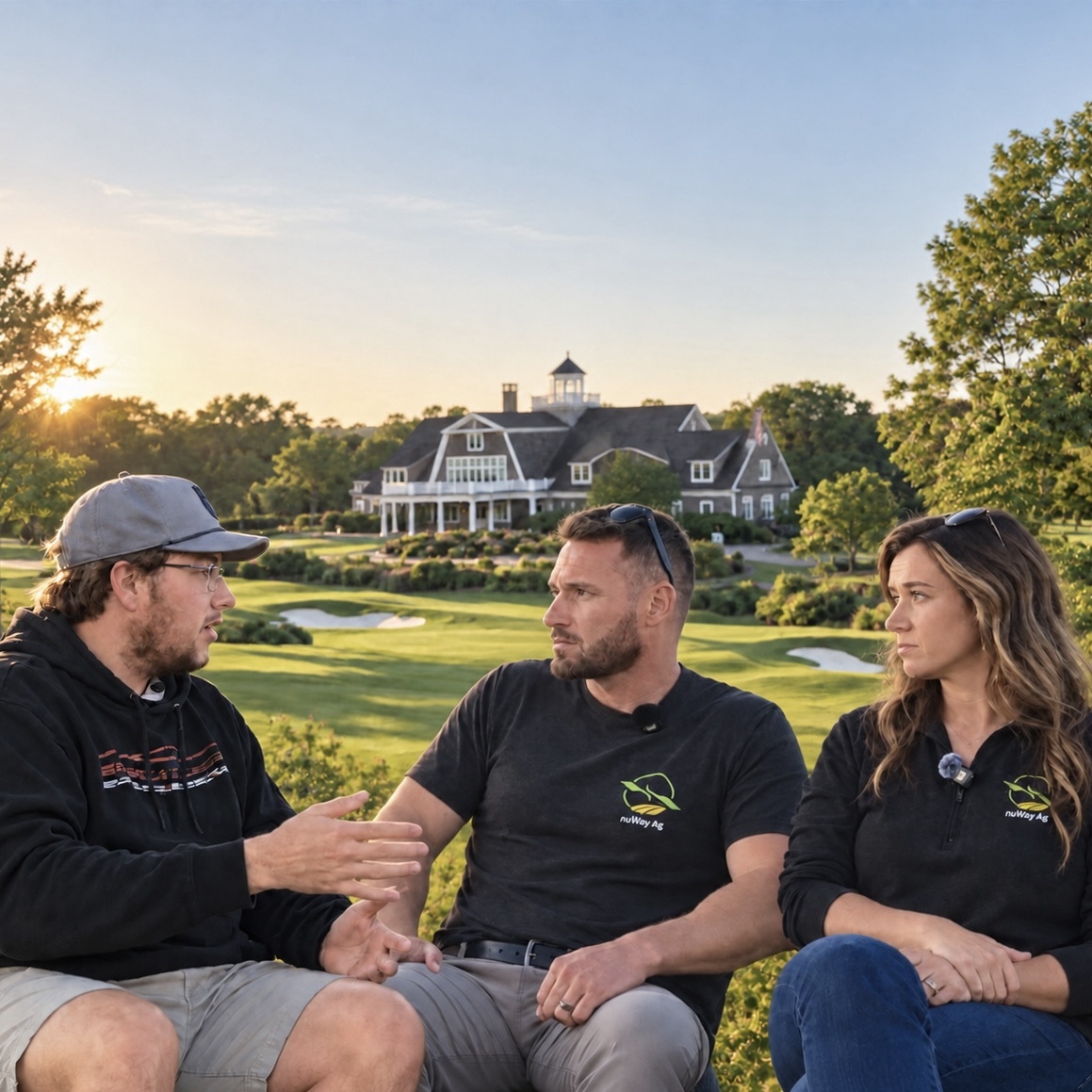
[00:00:00] Speaker A: All right, guys, welcome back to the podcast. It's going to be an interesting one. We are sitting at probably the nicest place that I've sat at to do a podcast. Now, I don't do many of these outside, but we had to. We. We were invited over to Shelter Harbor Golf Club, and we got to see their operation where they use spray drones on their course. And I was like, we have to sit down with Chris and talk about it, because I think it's so neat. I recorded a video, I don't know, a couple years ago, at some point,
[00:00:34] Speaker B: you or your friend, our boss, Mike, the superintendent or director of agronomy here, saw one of the drone deer recovery with the thermal drone. One of your very first videos.
You were in your truck, and then you. I think it was titled Something to do with Finding a Deer with the Thermal Drone and that it came up on his YouTube feed.
He saw it. He loved it because Mike is very.
He loves to hunt. And then he came to me because he knows that I. My background is in tech. So he asked me, like, do you know how to fly a drone? Have you ever done this? I'm like, I've. I've flown the DJI drones for many years, just recreational stuff. And that's how he started.
[00:01:19] Speaker A: Okay, so through thermal, he's seen the channel. Then at some point through that channel, he probably seen that I got into agricultural drones. Correct. And then you had mentioned that he did see one of our golf course videos. I think we were in Iceland. He had mentioned that. And then that's when he said, let's try this.
[00:01:37] Speaker B: Yeah. So that's basically the whole process. He's been a fan ever since he saw the first video with the thermal drone. We've used the thermal drone for many different things. And the wintertime, we like to see just the deer population. We don't hunt any of this, obviously. We just like to. He likes to keep a population count. And we've seen. We have some horticultural practices that we've done here to increase the deer population. Just naturally preserving wildlife areas and stuff like that.
So we've done that. And then we've also used a thermal drone to spot irrigation leaks early in the morning.
We had this very, like, trickle leak, and it was like maybe 50 gallons a minute. We couldn't pinpoint it anywhere. It was actually a mainline in the way.
[00:02:18] Speaker A: 50 gallons a minute is a trickle. Probably when you.
[00:02:21] Speaker B: Yes. At full capacity, we're at almost up to 200 gallons or 2,000 gallons of water per minute. When all of our pumps are running that does. That does about 40 to 45 heads. We tend to not push it that far because it is older system, but we will comfortably sit at 1800 gallons a minute on the irrigation system when we're doing. Doing what it's.
[00:02:45] Speaker A: So. So how big are those irrigation logs?
[00:02:47] Speaker B: The pumps themselves, they're 75 horsepower.
There's three of them in our pump house. We're going to upgrade our system next year. It's going to be 4, I believe, 85 horsepower or either 100 horsepower. And then we'll have a jockey pump with it. So that will push 25, 100 gallons per minute up to like 2700 gallons a minute. And that will help us just irrigate the course faster, especially during this. During the summer months, we have golf start at 7am and golf stops at 7:30. So we have between 8pm and 4pm, 4am the next day, because that's when we, the golf team comes in and starts mowing everything. So we want. We want to make sure that we have all. All the watering done before we get out there.
[00:03:33] Speaker A: So you guys call them the golf
[00:03:35] Speaker B: team, the greens and grounds maintenance, or
[00:03:37] Speaker A: call the golf team. Yeah.
Why are they called the golf team?
Because they're. They're mowing the golf course, then they're the golf team or.
[00:03:46] Speaker B: No, it's just because. Because we have the pro shop people that do the.
That handle more of like giving the bags out to the members when they're on the putting green or they're more focused on the members and stuff. We're more focused on the actual.
[00:04:01] Speaker A: Where the golf happens.
[00:04:02] Speaker B: Yeah, where the golf happens.
[00:04:03] Speaker A: Nice.
[00:04:03] Speaker B: I see the greens and grounds maintenance.
[00:04:05] Speaker A: I see for the guys or folks that are listening or watching on YouTube. And you see this lady next to me? That's my wife. If you guys haven't seen. Have we done a podcast yet? You and I?
[00:04:17] Speaker C: Not you and I. We did the one where it was me, Liz and Kayleigh, but we've talked about it.
[00:04:21] Speaker A: We had talked about just me and Karen, and we will. We will do a podcast at some point. But Karen's with us on this trip, and I told her that you should hop on and ask some questions if you have some for Chris.
So Mike said, let's get a spray drone and start figuring out how we can utilize it here at Shelter Harbor. Because you're using robots already on this course a lot in mowers. This is just another added tech.
[00:04:50] Speaker B: Yes. Mike, our superintendent, he's very open to exploring, expanding into New grounds.
We do a lot of different things. A lot of sometimes stuff that we try fails miserably, but we know that it fails. We don't want to be the course that doesn't try something because we're scared to do it. Mike always is trying to push the boundaries for me to explore more into the tech stuff that we have here so we can elevate the quality of cut on the grass and be up to date. We don't want to be behind on the eight ball for, for any technology stuff.
[00:05:25] Speaker A: Maybe someday I'll get to meet that mic. But that mic sounds a lot like me because I. I'm always trying to innovate, trying to educate myself, trying to push industry, push industry forward. Now that that'll cost me at times because I will be sharing at some point how the FAA is at my doorstep. But that's all right. How else are we going to get down the road further? You know, rules and regs and stuff are always behind on technology, but that's not for this podcast.
[00:05:56] Speaker C: I feel like innovation and regulation are two things that do not go well together. Very.
[00:06:01] Speaker A: Yeah, yep. That is. That's so true in the FAA space.
Okay, we'll just drop it there.
Anyhow, so what was the first thing that you wanted to use the drone for that you. You guys have been having a challenge with other equipment on the course.
[00:06:17] Speaker B: So with the drone specifically, it was more areas where we were hand spraying stuff. So we have. If you know any, if your viewers have any knowledge on golf course, they
[00:06:29] Speaker A: probably don't have any, but we'd love for you to share. Get techy.
[00:06:32] Speaker B: Get.
[00:06:32] Speaker A: Yeah, they.
[00:06:33] Speaker B: So we use a John Deere sprayer. We have the GPS sprayer that John Deere has 330 gallon tank and that's mostly for either sod farms or golf courses. And it's specifically designed for those applications.
[00:06:49] Speaker A: Yeah. And then that machine kind of looks like a gator. Like most people are aware of what a gator.
[00:06:54] Speaker B: Yeah. If you know what a John Deere pro gator is, just think of that. But instead of the bed, you have a 330 gallon tank on it. And then you have a RTK satellite on top that pings. And then you get the RTK GPS spraying capacity 1 millimeter up to or 11 centimeter accuracy on everything. So. And that's really important for golf course because we have areas where that we're spraying a product on some grass. It might be safe on one grass, but two feet away from it, it's going to kill the grass. So we need to be. Everything here has to be dialed in every single time we spray it. We can't be last laxadaisical here. Yeah, everything has to be dialed in every single time.
[00:07:33] Speaker A: Yeah. So the drone is for those rougher areas. And of course, you got to be careful on what product you're spraying, but it just makes it so a guy doesn't have to be in there with a backpack sprayer or try to take that machine. Because some of the. The hills you showed me, the machine's not going to work on this.
[00:07:53] Speaker B: Yeah, a lot of, A lot of the hills that you. If you've seen the video, it's all like very steep incline. We can't send a 330 gallon sprayer because you're working against gravity with how heavy the water is in the tank, let alone getting up the hill with it. So all that is usually done by hand. And with that, you're spending so much time on not useless things, but more things that you could be doing more detail work. And since we're one of the top golf courses in the country, we want to make sure that we can get the main things that we can get done, but we want to be able to focus on the little minute details to establish ourselves above the rest of the people.
[00:08:33] Speaker A: So you were sharing earlier as we were going throughout the course. It's made your applications faster. Yes, but then you also have to like, there's nobody here today. On Mondays, you're usually closed. Correct. But you know, you spray throughout the week.
You get here early in the mornings and. Yeah, just kind of walk me through what, what that would look like.
[00:08:54] Speaker B: So usually the.
If there's a certain spray that we don't want anyone to be around, your podcast users might know 2am, 3am spray. Get it done before people get here, even before the maintenance team here. So it's just me alone out here, just getting it done. That's almost the motto of golf courses. Just get it done.
We have a standard here and we need to live up to it every day. It's not, oh, we can take a day off here. If we take a day off here, that's. That's bad because then we're playing two days. Catch up on it.
[00:09:24] Speaker C: You're compiling it. Yeah.
[00:09:26] Speaker A: The equipment. You were brand new to a spray drone.
You were familiar with DJI drones as far as the, you know, the handling of a T.
What. How was that transition to go from a Mavic 4 Pro or whatever the small drones were to flying a T100.
[00:09:46] Speaker B: I'd say that it's just more daunting because when, if you've ever flown a T25, T50, T100, it sounds like a helicopter. It's more of the just looking at it and seeing like, oh, wow, this is a big aircraft and you don't want to damage it because they cost so much money. With a little drone it's more. You get to learn like the basic moving and everything. With the bigger drone it was more of just like almost a shock factor of it all. And once I got past that, it's. It's like riding a bike. Once you get the muscle memory down, you're good.
[00:10:16] Speaker A: So something we tell people that it's hard for them to watch it on the videos, it's hard to explain it or show it in a way that the system itself, the software that you run a spray drone on, the automation part of it is actually very user friendly and intuitive. Yes. How was that for?
[00:10:37] Speaker B: It was all, I'd say it was all basically the same stuff. If you've used DJI's residential stuff, if you use the little FPV drone, if you use the Mavic, if you use the old Phantom units, they're all basically the same thing. With the agriculture enterprise stuff, you just get more features with it. So the bare bones of it is still there in that it was easy to transition to that because the toggles and everything are basically the same. You just, you have more levels to it and you can do more stuff with the agriculture stuff. Yeah.
[00:11:10] Speaker A: What do you think about this?
[00:11:11] Speaker C: I just think it's fascinating because of how well kept a golf course needs to stay and how advanced technology has become to be able to do that and keep the maintenance up. And I was asking you earlier about like how long it would normally have taken to spray like those weird hillsides and stuff like that. And you had said usually that would take to get all of them like a week, but now you're finishing it within like three hours or something like that.
[00:11:37] Speaker B: Yeah. So usually a native spray or any other spray like in the video we sprayed the ponds. Usually just little nutrients for the ponds themselves.
No insecticide, no stuff like that. Usually you'd either have to go out in the pond and you're either on a little lifeboat or something like that.
But you just had to get it done because you need the pond to be good because the pond is using for the, for your irrigation. And if your irrigation water isn't good, then the grass isn't good. And if the Grass isn't good, then
[00:12:09] Speaker A: you don't have golfers.
[00:12:10] Speaker B: So it's, it cuts down so much time in that stuff and you, you get the benefit of the faster time, but you have the better quality because you can't get as in depth when you're going if you're just either hand tossing stuff in the pond or if you're just dumping chemical into the pond itself.
[00:12:26] Speaker C: Yeah.
[00:12:27] Speaker A: I didn't ask you on the video today, but I see you guys have, you know, big, nice tall trees. Have you done any application with the drones on the trees themselves?
[00:12:37] Speaker B: No, we have not.
We, we want to keep the native areas as native as we can. We, we really want to just stick to if it's grass turf related, we'll do applications maybe not with the spray drone with our other products, but like,
[00:12:55] Speaker A: but let's say there's a bag worm or something like that that moves in and starts, you know, damaging the trees. You'd probably entertain the idea or not necessarily.
[00:13:05] Speaker B: It would probably be case by case basis.
And it would come down to Mike.
I know that we, I just know that with the wildlife that we have here, we want to keep everything as natural as we can. Yeah, but any stuff like that or whatever is almost like a case to case basis because like certain times a year we'll have like a fungus or whatever. Like we don't want to spray the fungicide in February when the grass isn't growing. We want to spray it when the, the fungus is on the grass blade or whatever. So it's all case by case. And Mike has all the experience with it. He's been superintendent here for, I think this is his 17th year here.
He's been, he's the second superintendent here and he's been to the other top golf courses. If he's been at Marion, they just hosted a major event this year. Or Shinnecock, they hosted another event this year. If any reviews know anything golf related, he's been at all the major golf courses. He's worked at Augusta. He's done, he's done it all. So he turf related stuff. Mike is the person that you talk to.
[00:14:04] Speaker A: Yeah.
[00:14:05] Speaker B: That's cool.
[00:14:07] Speaker A: What would you want to share with say there are other golf clubs like this listing about the tech that you guys have adopted from your robot mowers to. You probably have more things that are tech related on the course that we didn't get to see today. But yes,
[00:14:26] Speaker B: just, I would say just be open minded to things. I know that at least in the golf industry, a lot of people are very.
It worked last year, so let's just do it again this year. But there's so much technology. Like for example, the robots that we have five years ago, the robots weren't really a big thing over here. Now, five years now there's more golf courses that are buying these robots because it saves. You got to think with a. Usually for our golf course here, we have almost 50, 50, 60 acres of rough. So that's two Ventrac mowers. So that's the lease or the payout or whatever. That's probably close to 100 grand right there. You have to pay two people to do it. And that take for here, it would take a day, day and a half. So we would start it Monday, go to Tuesday. But let's say if it rained on Monday, then we have to push it to Tuesday, Wednesday, Thursday.
And then you could start falling behind real quick. You start falling behind because it takes so long and you were only mowing the rough once per week and you'd have. The grass would be the perfect height. And then a week later, if you had rain, it's too tall, then you. Then you have to send someone with a tractor blower to blow it. So you're taking people away from stuff. The little minute details that separate the great courses and the best courses. We have more time to spend to be the best instead of just being a good golf course. You know, that type of stuff. And that goes with the spray drone too. Just any tech stuff. We've been fully invested in stuff. We're always trying new things. Like I said before, there's been stuff that's failed miserably. But then there's been stuff like the robots, the spray drone, and it's been revolutionary for us.
[00:16:01] Speaker A: So there's a lot of entrepreneurs that listen to the podcast and watch that are custom spray drone applicators.
Do you think there's a spot for a customer spray drone applicator in golf courses or do you think it's going to be more that the. The courses themselves will owe the equipment
[00:16:20] Speaker B: really depends on the area of golf courses because you might have. Every state has different regulations for even just drones drone spraying, or you have different regulations with all the other stuff. I would say the bigger use case for the agronomy side or like turf grass is either sports fields or sod farms. Sod farms are similar to normal farms, but it's wide open so you can rip a T100 all day and you wouldn't have any issues. Golf course if you're A link style type, of course. And you're wide open, no trees and everything. I'd go for it just. And you don't have to do your greens with it. I know that some people will be like, oh, I want my green spray like this. Well, you can spray your greens like how you've been doing, but if you start experimenting, you'll see that, wow, we're saving so much time, time and money. And you, you have more people that don't need to be stuck on those things or whatever. You can focus on the small details of everything.
[00:17:17] Speaker A: This course specifically. Is there any service that you guys do hire in or are you guys doing it all in house?
[00:17:24] Speaker B: It depends project. Like if it's a major project. When we were coming in up on the entry road where their clubhouses, there was the bunkers right in front. We did have a company come out to do something like that. But spraying robots, all that stuff is done in. We do as much stuff as we can in house.
[00:17:40] Speaker A: What about. So I, I was an arborist, trimming trees and stuff.
Are you guys doing that all in house as well?
[00:17:47] Speaker B: During the winter time, we'll do if, like there's a dead tree, we'll cut down the tree, stuff like that. We will have a company come out, they'll do limmings on trees.
Just local people that we know and can reliably call upon and stuff like that.
[00:18:03] Speaker A: But yeah, I'm just looking at your operation. You showed us all the equipment and I don't know, is this, is this normal in the golf industry where you have all your stuff?
[00:18:13] Speaker B: No, we, we are very fortunate that we have the, the budget. We have a great membership here that is willing to invest into these future technologies like the robots, like a new irrigation system. So we're very fortunate in that sense. And I know that, I know not every course is going to be able to spend, yeah. All the money on a T100. But if you're just.
Even if you just go demo it or go. At least try just using a normal drone or like a thermal drone to check for irrigation stuff. Like if it's a $2,000 thermal drone and you're able to find a leak and save someone 5, 6 hours instead of digging everything that's like it already pays for itself.
So. But no, we're very fortunate here that we, we have the financials for it.
Great membership here. Everyone's very nice. So it's not like we're top 200 in the country for a golf course, rating other courses at our level have similar budgets.
[00:19:11] Speaker A: So that we're sitting on a top 200 in the nation, correct?
[00:19:15] Speaker B: Yes.
[00:19:15] Speaker C: Wow.
[00:19:16] Speaker A: So in that 200, how far up on the 200 are we?
[00:19:19] Speaker B: I don't know the exact number. I think it's around 150.
In that range, we're definitely number one in Rhode Island, New England. We're right up there with the golf course ratings. And it might be. It's similar to other places or, like, colleges or whatever. The longer you're a golf course, the higher rating you are. So, like, Augusta is obviously going to be in the top five because it's been around for so long.
Or the places where they host the British Open, like, all those type of places, they've been around for hundreds of years. 100, 150 years. So, like, they. And they've been like this level for that.
That long. Our course was founded in. Started in 2004, so we've only been at it for 22 years. Okay. So. And we've. We've climbed up. We're consistently climbing the ratings, and that's in part, keeping the grass and everything at a high standard. Mike setting the level that he wants, everything in the membership wants, and investing in technology and everything.
[00:20:18] Speaker A: That's impressive because when we pulled up here, it's just looks and feels like it's been here for a long, long time.
[00:20:25] Speaker B: Yes.
[00:20:26] Speaker A: And it. That's probably on purpose.
[00:20:29] Speaker B: Yes.
The membership wanted to keep the existing routes like it. When you can. You might be able to see in the podcast right now the running walls, the rock walls, a lot of them are from the original native settlers, and the membership wanted to keep those in place. And then we've added some to just make it natural. We don't want it to come in here, cut down every single tree, and make it look like every single golf course. We want it to be unique. Southern Rhode Island. Like, wow. Like, everyone wants to come here.
[00:21:01] Speaker C: It definitely feels like a nature preserve.
[00:21:04] Speaker B: Yes.
[00:21:04] Speaker C: Like, it feels natural.
[00:21:05] Speaker B: Yes.
[00:21:06] Speaker C: More so than any golf course I've ever been on.
[00:21:09] Speaker A: It's definitely quiet out here compared to the golf courses that I've been to.
There's no, like, big roads next to you running past.
[00:21:16] Speaker B: Yeah.
[00:21:17] Speaker A: And all.
[00:21:17] Speaker B: And all that's intentional. The membership wants it like this, and we're going to keep on providing that for them as long as they want that.
[00:21:24] Speaker A: How did you get a job here?
[00:21:26] Speaker B: So, funny thing was, I have zero golf course experience. Before working at Shelter Harbor, I started. I went to.
I've grown up in southern Rhode Island. My Whole life I went to the University of Rhode island for software engineering, computer engineering, that type of field. So all tech related stuff. And in my sophomore year, going into my junior year is when Covid hit in 2020, 2021.
So I'm like, well, I can't do my internship now because everything's closed and we weren't virtual yet. So I started because my brother, my younger brother, his baseball coach was the superintendent here, Mike. So I went to one of his practices. He's like, hey, need someone to rake bunkers? I'm like, all right. I, I got nothing going on because it's Covid.
So I came out here and just fell in love with it and I've just been here since and I.
[00:22:17] Speaker A: So raking a bunker that would be like those sand pits?
[00:22:21] Speaker B: Yes.
[00:22:22] Speaker A: Would that be like the lowest point of an entry getting into a golf club?
[00:22:26] Speaker B: Yes. I was as bare bones as you can, bottom floor. And I've, I've been here.
This is, I'm going into my sixth season now and I've went from basic crew level. I was assistant in training, second assistant, was going to go into the first assistant role. But I diverged into the irrigation tech and to focus more on the irrigation because we have a new irrigation system going in which is very tech based and everything that's all phone app, everything's gps, all that type of stuff. And then the robots came out. So my job has focused more at shelter at least gone almost linear for golf course management and then it's shifted over to tech related stuff.
[00:23:10] Speaker A: Yeah. So would you say that the, your degree that you went to go get helped in any way or is this like just figure it out type of.
[00:23:20] Speaker B: It was definitely, it was helpful in the sense that I grew up around tech. I've always built my own computers. I flew the DJI drones. I've always been tech tech related stuff. I always grew up in it, so that definitely helped with that. But I was definitely thrown into the fire here. And it's. With these top golf courses, it's sink or swim. It's either you're here or you're gone. So you, you. It's a very fast ramp up or learning curve. And I was, after my first week, it was the aeration week. If any of your viewers know that, that's basically hell week in a golf course sense. That's 16 hour days, seven days, seven, eight days or whatever.
[00:23:57] Speaker A: So why, why, why the hours?
[00:24:00] Speaker B: Basically we shut down the entire course.
We're gonna poke holes into the ground, we're Gonna either pull the cores out of the ground or we're just gonna poke holes into the ground so we can help the grass breathe. Because with all the foot traffic on the golf course, all the members stepping on it, you create compaction. Compaction doesn't allow water to seep into the roots and you'll get dead patches of grass. So we're basically taking, we're taking all that firmness out, putting sand in, and that sand is going to level everything back out to normal and it's going to allow the roots to go deeper because there's no nutrients in sand. So we're almost intentionally, we're firming the grass, but we're pushing the grassroots down so there's more water below the sand because the sand is going to drain all the water down. So you're getting like a two in one. So you do. And you're doing that on everything you see here. That's including where the robots go, all the. Where the flags, everything.
So it's all the green gets aerated. Everything.
[00:25:00] Speaker C: Wow.
[00:25:01] Speaker A: Wow.
[00:25:01] Speaker B: Yeah, It's a whole process.
[00:25:02] Speaker A: So that happens every year?
[00:25:04] Speaker B: Yes, that happens every single year.
[00:25:06] Speaker A: Oh, wow.
[00:25:06] Speaker C: And it has to be done in a week because you guys open again.
[00:25:10] Speaker B: There's no, there's no exception. If it takes 20 hours, one day, it takes 20 hours. It's raining.
[00:25:15] Speaker A: Not usually.
[00:25:16] Speaker B: Right.
I've had one year that it's rained. We just switch our process. We're still out here for 15, 16 hours, but we're just switching the process. Maybe we're not pulling the course, maybe we're just pushing the holes into the ground. But it's still. We always do it. It's so beneficial for the grass to stay healthy.
Even though when you're out here and watching, you're like, oh, you're beating up the grass. Why would you do that? But there's so many positives with it that you just have to do it.
[00:25:41] Speaker C: So what is the process to get the green back to like your reopening
[00:25:45] Speaker B: day throughout the whole process, where we'll poke the holes, put the sand on top, groom it in lot of water, fertilizer. We'll cut back on the growth regulator. Growth regulator is so the grass can stay at the same height. So we're not cutting a lot of grass blades off. Because if you're cutting too much grass blade off, you're going to scalp it. And you scalp it and it's a 100 degree day out here. The grass is going to die. So the growth regulator is going to Keep it at that. It's not going to grow as fast. It's going to grow more roots than anything. It's going to have more either lateral growth or root growth instead of top growth. So we'll put fertilizer, put all the amendments or whatever, gypsum, zinc, like all of the macronutrients, micronutrients or whatever similar to like agriculture stuff.
We want to. We're basically helping the soil. Basically we're trying to help the soil heal so the grass can heal faster with the whole process.
[00:26:41] Speaker A: So how many people were here in season?
[00:26:44] Speaker B: The greens and grounds department will have between 30 to 35 some years we'll have 35 some years, we'll have 30. It just ranges in that year round. It's about 12, 15 guys.
Just the higher level people are assistants, interns. If they finish their internship in the fall and then get a job here afterwards. Me, the irrigation and the horticulturist. So it's, it's a very small crew in the winter. But with a place like this where the clubhouse open 24 7. So we need. If there's a snowstorm, we're out here plowing everything.
[00:27:17] Speaker A: Wait, it's open 24 7, so members come and just relax here?
[00:27:21] Speaker B: Yeah. Yeah. Yep.
[00:27:22] Speaker C: Oh, wow.
[00:27:22] Speaker A: Oh, wow.
[00:27:23] Speaker B: Yeah, there's a, there's a gym, everything. There's dining, all the dining might not be open right now, but there's a 24 hour gym.
There's at least gym access for them whenever they want it. So.
[00:27:32] Speaker C: And that's all built into the membership.
Yeah.
[00:27:35] Speaker A: Yep. Huh.
[00:27:36] Speaker C: Very cool.
[00:27:36] Speaker A: The actual building, we probably can't show it to him because we're, we have the cameras here. But it's crazy to look at this building and think that it's really not that old. But it. No, you built it to look like it's been here for many years.
[00:27:52] Speaker B: Yeah, we went with the Cape Cod, like cottage type. Like almost a warm, inviting, southern New England type of vibe.
If anyone's seen like a Cape Cod, the Nantucket type of housing, it's the same wood, shingles, that type of.
[00:28:07] Speaker A: Talk about Nantucket. Landon here is looking up about buying property there. But we saw it, it's probably out of our budget. Yeah. You know, there was one house there, the cheapest one was how many square feet is a.
[00:28:20] Speaker B: One bed, one bath, one bed, one.
[00:28:22] Speaker A: One million.
[00:28:23] Speaker B: And it was 760 square feet. Oh yeah. That's similar to this area. Westerly. Oh, yeah. Because we're, we're very coastal. It might not Be as crazy. Antucka. But we're. We're right there with you. It's.
[00:28:35] Speaker A: Dude, I. Flying in here. There's a lot of houses on the. On the shore.
[00:28:39] Speaker C: I did not realize I freaked out how like kind of the. I don't know if you call it marsh areas where the. You can still see like ground, but there's water. There's houses built out into that. That's crazy.
[00:28:52] Speaker B: Yeah.
[00:28:54] Speaker C: And their driveway like followed all the little land pieces.
[00:28:56] Speaker B: Yeah. A lot of those are all older houses. A lot can't be built like that now. It's all before.
[00:29:02] Speaker C: Wow.
[00:29:03] Speaker B: All that type of stuff.
[00:29:04] Speaker A: But. So you grew up in this area?
[00:29:06] Speaker B: Yeah, I grew up in Narragansett and then I have a house in Narragansett, but I live on property because I. I have to be here seven days a week.
[00:29:14] Speaker A: You live here?
[00:29:15] Speaker B: Yeah, there's. We have employee housing right down.
[00:29:17] Speaker C: Is that the cottages that you see?
[00:29:19] Speaker B: Yeah, when we were driving in.
They're all those houses we own.
[00:29:23] Speaker A: Okay.
[00:29:24] Speaker B: Yeah. The kitchen staff up here.
Mike lives here. All the assistants live here. I live here.
[00:29:30] Speaker A: Wow.
[00:29:31] Speaker B: The seasonal people live here. So basically the golf course is our life.
[00:29:36] Speaker C: What?
[00:29:37] Speaker B: Yeah.
[00:29:39] Speaker C: That's crazy.
[00:29:40] Speaker A: Okay.
Why do you have to live here?
[00:29:42] Speaker B: You don't need to. But when the higher up you go on the totem pole, the more responsibility and the more you. You're working here. So if you're like basic grounds level here, 45, 50 hours a week, like eight hour days during the week. And then you'll come in for a weekend day. The assistants may. Mike and that. Like we. We have to. We might only work six days a week, but that seventh day, only six days. Like we have to be. We have to at least be around here. Like let's say tonight there's a geyser. Like say the main line breaks or whatever. I have to come out here, isolate it and then start the repair. Because we have golf coming in tomorrow.
We have to get that repair before golf gets out here.
[00:30:22] Speaker C: It's like a never ending wheel.
[00:30:23] Speaker A: No way.
[00:30:23] Speaker B: Yeah. So we're on the clock 24, 7.
[00:30:26] Speaker A: Anything. I did not know that.
[00:30:28] Speaker B: Yeah.
[00:30:28] Speaker A: Even like that's this type of club.
[00:30:32] Speaker B: Yes, definitely. Not all golf courses are like that. This is because we're top of the line.
The members expect the most out of us, so we have to give them the most out of us.
I did not think of that.
[00:30:44] Speaker A: That there might be a geyser out there and then you show up and it's flooded.
[00:30:49] Speaker B: That would not be Good Geyser P failure. If a robot, let's say if a robot blade or a robot disc got cut off and start scalping the grass. I have to go out there, change out the disc and then we have to think of a plan on how we're going to repair the grass out there. Oh there, there's, there's so many different variables.
[00:31:05] Speaker A: Give me a scenario where hit the fan and you had to figure it out.
[00:31:11] Speaker B: You can act right where that pond is right over there. About Friday afternoon, about 4 o'.
[00:31:18] Speaker A: Clock.
[00:31:18] Speaker B: We usually try to leave here around 5. About 4 o'.
[00:31:20] Speaker A: Clock.
[00:31:21] Speaker B: About a 60 foot geyser just pipe blew out of the ground and we're out here for about 9 hours, 9, 10 hours just to get it fixed. And then we came in the next day at 4am to get back at it.
[00:31:33] Speaker A: So I've had so all hands on deck. How many people were trying to get that figured out.
[00:31:39] Speaker B: We had all the full time people out there. So we probably had eight people out there. Yeah.
[00:31:44] Speaker A: Like, like digging with shovels or digging with equipment.
[00:31:47] Speaker B: Digging with shovels because let's.
[00:31:49] Speaker C: You can't take equipment out.
[00:31:50] Speaker B: Yeah, we, I mean we could have taken the excavator out but it's from our shop and with how it would have taken an hour to get out there and there, there's other pipes, there's wires in the ground. We, we, we can't, we can't do. We have to?
[00:32:02] Speaker C: We have to. That's wild.
[00:32:04] Speaker B: Everything's very meticulous.
[00:32:05] Speaker A: That is wild. Those are the stories that I like hearing. It's like.
[00:32:09] Speaker B: Yeah, no they're not.
[00:32:09] Speaker A: You don't realize what goes into having an operation like this. And it takes people like yourself.
When you started talking to me on the video, it's like you're very passionate about taking care of this golf course.
[00:32:22] Speaker B: Yeah. And you, you have, you have to be when you're out, like you're almost giving your life to it because you're out here so much. And you either.
This isn't a career field that you can half, half be in half the out. You have to be fully committed. If you're not fully committed, you have to go to, you have to go somewhere else because this is a place where you have to be 100 every single day, rain or shine. Even on like rainy days. Like if it's torrential downpours, there's drains out here. The drains have to be pulled because if they're standing water there's going to be fungus on the grass. For the next day. And if there's fungus on the grass then we have to spray it so
[00:32:58] Speaker A: it that it's so wild.
[00:33:00] Speaker B: The only time that it's like 40 hours a week is the winter time and that's when there's no snow. But during the flood, the wintertime or whatever, if you see the little tea markers, the, on the tee boxes, we're doing those. We're repainting flag sticks, we're fixing bunkers, we're doing other projects. So we're busy. We're busy year round. There's. There's no real.
Like this isn't like a cushy like. Oh, just you can come in when you want or like you have to. It's every single day. It's a. It's reset every single day.
[00:33:30] Speaker A: Are you allowed to share what a golf membership costs here?
Can't share that.
[00:33:34] Speaker B: Not. Not on the podcast.
[00:33:36] Speaker A: No.
[00:33:36] Speaker B: Yeah, I cannot. I can. We have a very limited membership. They're amazing. I've. I've worked with some members and with robots especially.
Everyone's very nice here. It's very exclusive. It's not something that you. Even if you had the money to get in here, you're not. You can't pay your way in.
[00:33:56] Speaker C: I was gonna say, is there a waiting list like for a lot of places like this?
[00:34:00] Speaker B: Yeah, yeah, there. And then there is a waiting list.
I don't know the specific numbers. That's all clubhouse related stuff.
[00:34:08] Speaker C: I feel like a lot of memberships would get passed down to family. Is that a thing there?
[00:34:13] Speaker B: I believe that there is something like that here. I don't know to what extent. That's not really my department to say.
But it is very family oriented here. A lot of people grew up either in this area or have of. It's. You have the locals here, then you have the people that vacation here.
[00:34:32] Speaker A: Yeah.
[00:34:33] Speaker B: But it's all very tight knit. Everyone's. Everyone's working together to build a course like this.
[00:34:38] Speaker C: Yeah, Yeah.
[00:34:39] Speaker A: I, I feel very honored that we were invited to come here and that you guys bought equipment from us. I would like to meet Mike and shake his hand because obviously it started because of YouTube.
[00:34:51] Speaker B: Yeah.
[00:34:52] Speaker A: He's seen a video and then just probably building a relationship through my sales team that you guys were comfortable with making that purchase and then being able to come out on a, on a golf course like this and getting a tour. It's not something that the general public is going to be able to get.
[00:35:11] Speaker B: No. It's not something that you can't drive Your car up here, you'll be asked very nicely to leave. It's not something that you can just walk on. You have to.
You have to go through the right steps to be on the stuff. But, I mean, we've had amazing relationships. Just back and forth, customer service, buying the drone, all that type of stuff. It's all been excellent. So we couldn't be happier with the relationship.
[00:35:34] Speaker A: Landon's taking the Mavic 4 Pro out to get some money shots. So you guys can see how pretty this place is by watching the YouTube channel on New Way AG. And you'll get to see what this place looks like. But it's definitely very, very pretty out here.
So do people raise like. Like yourself? Do you have a family? Like, do you have a wife or kids or.
[00:35:55] Speaker B: No, no, I have a girlfriend. I don't. Don't have any kids or anything. I started here single and just. It is very hard for. This is more of a younger person type of thing.
[00:36:06] Speaker A: That's where I was going to go with it is like, can somebody in your position have children and do this type of work? Because it's like, you never know. Like, you have to get out there. Like, you're not gonna go down the road and, you know, be at a party and.
[00:36:22] Speaker B: Yeah, it is very regimented here. It's not for everyone. Like, we can't hire someone that has. We not discriminated against people that have five kids, but if they have other responsibilities, they can't. They can't work in my position because I have to be here. I have to answer my phone. If something breaks, I have to go out there and fix it because the membership needs it.
[00:36:42] Speaker A: So we just seen that drone fly over. If that would not be ours, what would be happening right now?
[00:36:48] Speaker B: A very friendly phone call to local authorities, and it'll be taken care of very quickly.
The nice way of putting it.
[00:36:57] Speaker A: That being said, I don't know if you guys have them already, but the drone detectors, have you looked at.
[00:37:03] Speaker C: You can get, like, handheld versions of them.
[00:37:05] Speaker B: We really don't have any. Our property is very secluded. Even locals or whatever don't like.
My mom has her own business, and she tells them that, oh, my son works at Shelter harbor in Westerly or Charlestown. And they're like, oh, where's that? Because, like, it's Rhode Island. You could drive from the bottom of the state to the top of the state in 40 minutes. And people have been here their entire life, 50, 60 years they've been here, and they don't know where this place is so. It's very secluded. We've never had, We've never had a drone here. We've had people. And we can talk about that maybe outside of podcast or whatever, that we may or may not have used the thermal drone from the video that you guys have when we got it to detect that person. But that's, That's a story for a different.
[00:37:50] Speaker A: Yeah, because I was gonna bring it up if you do have the. That type of issue. We actually were working with a company to build our own drone detector system that you can see exactly where the guy is standing, the drone, where the drone took off, where all. It's already flown, and it saves all that data for whoever needs to see it. But, you know, you have drones and some people don't use them for good things. And so, yeah, that's why I brought it out.
[00:38:17] Speaker B: Yeah. All the members know I've flown the, the Mavic3t here thousands of times. The members know that. They know me, my name. They know that I'm flying the drone for cinematography for the clubhouse. Maybe you have a wedding and they want videos of the clubhouse there. There's all different sort of thing. So they know because I, I make myself visible. I'm not going to be in the bushes with, in like hide or I'm going to put myself here. I'm going to show the people that I'm doing the drone. I look like I'm doing the drone. I make myself available. I don't want them to feel like they're being watched. Yeah, they're being watched. They're. Because it's their, Their, their sanctuary. They pay the money to be here to have the golf course and to have the experience here. I don't want to be a burden to them. And they just want their, Their space and everything.
[00:39:04] Speaker C: Yeah.
[00:39:04] Speaker A: How long do you think you'll do this work?
[00:39:07] Speaker B: I mean, I have all the energy to keep going. It's really how the space devolves.
If the robots take off, if the drones take off, if I'm open to any. Not saying that I'm going to leave or anything, but I, I think I've put myself in a situation where if I see something go that way, I can either follow that or I can advise it here and then we can grow into that field and I can pick and choose. But yeah, I mean, I'm very happy working here. I have no issues with anything like that because it's very stimulating to have. It's not, it's not repetitive. I have a different thing Every single day with all the jobs that I do. So it's not like, oh, I come in at this time. I do this thing every single day. It's all right. Maybe I'm trimming the teas or the. The t. The heads around the teas or the greens, or maybe I'm fixing. Changing robot blades, or maybe I'm fixing the irrigation. It's always something different. So it's very. At least mentally stimulating.
[00:40:03] Speaker A: So I don't know if you thought about this. The T100 also has a lifting chassis able to, you know, lift things.
Have you thought about any way that. That. That you could potentially use that down the road on the. The course here?
[00:40:19] Speaker B: Yes, but the regulators wouldn't like how I would want to use it.
[00:40:23] Speaker A: Okay. But it's coming. It will be legal to do heavy lift stuff with these drones once part 108 comes. Would some of those use cases be.
[00:40:34] Speaker B: I mean, even. Even if we can. If there's a dead limb or something like that, if we need to just push or like, just stuff like that, like simple little things like that. Nothing like super dangerous or whatever, but if we needed to get someone up there or like any stuff like that.
[00:40:51] Speaker A: Yeah.
[00:40:51] Speaker B: Nothing.
[00:40:52] Speaker A: Yeah. I wasn't sure if, like, taking sand out there or moving a boulder or getting fertilizer bags out there that'd be helpful.
[00:41:02] Speaker B: If I could carry a little pallet. And then if.
Especially during the aeration week that we just had, because there's. We're on over 400 acres of land. There's a lot of driving, as you viewers saw in the course or whatever. It's very expansive. We need cars that can go to and from fast, and there's a lot of driving involved. It's not like everything's tight. Every hole is manicured for it. There's. There's two or three holes that are next to each other. Everything else is very spacious. Spacious.
[00:41:31] Speaker A: I bring that up because often I say it on the podcast and I show it in videos. It's like, I don't think our brains grasp yet exactly what all drones will be used for. I believe that drones will be used for way more things than what they're being used for right now. It's just because you haven't seen it, you haven't thought about it, and then once you see it, you're gonna be like, gosh, why didn't I think of that?
[00:41:57] Speaker B: Exactly.
[00:41:58] Speaker A: Or I've been thinking about that for a long time, and I just never thought that drones could do that.
[00:42:02] Speaker B: Yeah, like, why you guys are here like with the golf course. Maybe there's a viewer that works on a golf course and there they thought, oh well, it's just agricultural. They spray corn or soybean or whatever and then they watch the video. I'm like, yeah, wait, we have an area out. Maybe we don't need the T100. Maybe we need the T25 and we already have someone that's licensed to do it or whatever. And then they can just spray stuff. You know, they're, it's, it's being open minded and pushing the boundaries.
[00:42:27] Speaker A: That's. Yeah.
[00:42:29] Speaker B: For all that type of stuff.
[00:42:30] Speaker A: Yeah.
[00:42:30] Speaker C: You had asked about the spreading unit. What is. Scenarios like that. You could see that that would be something that you guys might add in the future.
[00:42:38] Speaker B: Could be pond applications, could be spreading.
Not insecticides or anything like that. Everything to the bag label. Maybe it's a wetting agent. A wetting agent is basically you're putting it on the grass, it gets absorbed and it's going to hold the water more. And if you can hold the water more, the grass is going to stay more alive. Yeah. So if you can spray that, if you can get, have the T100 go 20 or maybe 15 miles per hour. A John Deere tractor. We're only spreading stuff at 3 miles per hour.
[00:43:08] Speaker A: I see.
[00:43:09] Speaker C: Okay.
[00:43:10] Speaker B: Because we, we want the, because the rate on certain machines or whatever, you have to go 3 miles per hour to get 50 pounds per acre.
[00:43:17] Speaker A: Yeah.
[00:43:18] Speaker B: But if you have the T100, you load up the trailer with whatever the things or whatever and everything's already mapped. So. And with the tractors you don't have using foam dots or whatever. And not everyone knows how to use a foam dot block patch or whatever, all that type of stuff.
So with the tech in the T100 or T100 or any of the DJI stuff that has the track lines and everything, you could dial in stuff like that.
[00:43:44] Speaker A: Did you guys get a spreader?
[00:43:46] Speaker B: No, we were, we were toying with it. It could be something in the future that we look into, at least for this year. Just how everything played out. It was just pond application like they saw in the video primarily.
And it's just experimenting with other stuff.
[00:44:03] Speaker A: Yeah.
The granule application, is that done throughout the year or is there usually it's
[00:44:10] Speaker B: this time of year specifically gypsum after aeration.
[00:44:14] Speaker A: Okay. So I wonder if we should just send you our used tank just for you to like try it out and figure out if it's going to work.
[00:44:23] Speaker B: Yeah, I mean, I mean if you send it to us, we'll. We can gladly try it. I know Mike would be fine with doing that.
[00:44:30] Speaker A: It's not. Yeah, because it's like, you know, I said earlier, some of this stuff is like, you don't want to go out and buy a bunch of equipment and then have to get rid of it. But obviously my company, we're always trying to innovate and try to figure out how this equipment can serve other companies better.
I think this could be one of
[00:44:50] Speaker C: those cases, and I think it's a great scenario to have like a demo unit so that you guys can use it and see if it's something that's actually like, feasible in this situation.
[00:44:59] Speaker A: Yeah, yeah, yeah, yeah.
[00:45:00] Speaker B: And we have the granular product. We. It could just be like how you were saying before, like, everyone's in their own way, and then no one's actually branched out to do it another way. And then when people see it that way, they're like, oh, that's another use case. So then we could spend more money on either drone technology.
[00:45:16] Speaker A: So I'm looking at how nice and green this grass is.
Is most of that fertilizer done with liquid or granular?
[00:45:24] Speaker B: Everything?
95% of applications here are done liquid. Okay. Because you get better soil contact. You're getting directly to the grass blade.
[00:45:36] Speaker A: Okay.
[00:45:36] Speaker B: Just a whole bunch of positives with that and certain products you want to be pushed into the ground. There'll be certain scenarios where we're going to. We use granular.
[00:45:45] Speaker A: It's.
[00:45:45] Speaker B: We could go fully liquid, but there's other times that we want to use a granular for some things, it's just. But primarily it is all liquid and it's a whole, whole bunch of stuff in the, the liquid tanks that we spray.
[00:46:01] Speaker A: Okay, well, this, it's been good.
What's the latest that you've worked?
[00:46:05] Speaker B: Like, if, like my first week here, no golf course experience, I put in 103 hours.
[00:46:14] Speaker C: Wow.
[00:46:14] Speaker B: I never had worked over 35 hours of my week. My first week. 105 hours.
[00:46:18] Speaker A: Did that now make you want to quit?
[00:46:21] Speaker B: Surprisingly, no.
I was, I was like, so tired. I'm like, I mean, it wasn't that bad. Maybe, maybe, maybe I'm.
[00:46:28] Speaker A: Maybe it'll get better.
[00:46:29] Speaker B: Yeah. Cuz everyone kept saying like, oh, it's just this week or whatever. I'm like, all right, well, I'm at the ground screw. Like, maybe it's just like this because I didn't know the process of the aeration. I didn't know any of that stuff. So if it was like that, are you salary or. No, no, no. I'm out early.
[00:46:45] Speaker A: Oh. So 103 hour week, not too bad.
[00:46:49] Speaker B: Yeah, no, it was a nice paycheck for a first week or whatever, but it was definitely working from before the sun comes up to after the mosquitoes start biting you at night. It's very, it's a very big culture shock going. And especially coming from a desk job working at a local government, 30, 35 hours a week or whatever at a desk.
[00:47:07] Speaker A: Not outside. You were not outside and then boom, you're out.
[00:47:10] Speaker B: Yeah, I went.
[00:47:12] Speaker A: Shocking.
[00:47:14] Speaker B: Oh, I was, I was purple. I was purple the first week because I. No one told me that it was going to be like that. It was just. I got, I got literally thrown into the fire, but.
[00:47:22] Speaker A: Oh my gosh.
[00:47:24] Speaker B: But I think it was because I was open minded. I didn't know what I was getting myself into at least coming here. And I know not every course is going to be like that. This, it's obviously an exception here because we're top of the line. We want the members to be happy, but we need to be able to get stuff done.
[00:47:39] Speaker A: So.
So you took on the, the drone, you know, side of things here.
Do you think that's something as you guys get it more dialed in that you'll have more drones and then you're going to teach people or you're going to kind of keep it small scale and have, you know, one guy run the drones?
[00:47:59] Speaker B: Probably just me for now. Unless we can find someone that's the. At least I'm sure that you guys have. I've seen it or whatever. Finding the right person for specialized stuff or whatever is really hard. You have to pay them really well to at least come here. And then some people don't like the environment. So it's. Right now it's probably just going to be me and just localized stuff like the pond, stuff like that and then maybe expand into it. But there's definitely a business for someone, I would think specifically for sod farms because they're wide open and if you, if your area has golf courses that are open to spray drones or whatever, it could definitely. Yeah, it's definitely an option.
[00:48:39] Speaker A: But. But as far as Shelter harbor, you guys are probably going to keep it small scale. You're not looking to add a team to this?
[00:48:49] Speaker B: No.
With how turf grass applications have to be.
Most of our applications are still going to be done with the John Deere sprayer because they're specifically designed for golf courses and that's Fine. DJI might not want to go all in on golf course or whatever because it is a very niche or whatever.
[00:49:09] Speaker A: Very niche, very niche. So. But for this operation specifically, one drone might be plenty for you guys.
[00:49:15] Speaker B: Yeah.
[00:49:15] Speaker A: Do you think that most courses in the future, if they have the funds, will have a drone just because it's a versatile tool?
[00:49:24] Speaker B: I wouldn't see why not. I think other courses would benefit more from a drone than our course, actually. Because a lot of other courses, they're not as strict on what you can do or don't have the.
They don't have the standards or whatever for like they could just be like a public course or whatever and they only have eight people on a crew. And if they don't have anyone that can spray, maybe they just have one person spray at night. They hire someone to spray at night and just bang it all out. But at least here it'll.
For now it'll just be me. Unless I can find someone. Yeah, that'd be great.
[00:49:59] Speaker C: What do you enjoy doing the most in your position?
[00:50:03] Speaker B: I really like the robots.
I there we have 45, 42 robots here. I do robots, I have robots at my house, I have robots at my neighbor's house. I have robots for. I probably control 100, 120 robots just, just on me outside of work.
And so it's, I am stretched very thin. And yeah, I'm always, I'm trying to get as much tech stuff. I'm just trying to branch out because my, maybe my golf experience or whatever because like maybe another golf course would be like, oh well, he doesn't have a degree in turf, but he has all this other stuff. So that I'm trying to expand my knowledge in the tech related stuff. So that could either in the future or I can just keep expanding here, all that type of stuff.
[00:50:47] Speaker A: So you do a lot of robot mowers here on the course. Do you think robot mowers will be used in normal residential yards?
[00:50:55] Speaker B: Yes, specifically higher end either. HOA places would benefit greatly from them because one, I know people are paying at least in our area, up to like 150, $200 just to mow their grass once a week. The mowers themselves, they get the residential one. The Most expensive ones, 3, 500 bucks, you pay it off in a year after paying. If you're paying 200 a week times 30 weeks, you do the math on that. The robot pays for itself.
[00:51:23] Speaker A: Yeah.
[00:51:24] Speaker B: And then it's. And the robot just works.
[00:51:26] Speaker C: Yeah.
[00:51:26] Speaker B: You don't rain, shine, rain, shine. They're not going to argue with you, not going to back talk you.
[00:51:31] Speaker C: And it makes lines.
[00:51:32] Speaker B: Yes, it makes.
[00:51:34] Speaker C: I've been converted.
[00:51:35] Speaker B: Yep.
[00:51:35] Speaker A: Yeah. So Karen didn't think that it makes lines. And I've been telling her, let's just get a.
A robot mower. I just want one because I think it's cool.
[00:51:43] Speaker C: Yeah.
[00:51:43] Speaker B: Yes.
[00:51:44] Speaker A: Like sometimes you just gotta get something because it's cool.
[00:51:47] Speaker C: Yeah.
[00:51:48] Speaker B: And that was kind of the thing here. When we got them, we started. We had a demo unit right on here.
Mike had. Saw one at a turf convention and he was like, yeah, I mean, we can do a demo unit or whatever. And just like the cut quality on them is amazing. But there's so many beneficial from an agronomy or just turf health in general. Because the mower is mowing every single day. You're not the. The grass blade standing upright. If once your grass blades bend down, you're going to get water on top. The water on top is going to cause fungus. So we've. We've eliminated so much fungus on our short course. We used to get dollar spot and red thread all throughout our thing. And it was because that we could only mow that maybe once, maybe twice a week. But the grass is growing so much because we're putting fertilizer and all that stuff with the robots. We don't have any of that over there. It's all because it gets mowed every single day and the grass is sticking up. When the grass sticks up, the water is going to drain better. The sunlight's going to keep the grass and roots healthier, and it's just. It's a net positive on every front.
[00:52:50] Speaker A: Yeah, that's good. Well, we could probably chat for a while. I appreciate you sharing everything today.
I want to say thank you to Shelter Harbor Golf Club for allowing us to come out here and see, see how drones are changing how your guys's operation works. And thanks so much, Chris, for showing us around.
[00:53:09] Speaker C: Thank you so much.
[00:53:10] Speaker B: Glad that we could get this figured out. And I'm so glad that we went with a reliable company like you guys and got our drone from you guys.
[00:53:17] Speaker A: Thank you.
[00:53:17] Speaker B: Appreciate that amazing support with you guys and anyone that's on the fence with it, go with them. Yeah, it, the support. Everything has just been amazing.
[00:53:26] Speaker A: Appreciate that. Thank you guys. If you got want to see the video where we came out here to prove if spray drones actually work on golf courses, make sure to watch that video on our YouTube channel, New Way AG. But that's all we got for you guys today. Make sure. Do you have something else?
[00:53:42] Speaker B: I have one thing. If you guys want more content from Shelter harbor, if you. We have a Instagram page at Greens and Grounds on Instagram.
[00:53:52] Speaker A: Greens and Grounds.
[00:53:53] Speaker B: Greens and Grounds. Just all. All lowercase on Instagram. You'll see the day to day of an assistant on the course.
[00:53:59] Speaker A: I love it. I'm. I'm glad brought that up.
[00:54:01] Speaker B: Yeah.
[00:54:01] Speaker A: Because you had told me that earlier, but slipped my mind.
[00:54:04] Speaker B: Yeah. If anyone wants to see, like, how a top 200 golf courses ran, follow that page. He posts all the time. You'll see a couple videos of the drone, but if you're more on the turf side, follow that page and you'll see more of the behind the scenes
[00:54:18] Speaker A: of what we do.
[00:54:19] Speaker C: Very cool.
[00:54:20] Speaker A: There you go.
[00:54:20] Speaker C: Yeah.
[00:54:21] Speaker A: Now you know where to find him. All right, guys, that's all we got. Make sure to subscribe to the channel, give it a thumbs up, and we'll see you guys on the next one.