Episode Transcript
[00:00:00] Speaker A: All right, guys, so on today's episode, it's a little unfortunate we started recording this and realized that about 13 minutes into it with Josh from Kansas. As we're going to get into this episode, you're going to, you know, learn who Josh from Kansas is. But it's a little unfortunate we didn't have the audio recording to the rogue. We're going to try to together best we can using the cameras. But so the first 13 minutes or so of the audio is not going to be as good as the rest of it will. But so get into the episode. All right, guys, welcome back to the drone on show. I'm excited for this one. Again, we. I'm gonna do this. I have to do this. We're talking with Josh from Kansas. That's right, Josh Lavalley.
Sorry I had to do that because, you know, we're gonna talk about it. Probably there was a video that was posted. You had not that good of an experience with some drones. But you know, let's not just jump into that right away.
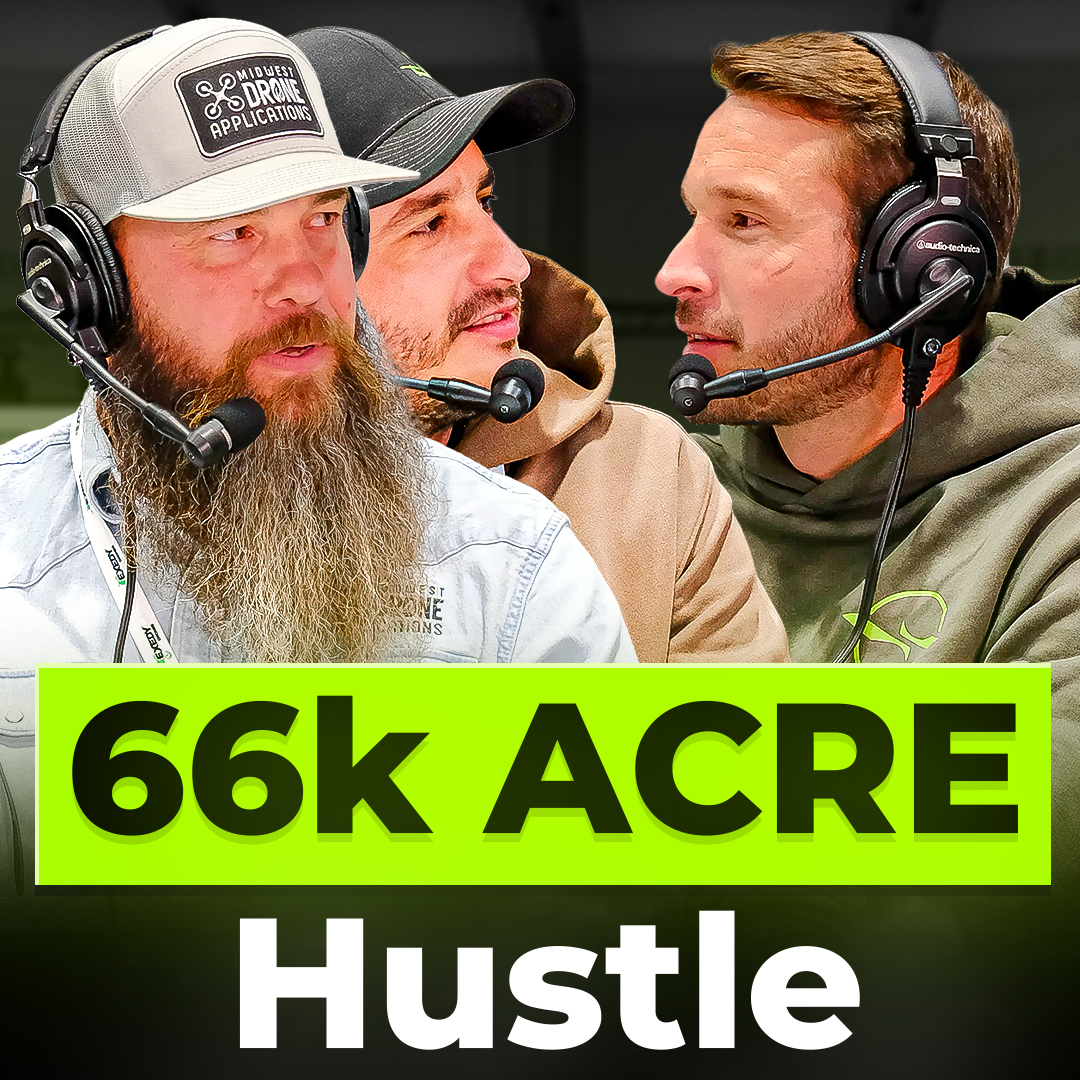
You guys, cover of acres using spray drops. How many did you do last year?
[00:01:00] Speaker B: We do. So last year we were right at 66,000 acres. That's insane.
Yeah, but of course, I mean I've got a. We've got a team.
[00:01:11] Speaker C: Right.
[00:01:12] Speaker B: It's not, it's not like I'm going out with myself doing that. So I have expanded myself first T40 from you.
23, I believe.
[00:01:24] Speaker A: I believe you were one of. One of the first.
[00:01:27] Speaker B: Probably like the second guy.
[00:01:28] Speaker A: Yeah. Yep.
Yeah.
[00:01:30] Speaker C: So I think I told you in
[00:01:33] Speaker B: conversation maybe the last couple days that, you know, that drone is now sitting in my shop. It's the O.G. it will probably go into the MDA museum here. I was gonna say about 22,000 acres on it.
Never crashed.
[00:01:48] Speaker A: Never crash. Never crash.
[00:01:51] Speaker B: Now all eight motors went out this year within about a five week period.
But the drone never crashed.
So we've got eight motors, right?
[00:02:04] Speaker A: Yeah, yeah, yeah.
[00:02:05] Speaker C: Not like they all went out at
[00:02:06] Speaker B: one time, but, you know, so motor. You know, basically they reach their lifespan is what we found out. Somewhere between 13 and 15,000 acres.
You know, drone get the warning on the controller, whether it's motor overheating or whatever, ultimately motor goes out.
[00:02:27] Speaker A: So did you have most of the
[00:02:28] Speaker B: errors like happen while it was in
[00:02:30] Speaker A: flight or was it like drone plan
[00:02:32] Speaker B: that no would take off?
[00:02:34] Speaker C: So every. Every motor on that drone went out while in flight.
[00:02:39] Speaker A: So did it give you any kind
[00:02:41] Speaker B: of like error before or just stop?
[00:02:44] Speaker C: Yeah, no, it would. It would give an error.
[00:02:47] Speaker A: So you. You knew it was coming.
[00:02:48] Speaker B: Yes. Yeah. Yeah.
[00:02:50] Speaker C: And. And I wasn't with a one flying.
One of my.
[00:02:54] Speaker B: One of my pilots was. And, you know, then I would get the call, hey, you know, the motor went out. So obviously sourcing the motor a later, a few weeks later, whatever it was, you know, it was just one after another, but after a month, five weeks there, period, like changed all eight motors on it, and I was like, heck,
[00:03:16] Speaker C: you got a new drone now.
[00:03:19] Speaker B: Good to go for another.
[00:03:20] Speaker D: Another 10 or 15,000.
[00:03:21] Speaker C: Yeah, yeah.
[00:03:22] Speaker B: And ultimately he put another 5,6000 acres on it. After that, all that happened.
[00:03:29] Speaker A: Yeah. So I got to know Josh from the original drone deer recovery.
What was it called at that time was like a licensed operator. Licensed operator, right. You were in that group.
[00:03:41] Speaker B: I believe I probably still have some stickers or.
[00:03:44] Speaker A: Yeah, you know.
[00:03:45] Speaker B: Yeah, so.
So, yeah, that's. That's how I got started in drones was you and drone deer recovery.
[00:03:54] Speaker C: So, you know, a little of my
[00:03:56] Speaker B: background, 20 years in the.
[00:03:58] Speaker C: In the army, retired in 2020.
[00:04:01] Speaker B: And then, you know, you kind of take some time off and then you're. The question is, you know, now what
[00:04:06] Speaker C: am I going to do?
[00:04:07] Speaker B: When I got.
And you know, you were ripping on social media with recovery and looks kind of cool.
And, you know, at that time, it was just you then you were looking at. You had such an interest.
So then you were looking at how do I expand to meet the needs.
And that's when I contacted you and ultimately, you know, come to your place and met the team and we did some training.
Right, right. It's like another lifetime.
[00:04:44] Speaker A: Yeah. So you bought a 330T, you came, got licensed. We started this whole program about being a drone recovery license operator. You go home. It was not too long after.
[00:04:59] Speaker B: No. So within weeks.
So I think, I think maybe I got the drone in February, March. I think the training. The reason I remember was in April with.
It was, you know, Tam's day, she came out there with me.
So. Yeah. And soon after getting back, the Kansas Game Commission had changed their mind.
[00:05:24] Speaker C: Right.
[00:05:26] Speaker A: Yeah. Because they told the people. They told you.
[00:05:30] Speaker B: Yeah, yeah. So originally I, you know, I talked to one of the game board members saying, I'm thinking about doing this.
They knew you, right?
[00:05:39] Speaker C: They're like, oh, yeah, we, you know, we follow.
[00:05:41] Speaker B: Follow that on social media and we understand it. And at that point, I'm looking at doing it issues. Anything I should know? Is it legal, illegal? Because there was some gray in the regulations about it.
But yeah, then ultimately, I think There were, you know, there was so much more interest that came directly after me
[00:06:05] Speaker C: that they were like, oh, wait a
[00:06:08] Speaker B: minute, you know, maybe, maybe this is
[00:06:10] Speaker C: a little too much.
[00:06:13] Speaker B: They just didn't have anything in place, policies and regulations on what they wanted to do with it. And of course, that sort of technology and not knowing fully the ins and outs their mind is law enforcement goes to how can it be used for bad versus trying to use it for good.
So ultimately it happens for a reason. Right. So that's when I, you know, I get back with you and Kevin and I'm like, ah, well, Josh from Kansas is no more on this.
[00:06:49] Speaker C: Right,
[00:06:51] Speaker A: sorry. I laugh because Josh from Kansas. We haven't told him exactly why.
[00:06:55] Speaker B: It's Josh.
[00:06:56] Speaker A: Yeah.
[00:06:56] Speaker B: You know Tammy, my wife, when we were there, you had the xag. Yeah, we carried it out of the garage.
[00:07:05] Speaker C: We looked at it. You were fumbling, you know, with the. Trying to figure out, well, you did
[00:07:11] Speaker B: a quick demo across the yard and back. And Tammy said, you know, either then or shortly thereafter, she's like, that's your.
Well, then it just so happened the deer recovery wasn't going to be legal in Kansas. And you all assisted. Like my drone package, the 30T, we kind of sold to it. The next guy, you know, coming on board, I believe.
[00:07:37] Speaker A: So we helped you sell it, or you sold it.
[00:07:40] Speaker B: You connected me with a guy that was wanting to do join your team, I believe he's from Illinois.
[00:07:49] Speaker C: And.
[00:07:50] Speaker B: Yeah. So you connected us. I sold the drone to him. And then it's later on, maybe not even that long, is when you had switched to the T40. Then.
[00:08:03] Speaker A: Okay,
[00:08:05] Speaker B: the XAG went ha. Bam. Yep.
Kind of, you know, disassembled itself. So.
[00:08:13] Speaker A: How does Elon say it? It's a rapid, unplanned. Rapid disassembly.
When his.
[00:08:19] Speaker C: That's exactly what it was.
[00:08:21] Speaker A: It was.
[00:08:22] Speaker B: Yeah. So I. I got the first. First T40 from.
From you.
[00:08:28] Speaker C: Jason and I were talking earlier that
[00:08:30] Speaker B: the drone showed up on a Wednesday and two days later, Friday, I was on a contiguous 628 acre field. Was my first field out of the box. I'd had the drone for less than two days, no training.
[00:08:48] Speaker A: How much did you fly before you
[00:08:49] Speaker D: actually went to the field?
[00:08:50] Speaker A: Did you practice, spray, anything?
[00:08:52] Speaker B: So I took it out in my back 40, which is actually almost a
[00:08:58] Speaker C: back 40, and I had, I don't
[00:09:01] Speaker B: know, thigh high grass at that time. It hadn't been put down for hay yet.
And so I fill it up with
[00:09:11] Speaker C: water and I map the field and
[00:09:12] Speaker B: I send it out, it's doing its thing and it's like, man, the battery's
[00:09:18] Speaker C: getting kind of low.
[00:09:18] Speaker B: That thing should figure out it needs
[00:09:20] Speaker C: to come back anytime, you know.
[00:09:22] Speaker B: And I was like it's not coming back.
So it landed it in the grass. And I was like, okay, well I gotta find the setting that I didn't,
[00:09:35] Speaker C: I, I, you know, I had, of
[00:09:37] Speaker B: course I'd seen some, watch some videos but it was all self taught. Yeah. I was telling Jason, I, I got
[00:09:44] Speaker C: on that field and I, I learned quickly.
[00:09:47] Speaker B: Lucky enough that I, I didn't crash at this point. I wouldn't have it any other way. It was school of hard and rocks. Yeah.
[00:09:53] Speaker A: Yeah.
[00:09:54] Speaker B: Now I, the growth of my team. Like I loathe bringing people into the business.
But I also love the teaching, handing
[00:10:05] Speaker C: off the knowledge and you know, all
[00:10:08] Speaker B: the time that I've had on sticks to them because you don't know what you don't know. Yep.
[00:10:14] Speaker C: You know, and you're putting a lot
[00:10:17] Speaker B: of money in the air and there's, there's no sense in giving a drone to someone and putting them out there, there and doing something crazy right off the bat that could have been avoided.
So that's a big part of my team. Is that initial training.
[00:10:38] Speaker A: Yeah.
So then you start. Was this an actual job like a 6 20?
[00:10:43] Speaker B: Yeah, yeah. 628 acres. Just started off with river, you know, and now knowing more about the area that I'm in, I think that had to be the biggest five gallons and
[00:10:57] Speaker C: it just happened to be my first.
[00:10:59] Speaker A: Okay.
[00:11:00] Speaker C: And of course. Right. So not knowing what I didn't know at the time. Well, you don't fill up the T40 doing two gallon work and send it a mile and a mile back. Right. So I'm like, well okay, that, that's not going to work. We're, we're half a mile out and we're empty.
So you know, I figured a lot out. The field obviously was not efficient and I didn't, I didn't do it in record time, but nonetheless I partitioned it up after I figured some things out and I, I sprayed it in quarter sections with the half mile runs and ultimately succeeded.
[00:11:37] Speaker A: Huh.
The newer drones, you can make that run now though.
[00:11:42] Speaker C: Easy.
[00:11:43] Speaker A: Yeah.
Because they're faster, carry more and you can, you can go a mile down and a mile back.
Hmm. I was talking to a guy earlier. He's doing half mile sections and that's literally all he knows. He doesn't even know anything else. It's either a Half or a three quarter mile run. That's so crazy. Yeah. Yeah. The efficiency and productivity would be through the roof.
[00:12:05] Speaker C: Yeah.
[00:12:06] Speaker A: So what was, what was one of the biggest challenges just to learn the system for you?
[00:12:12] Speaker C: I guess it's a great question. It's been a minute.
[00:12:15] Speaker B: Yeah.
[00:12:15] Speaker C: You know, thinking back to, to that time, what, what was the, what was the struggle? I mean it was just so new that what helped me, I believe right out of the gate was that was the same controller as the 30T.
[00:12:28] Speaker A: Yeah.
[00:12:28] Speaker C: So at least I knew the fundamentals. I knew the fundamentals of the operation of the controller.
[00:12:35] Speaker A: Yeah.
[00:12:36] Speaker C: Then of course everything else, the, the settings, I don't know it as you well know. It's the most intuitive system that there is.
Now that, now that I know what I know, I guess the settings would have had to have been the, the main thing, like what settings are you going to put in there? And they're going to stay the same.
[00:12:57] Speaker A: Yeah.
[00:12:58] Speaker C: And then what settings are required for a field that's presenting obstacles or presenting challenges? Well then what do you change? What are you changing the settings to? To keep yourself safe. So I think that was probably just knowing the settings and what they meant, I guess.
[00:13:15] Speaker A: Yeah.
[00:13:16] Speaker D: Yeah. It's just, I remember when we learned first, it's like a whole new system and you just don't know something you don't know.
[00:13:22] Speaker A: Yeah. So. So like how did you know what swath or rouse spacing to set it? How'd you know how high to fly?
[00:13:29] Speaker C: A phone call to Agri Spray.
[00:13:31] Speaker A: Okay. So they just, they recommended if you're doing, you know, some.
[00:13:35] Speaker C: I, I told them what I was going to be spraying and you know, at that time, so. So Agri Spray was two hours down the road.
[00:13:44] Speaker A: Yeah.
[00:13:44] Speaker C: And so that was, you know, and they were selling DJI just, just like you were and so proximity wise, you know, that, that started that relationship with them and but to answer your question, yeah, it was just a, just a phone call, like, hey, I'm, I'm doing this.
This is what I'm. What I'm spraying. It's a. And fungicide on corn.
Excuse me. And you know, they gave me height, swath width, nice, you know, that sort of thing. And you know, ultimately it turned out, turned out great.
[00:14:15] Speaker A: Yeah. I mean, how, why do you think your company grew so fast?
[00:14:19] Speaker C: You know, I mentioned earlier being military the, you know, first year myself, the second year I had a couple, just a couple guys join the team.
One was a military buddy of mine that we, we had retired about the Same time.
And you know, it was one of those things where we, neither one of us really needed to, to go out and seek some, you know, high paying job. We obviously could if we wanted to, but we were, we were more, let's relax, let's spend some time with family, let's be our own boss.
[00:14:51] Speaker A: Yeah.
[00:14:53] Speaker C: And that, you know, he had, my military buddy, had some, some young kids, you know, so kind of the Mr. Mom thing, you know, a lot more time with dad and. But then, you know, you kind of find yourself kind of missing a sense of purpose. And so I believe that's kind of what brought a couple of my military buddies on board was just, you know, kind of getting that sense of purpose and doing something you enjoy and ultimately, you know, providing for your family. Yeah, I went from myself to three, well, two others and myself the following year. And then I exploded to 12.
[00:15:26] Speaker A: Yeah.
[00:15:27] Speaker C: And I think the 12.
[00:15:29] Speaker D: 12 guys or 12 drones.
[00:15:31] Speaker C: Yes.
[00:15:34] Speaker A: Yeah.
[00:15:34] Speaker C: You know, again, I've got some, I've got some military folks, I got some, some college buddies that have been through, you know, whatever career they've done from, from college to now retiring, you know, got a buddy that retired from the Forest Service, you know, Walmart for 30 some years. And it's just, it's a change of pace.
We're, you know, we go hard from mid March to probably through October. The way I'm set up is, is my team is, they're, they're contractors. Right. So they, they don't have to, you know, show up for work at nine o' clock and go to five and clock out. Like we have the acres that, that's what, you know, MDA does is we, we gather and provide the acres to these guys and they, they can do as much or as little as they want. They still, you know, they are working for themselves and it just gives them the leeway that they need to, at this stage in their life kind of take a step back from working so hard or working for somebody else and doing their own thing. But, you know, that 66,000 acres in a year, you know, that I had somewhere between 10 and 12 guys throughout the year. Some come on a little further down the road into the season. But you know, the guys that wanted to go hard, you know, they went hard. They could cover all the acres that they wanted and all the acres that they could. And then you had the guys that could plus me up when we had bulk acres. So, you know, in one instance we got a call for in northern Oklahoma, they were trying to get wheat out of the field, some of the best wheat that, you know, those farmers had maybe grown ever as far as quality wise. Quality wise. And they were just getting rain and rain and rain and rain. And so we were called into, or we were asked if we could, you know, at that point, grass and weeds were coming up through the canopy of the wheat. And, you know, they wanted to know if, you know, can we basically burn it down so that when it does dry enough and hopefully the. The wheat didn't sprout in the head in that time that they could get in there and. And harvest it without all that green and extra moisture and then being docked at the co op.
[00:17:51] Speaker A: Yeah.
[00:17:53] Speaker C: And so, you know, we were told, hey, there's, you know, thousands of acres. Like, farmers had talked about it and like, hey, well, if you can get drones here were in. And I showed up the next day with nine drones.
[00:18:06] Speaker A: Wow.
[00:18:06] Speaker C: And. And we went to town for, you know, a couple weeks.
[00:18:10] Speaker A: That's sweet.
[00:18:11] Speaker C: And it was a success.
We didn't know going in how. How well it was going to work, or would it work, or would they.
What we didn't want to have happen. And we actually, we checked every field before we started, and we made sure that the producer and the landowners were on board as well, that, you know, the wheat was not sprouting in the head, and it was a loss anyway.
We didn't want to. For them to take that chance and put the extra money in hopes that they could harvest it.
[00:18:42] Speaker A: Yeah.
[00:18:42] Speaker C: Knowing that it was already too far gone, we ran into a little bit, you know, too far gone, and we didn't do it. But for the most part, it was a huge success and totally unplanned on, you know, something that was not on our radar, that we were gonna, you know, was gonna be part of our season.
But ultimately, just the, you know, me being able to. Hey, guys, we're. We've got a ton of acres. It's very time sensitive. And, you know, that's when the team just.
[00:19:10] Speaker D: Yeah, everybody are mostly guys your age.
[00:19:13] Speaker C: No.
So I.
I guess I'm actually the. The old guy.
[00:19:18] Speaker D: How old are you?
[00:19:20] Speaker C: You know, I just turned half a century old. Mike.
[00:19:23] Speaker A: Look, Dennis is over there listening.
He was feeling so bad because he was always the old guy.
[00:19:29] Speaker C: Yeah.
[00:19:30] Speaker D: Half a century.
[00:19:30] Speaker A: That. That sounds old.
[00:19:32] Speaker C: It does, doesn't it?
[00:19:33] Speaker D: Yeah, it sounds older than what?
[00:19:35] Speaker A: It sounds wise to me.
[00:19:36] Speaker C: You should ask my knees how old I am.
So they would. They would argue the point.
No, but I. To your question.
I've got guys straight out of college.
[00:19:50] Speaker D: Okay.
[00:19:50] Speaker C: You know, 22, 23 years old.
You know, the. The pilot that I have with me that's. That's logged the most acres behind me would, you know, I believe, just turned 23 this last summer. Wow.
[00:20:03] Speaker A: Like, those guys like the potential that they have.
[00:20:06] Speaker C: Well, full circle there. He valeted cars here at this hotel.
[00:20:09] Speaker A: No way.
[00:20:10] Speaker D: What?
[00:20:10] Speaker C: That was his job before he met me.
[00:20:13] Speaker A: No, no. Crazy. That is so cool.
[00:20:16] Speaker C: I.
I told him that I saw his picture on the wall of fame for valets at the hotel.
[00:20:24] Speaker A: That's cool.
So how were you able to get this many acres this fast? So when you started your spray drone business, did you know farmers before?
[00:20:34] Speaker C: Yeah. Yeah. So family, right? I grew up, you know, family farm, parents, you know, grandparents for them. My dad actually started out in farming when I was young and, you know, switched out of it. But I worked on family farm, you know, up until college and before I left for the military. So ultimately, when I was thinking about doing this, I called a cousin of mine and said, hey, crazy thought.
What do you think?
Have you heard about it?
And, you know, ultimately, he had heard a little bit about it, and he's like, yeah, let's. Let's do mine.
[00:21:17] Speaker A: Okay.
[00:21:18] Speaker C: So. And I, you know, I. I remember the exact day. I mean, I got that T40 on July 13th. Ultimately, that year I only sprayed 26, 27 days.
That was all I sprayed that first year. But.
[00:21:32] Speaker A: Because the season was already ripping, right? Yeah, yeah.
[00:21:35] Speaker C: By the time that. I don't. Hey, I don't know. I don't know why that July 13th was the day that I ended up with the drone, whatever that was, but it was already into, you know, some fungicide.
[00:21:47] Speaker A: It's interesting that you remember the date exactly.
[00:21:50] Speaker C: Yeah.
[00:21:51] Speaker A: Why is that, you think?
[00:21:52] Speaker C: I have no idea. It's a big day. I read.
[00:21:54] Speaker A: I mean, that's four, three years ago.
[00:21:57] Speaker C: I remember random things.
[00:21:59] Speaker A: Like, I'm trying to figure out if I could remember when my drones arrived. I just remembered that the truck was sitting at the neighbor's drive and in driveway because we had ordered four of them at that point, because I was so over the xag. And I'm like, this is going to be fun.
Got them all up and ripped them out of the box in a hurry. No, no experience. Just like you.
It's like, here we go. We're going to figure out a new platform. But it's just interesting that you remember it's July 13th.
[00:22:26] Speaker C: Well, so, you know, you asked me the question about, you know, what were my challenges Getting started, were you similar.
So do you think.
[00:22:33] Speaker A: No, I mean, going from the XAG,
[00:22:35] Speaker D: then opening up the T40s, it was.
[00:22:37] Speaker A: It was like, easy.
[00:22:38] Speaker C: This is.
[00:22:39] Speaker A: So they dumped it.
[00:22:40] Speaker D: They dumbed it down, like, and it was so easy.
[00:22:43] Speaker A: Yeah. Yep. So. So, like building the boundaries and, you know, putting in the parameters and all of that was just so easy. Like, I had to do it on my phone with the XAG and like, and sometimes it was all meters and stuff and I couldn't convert it, which it wasn't. You know, it's like anything else. Once you do it for a little bit, you figure out, you know, what a meter is.
[00:23:01] Speaker C: And I mean, I. I' video of your flight with that XAG in your yard, actually.
[00:23:06] Speaker A: Oh, dude. Yeah, you should share that with us. Yeah, like my. Literally, like one of my first flights with the xhg.
[00:23:12] Speaker C: Yeah, she. She just showed me. I mean, it comes up on occasion, but, you know, there I was. I was. I don't know if Mike was in the picture or not, but took a picture with the drone just to kind of get a size comparison.
[00:23:25] Speaker A: Yeah.
[00:23:26] Speaker C: And then. Yeah, she. She videoed your.
[00:23:29] Speaker A: Hmm, that's interesting. Yeah, we definitely need that. So I can refer back to you that at some point in a video. Yeah. So because you had the farming background, that's why the acres were able to roll in faster. You didn't necessarily have to go look for a bunch of them.
[00:23:46] Speaker C: No, no. And. And especially not early because I, you know, that first year, and we've talked about this before. I did.
I did 5,500 acres in that, like, three week plus period.
And it was mostly family. And then, you know, some people found out around some neighbors there, like, well, you know, let's. Let's do this. And it was all. It wasn't very many clients, but it was, it was a good number of acres. Right?
[00:24:10] Speaker A: Yeah.
[00:24:10] Speaker D: Yeah.
[00:24:10] Speaker C: Well, then the word spread like wildfire and we have, you know, here in the. I've had a lot of conversations about, well, that's a lot of acres.
You know, is it. Is it your marketing? Is it your. And I. It's not. It's. I've done no marketing whatsoever.
[00:24:29] Speaker D: That is insane.
[00:24:30] Speaker A: That's so cool.
[00:24:30] Speaker D: But you also live in big country.
[00:24:33] Speaker C: Yes, of course.
[00:24:34] Speaker A: Yeah.
[00:24:34] Speaker C: I mean, I'm.
If I'm. If I'm gonna do this, I'm in the right place.
But, you know, on that, on that same note, you treat a customer right, and especially farmers.
Farmers and ranchers are as loyal as it gets. You do, right? By them, you do good work and that's your marketing.
[00:24:53] Speaker A: Yeah, yeah.
[00:24:54] Speaker C: They just start talking and the amount of times that, that I, you know, go to a location and maybe I'm going there for 50, 60 acre pasture and 400 acres later, I'm headed home. Like, you know, it's just, guys get on the phone, like, you got to come check this out. You know, how soon can you get Chemical while he's here? You know, that's cool. And that, that, that's, you know, I, I don't want to, you know, get out over my skis, but that has, that's how it's been. I don't want to say that's how it's always going to be.
[00:25:27] Speaker A: Yeah.
[00:25:28] Speaker C: But yes, the, you know, I mentioned earlier the, the acres that we picked up there in northern Oklahoma because of the, the monsoons during wheat harvest, unexpected. But we were, we were prepared. The timing was right because that was kind of. We were kind of hitting some late pasture work at that time. We had done wheat fungicide. We had, you know, got into some pasture work, and then we were leading into corn and bean fungicide later in the, in the season. And so the timing worked out. You know, my guys, you know those guys that were sitting on the sideline, you know, waiting, you know, when. When I said, hey, we got the acres, everybody showed up.
[00:26:09] Speaker A: Yeah, they were ready to rip.
[00:26:11] Speaker C: Like. Yeah.
[00:26:11] Speaker D: Did you already have enough drones to do that or did you have to buy more drones to go and do that?
[00:26:15] Speaker C: Yeah, no, we had them.
[00:26:17] Speaker A: Yeah.
[00:26:18] Speaker C: So I think we, I think we ended last season with 12. I think it was 12. And I've had.
[00:26:27] Speaker A: So. So this 9,000 acres, or the nine drones you're talking about, that was just in 2025.
[00:26:34] Speaker C: Yeah, that was just this, this last June.
[00:26:35] Speaker A: Oh, wait. So that's when things started.
You know, the hitting the fan is. You switched. You had switched to the new drone. The EA drone did that just prior.
[00:26:47] Speaker B: This was.
[00:26:47] Speaker C: Yeah, that was. That was prior. So the EA Vision, the J100, was in April, I think.
[00:26:54] Speaker A: Okay. Was that on wheat?
[00:26:55] Speaker C: It was wheat fungicide.
[00:26:57] Speaker A: Yeah.
[00:26:57] Speaker C: Yeah. So that was fungicide versus what I was talking about was burned down when it was ready to harvest. Yep.
[00:27:05] Speaker A: But. Okay, so we're going to jump into there because it's, it's. Your business was growing. You were going to add more drones.
And were you pivot. You were you thinking of going from T40s to 50s and that's where you got the J100 or was it 50s to 60s?
[00:27:22] Speaker C: No, it was. It was 40s to 50s.
[00:27:24] Speaker A: Okay. So you were trying to figure out you're. You're going to invest in more equipment.
[00:27:30] Speaker C: Yeah, well. And so the way I'm set up is my guys are, you know, contractors, so I personally was not investing, but my team was investing in the drones in the. The trailers, you know.
[00:27:45] Speaker A: So did you have.
[00:27:45] Speaker D: You had nine T40s?
[00:27:47] Speaker C: No. No. Combination of 40s and 50s.
[00:27:50] Speaker A: Okay.
[00:27:50] Speaker D: Okay.
[00:27:51] Speaker C: Yeah.
[00:27:51] Speaker D: So you had 40s and 50s before you got into the EAs?
[00:27:55] Speaker B: Yes.
[00:27:55] Speaker C: Okay. Yes. And then. And then when the EAs didn't work out, we, you know, that, you know, the reason I called you that day was I was looking for 50s that very. Because if you remember, there wasn't a lot of them at that time with the whole, you know, trying to get them in and, you know, whatever was going on at customs. And so I was just calling some contacts that, you know, hey, do you. I need some drones, like right now? Yeah, like last week. And so that was ultimately. So we added, I believe, five or six T50s to replace the. The J1 hundreds, and we finished out the season mostly. Mostly 50s. I think we had two T40s in the. In the fleet.
[00:28:41] Speaker A: So on the J100 thing. So you didn't actually pay money out of your pocket, it was. Your guys were paying money out of their pocket to buy those?
[00:28:51] Speaker C: Well, two of them were mine.
[00:28:52] Speaker A: Okay.
[00:28:53] Speaker C: And then.
And then four were my team, and
[00:28:57] Speaker A: every single one actually crash.
No way.
Huh?
[00:29:02] Speaker C: Yeah.
[00:29:03] Speaker A: So. So did any drone. Did any drone that you're aware of that did not have the wiring harness change actually fly for a long time?
[00:29:12] Speaker C: Not that I'm aware of. You know, in the, you know, what they identified there was the. The wiring harness, and it was just a. It was just one of those things that. It was just a matter of time when enough power was pushed through that funnel that it would melt off, that it was. It was. It was gonna. It was gonna fail.
[00:29:30] Speaker A: Yeah. So I wasn't sure if every single one needed to be changed or was it a small batch of, say, I don't know, 60 drones that had that bad wire.
[00:29:41] Speaker D: Was it all at the exact same spot?
[00:29:43] Speaker C: Yeah, it was.
At least for us. It was. It was a crimp and power cable going to the. To the motor.
And, you know, Obviously on the J100, you had. You had four motors instead of eight.
We talked about the motors going out on the T40. Well, every one of those motors went out while in flight, and they were still able to safely land the Drone. We've only got four motors. One goes out, you're going down.
[00:30:08] Speaker A: Yeah, yeah.
That is what kind of sucks about a drone that only has four.
[00:30:14] Speaker C: You run that risk.
[00:30:15] Speaker A: Yeah, you do. But I will say the T60X, it
[00:30:18] Speaker C: was, it was a monster.
[00:30:19] Speaker A: Absolutely mind blowing how reliable it is.
I don't know that anybody had a motor failure while in flight. I mean, we definitely had motors go bad over time, but not while in flight.
[00:30:34] Speaker C: Yeah, you know, I had a, I was, I was actually flying a pumpkin patch and I, the, the owner sitting there with me and, and we're flying it and the, I got a warning that, you know, something with a motor and so I'm keeping an eye on it, trying to see what, what's going on. And it makes the turn in front of us.
You've got seven motors going and the other one just.
[00:30:59] Speaker A: Hey.
[00:31:01] Speaker C: And like it kept doing its thing. I, I finished, I flew it another three minutes.
I was like, I'd be like, what? I, I don't have a motor to, to, to replace it and it's flying.
[00:31:14] Speaker A: You don't want to land it because it's not going to take off again.
[00:31:16] Speaker B: Exactly.
[00:31:17] Speaker C: So it finished. I finished. No harm, no foul. Put a new motor in and I was, I was good to go. But that is, that is a sight when you've got eight motors and your drone goes flying by and one's just hanging out.
[00:31:33] Speaker D: So it was still half full when it, when it went out?
[00:31:35] Speaker C: Oh, yeah, yeah.
[00:31:36] Speaker D: Wow, that's impressive because we had one that go out on a 50, but it was empty while it was flying. And you were able to fly it back?
[00:31:41] Speaker C: Yeah, no, it went another, it went another two or three minutes and the landing was a little shaky, but it landed just fine.
[00:31:50] Speaker A: Dude. That's why, like flying the T100, it's extra redundancy.
[00:31:54] Speaker C: It is.
[00:31:55] Speaker A: I mean, I personally have never had a motor go out, but now hearing you, it's like, ah, well, I guess it's probably why it's nice to have eight of them on there. But. Yeah, but if those motors on the T100 are as reliable as the T60, I don't know if they'll go out. I mean, I, I think they'll be screaming at you prior to like, just quitting. Yeah, I don't know.
[00:32:17] Speaker D: That's like our 50 that went out. It was, it was squealing for a long time and we should have replaced it, but we wanted to see like, how long it's going to actually go.
[00:32:24] Speaker A: Yeah, well, you Don't.
[00:32:25] Speaker C: You don't know until you know. Right?
[00:32:26] Speaker D: Yeah, it. Dude, it went for. It went for a month or more.
[00:32:29] Speaker A: Yeah.
[00:32:30] Speaker C: Yeah.
[00:32:30] Speaker A: So did you guys run through the night at all? We did, yeah.
[00:32:34] Speaker C: I love flying at night.
[00:32:35] Speaker A: Oh, dude, it's so nice. Yeah.
[00:32:37] Speaker C: You know, normally your winds are down a little bit. Your temperatures are way down.
[00:32:40] Speaker A: Yeah.
[00:32:41] Speaker C: And as long as the. The field is conducive to flying safe at night. I loved it.
[00:32:46] Speaker A: Yeah. Did you have any farmers request that it's done at night?
[00:32:50] Speaker C: No, because they didn't know.
[00:32:51] Speaker A: Okay.
[00:32:53] Speaker C: Now, when. When they said they wanted, you know, acres covered, we would tell them, hey, we can and we will fly at night. And, you know, you. If the. Especially for fungicide, because you're trying to stay under, you know, most of Those Bilabel are 91, 92, 93 degrees for, you know, being fully effective. And of course, that's what you want to stick to. So if you get in those days that are pushing mid-90s, you know, basically we just did reverse schedule. Yeah, we made. We'd fly a few hours in the morning until we reach that threshold, we would go basically, you know, clean, prep and prepare, and we would start when in the evening and then fly all through the night.
Just. Just basically doing a reverse schedule, still being able to cover the acres very effectively. And. But yeah, as far as. But again, as we keep doing this, farmers are going to, you know, repeat customers, you know, say you sprayed. And here's the deal. You know, a lot of them have, you know, they. They've got controls now, so maybe we sprayed one of their. Their fields at night and right across the road, it was during the day. Yeah, well, maybe they saw a few acre. A few bushel per acre difference, and they may request. Yeah, yeah, can you do ours at night? Yeah, it makes sense. You know, at least plant science wise. I mean, yeah, the temperature is a cooler.
[00:34:15] Speaker A: The.
[00:34:15] Speaker C: The plant is opening up, taking in, you know, moisture and nutrients at night versus kind of closing itself down for survival during the hot day. So it makes sense that it would be more effective.
[00:34:27] Speaker A: Yeah. I had guys requested in Kentucky, and then we were spraying at night for a farmer, and his buddy showed up and he. He asked if we would be able to do all his next year at night. I was like, I'm sure we can. And he's using the airplane. He wants it done at night, but the airplane can't do it at night, so he's automatically going to drones, because according to him and his science, he. He wants to do it. At night.
[00:34:56] Speaker C: Yeah.
[00:34:56] Speaker A: But his only option up to this point was airplanes.
[00:35:00] Speaker D: Yeah. They didn't have an option.
[00:35:02] Speaker A: His fields. His fields. What he has. The airplane is not able to do it at night.
[00:35:06] Speaker C: Yeah. That option for them is going to grow as they hear about it.
[00:35:10] Speaker A: Yeah.
[00:35:11] Speaker C: Right. Planes have got their place and, and they're still ripping off a bunch of acres, but the drones are covering more and more and I mean, my gosh, we're, we're doubling speed, we're double capacity.
[00:35:23] Speaker A: Yeah.
[00:35:23] Speaker C: In one model for us. I mean, we didn't see the, the in betweens other than the 60.
[00:35:28] Speaker A: Yeah.
[00:35:29] Speaker D: So in your opinion, you're out here in Kansas, huge country. This is where planes are, you know, really good at. Do you think in the future planes are still going to be flying out here, or do you think it'll actually mostly be done by drones?
[00:35:41] Speaker C: It's hard to say.
You know, I, I don't want to say we're going to put them out of business. I mean, there's some of the best pilots that have graced the earth. The guys that do that, they're, they're on another level with, with what they do. And I'm, I'm not, I'm not out to put them out of business. But are they gonna, they're gonna know the drones are out there. Right. I think there's. Well, their numbers increase or diminish. Is it going to be because of drones or is it, is it going to be because of, I guess, pilots that have the gumption to do it?
[00:36:14] Speaker A: Yeah.
[00:36:14] Speaker D: I guess a better question would be do you think the drones are capable of doing large acreage like this?
[00:36:20] Speaker A: Yeah.
[00:36:21] Speaker C: Yeah.
[00:36:22] Speaker D: Sounds like back home we have small fields and the airplanes are not coming there.
[00:36:26] Speaker A: Yeah.
[00:36:26] Speaker D: To do those acres. Drones are sweet.
[00:36:28] Speaker C: Yeah. No, that's, Yeah. I can answer that question with certainty.
[00:36:33] Speaker A: Right.
[00:36:33] Speaker C: I just wouldn't say that.
Are we out there to, to put the guys out of business? No.
But are these gonna. These drones and this next year, like, I'm more than optimistic. The amount of acres that we're gonna cover, you know, covering what we covered this year, knowing what drones we did that with.
[00:36:52] Speaker A: Yeah.
[00:36:52] Speaker C: Knowing now.
[00:36:53] Speaker A: Oh, my God, it's gonna be insane.
[00:36:55] Speaker C: So we're, we're adding.
We've currently got six. I think we'll end up with eight to start the season. One hundreds.
[00:37:03] Speaker A: Wow.
[00:37:03] Speaker C: And then the other half or third, you know, whatever we've got will be 50s and then we'll have a, we'll have a few. We'll probably have some 50s that will sit in reserve.
[00:37:14] Speaker A: And so what charging system are you going to use for the T1 hundreds?
[00:37:19] Speaker C: Yeah. So was it you talked. I was talking about the generator earlier with you. Yep. So I am going to start with two chargers per T100. I am going to stick with three batteries per drone. So it will be four chargers, six batteries and I'm going to run a 50k diesel.
[00:37:40] Speaker A: Okay. Yep.
[00:37:41] Speaker C: So I'm sticking with that single phase versus the three phase.
[00:37:45] Speaker D: That would be C 10,000 charger.
[00:37:46] Speaker C: C 10,000? Yeah. So I'm sticking with the single phase. 12,000 require the three phase and then obviously my, the other option being the 14,000.
[00:37:57] Speaker A: Yeah.
[00:37:58] Speaker C: Generator, which I've lost enough hearing over the years.
[00:38:01] Speaker A: Yeah.
[00:38:02] Speaker C: It's loud and you know, I flew with, I did the DJI generator, the 12,000, I guess, for, for two years.
[00:38:09] Speaker A: Did you have issues with it?
[00:38:11] Speaker C: Yes and no. I had less issues than I believe most. I, I, you know, is one of those things that I, I found out through, you know, OJT on job training. Right. So just randomly, you know, maybe 50 or 100 hours in, it starts slow charging.
[00:38:29] Speaker A: Oh, I remember this.
[00:38:30] Speaker C: Right. So you're, you're just flying along, everything's great. And then you're like, why am I behind on batteries? And you, you know, you see the lights going.
You're like.
[00:38:40] Speaker A: And didn't you send a generator back because you, you didn't realize that you had to plug the controller in to do the oil?
[00:38:48] Speaker C: No, that one had us, that one had a separate issue.
[00:38:50] Speaker A: Oh, okay.
[00:38:51] Speaker C: It was actually a fuel injection. The efi.
[00:38:55] Speaker A: Oh, okay.
[00:38:55] Speaker C: The electronic, they changed that module. It was just running rough, like idling.
[00:39:00] Speaker A: Okay.
[00:39:01] Speaker C: And I took it in in the off season and we, they identified that and fixed it up. But no, you know, trying to figure out what was going on with that generator. Well, you know, I get my, my cord and I, I plug in to see if there was something. Well, you know, you scroll down to the bottom and it had maintenance and it was required oil change. Yeah, well, I had already changed the oil like twice at that point. I didn't, I didn't realize there that it was tracking an interval.
[00:39:29] Speaker A: Yeah.
[00:39:29] Speaker C: Yep. And I was like, well, I've, I've done that. And, and then that was it. Like, I'm back to fast charge.
[00:39:37] Speaker A: Yeah.
[00:39:38] Speaker C: And there were some other things. I mean, it did what it tracked oil changes, air filter.
I believe one got to the point where it said I needed valve adjustment, valve adjustments.
[00:39:47] Speaker A: So you, you went over 500 hours and it needed a valve adjustment. Yep. That's cool. Yeah. No, the, the whole charging solution with these drones and how big they are and the battery sizes, it just sucks that we have to have such a large generators to produce the power that we need to supercharge them. Yeah, because that 50 kilowatts. What's that thing weigh? 2,500 pounds.
[00:40:09] Speaker C: Yeah.
[00:40:10] Speaker A: Yeah. Is that taking away any capacity of water that you can take with you or do you have a large enough trailer?
[00:40:16] Speaker C: I've got a large enough trailer.
You know, when, when I designed this trailer and, and you know, had it built, we knew the dimensions of the generator we were going to put on there. We knew how much water we wanted to carry.
Now I. Water is going to be my Achilles heel. You know, flying two one hundreds off the same trailer, even two gallon work, they're going to cover enough acres that I can't haul that much water.
So ultimately I'm, I'm, I've taken the OG trailer that I believe you've seen on video. That was the, the 4x4 post in the platform. That thing went two years, but I've broken it back down to just the trailer now. I'm gonna put a water tank on there.
[00:41:02] Speaker A: Tender trailer. That's all she has now. Hey, at least she's still part of the group.
[00:41:06] Speaker C: I'll tell you.
[00:41:06] Speaker A: She's not gonna be upset at you.
[00:41:08] Speaker C: Yeah, yeah.
It was a sad day when I, when I tore that apart.
[00:41:13] Speaker A: What was it called? The Gypsy.
[00:41:14] Speaker C: So the gypsy wagon.
[00:41:15] Speaker A: Gypsy wagon, yeah.
[00:41:17] Speaker D: So are you guys mixing all your chemical? Are you guys getting hot loaded out in the field or both? Both.
[00:41:22] Speaker C: Both. So it depends on the, on the producer.
[00:41:25] Speaker D: If you guys don't work with co op normally or has.
[00:41:29] Speaker C: No. Now I do work for co ops and I say that like I do work for them, not for them.
I don't do contracts. I don't, I don't bind myself to, you know, contractually because I've got so many customers and clients and across the board that if I pigeonhole myself contractually it wouldn't allow me to do what I need to do and service the clients that I've already got.
So yes, we do work for them. And specifically dry spreading great with the co ops because they'll bring out the tender and make life easier. And then if the farmer has the manpower and the time to devote to hot load us, I mean obviously that's, that's best case scenario. Right. We're not stopping to mix. They can, they can hot load us we can, we can cover, cover big acres like that. And then otherwise we're, you know, we're mixing on our own.
[00:42:28] Speaker A: Why did you choose DJI to continue expanding your fleet outside of just the reliability? Actually, I'm gonna, I, I want you to basically tell, you know, the viewers, because we don't talk about this a lot, is the management of teams. You're talking about teams.
[00:42:48] Speaker C: Yeah.
So the, you know, you said it a hundred times, it's the, it's the ecosystem. Right. So me managing a team and, and what that entails for me is I'm the one bringing in the acres and then those acres are then going out to my contractors. And that's, you know, that's not so bad when it's, it's yourself and a couple guys, but when you multiply that and really grow from, you know, three to 12 in one year, well, that's a, that's a management struggle. Not that, you know, Tammy and I didn't work it out.
She's got a full time job and when she got done with that, she would go from work to, to computer to home computer and, and you know, she would do the behind the scenes, the invoicing and, and all of that between the producers and, and our contractors.
But ultimately what the, what the DJI ecosystem allows is it gives me a real time picture of what's going on.
[00:43:52] Speaker A: Yeah.
[00:43:53] Speaker C: Right. So in my, and well, you know, there's a, there's a little bit that you've got to do there to get that real time. So my guys would either, you know, tether to their phones where they're getting that, that real flight data uploaded, where I can see real time. Obviously we're in situations where we don't have cell signals, so I'm not going to see that real time. So what we've done is Starlink.
[00:44:18] Speaker A: Yeah.
[00:44:18] Speaker C: Now that we have the Starlink mini.
So convenient.
[00:44:22] Speaker B: So cool.
[00:44:23] Speaker C: So convenient.
[00:44:24] Speaker A: Thank you, Elon Musk. I know you listen, appreciate it.
[00:44:27] Speaker C: He's glued to the screen right now.
[00:44:29] Speaker D: Yeah.
[00:44:30] Speaker A: He has nothing else to do.
[00:44:31] Speaker C: Yeah. Yeah.
So he's wait. He's waiting for more content. I know he is.
So. But yeah, that's. It made that challenge of managing large growth in a short amount of time exponentially easier than others.
[00:44:50] Speaker A: Yeah. Yeah. It is so convenient to be able to open up your app and see right where the team is flying their drones. And you can tell, okay, they're about halfway done with this field. And if your farmer call, like the next customer calls, right. And he wants to Know, hey, Josh, where are your guys? You can literally go in there and be like, okay, it looks like they have about half more, you know, have to get done on this. And it gives you just. The information that it gives you is so nice.
[00:45:15] Speaker C: That's exactly right. And it, you know, at that point, it's quickly looking at an app. I don't have to, to send a text.
I don't have to make a phone call. How much do you have left?
Because.
[00:45:26] Speaker D: And you don't have to question. Hey, guys, did you spray that fuel back there? Right, you can see.
[00:45:31] Speaker A: Yeah, yeah.
[00:45:31] Speaker C: And, and real time. Right. So, yep, the, you know, those as applieds, they're just great.
[00:45:37] Speaker A: Right.
[00:45:38] Speaker C: And also, you know, I, I use them as learning tools.
[00:45:41] Speaker A: Okay, tell me more.
[00:45:42] Speaker C: Right. So efficiencies, wind direction, that sort of thing. So, you know, if, let's say a somewhat inexperienced pilot runs into a situation that, you know, they may not have known exactly what to do, whether it was efficiency or whether it was, you know, what direction were they flying, you know, crosswind into the wind, you know, what was going to be the best? What were crops around a pasture that you had to avoid for drift concerns and that sort of thing. So, you know, you can go back and look at those as applied maps and be like, hey, let's look at this real quick.
What was your wind direction, do you think? You know, and, and I always, always let them do the thinking. Right. Like what, what could you have done different here to increase your efficiency? Yeah, you know, ultimately it, it comes down to every second counts. Like, like, you figure, you know, you're on and off the trailer in, you know, 38 seconds. Right. If you're on and off the trailer in a minute. Well, if you Times that by 300 times on and off that trailer throughout the day, and you convert that to how many acres could you have sprayed in that time? I mean, that, that's, ultimately, that's money in your pocket.
[00:47:00] Speaker D: Yeah, well, that's what we figured out the first year we were doing it. You're spending 10 minutes loading and unloading your drones every time you're moving 20, 30 times a day.
[00:47:07] Speaker A: We were literally at one point, I think the one day we would have spent almost six hours just loading and unloading our drones. Yeah, yeah, yeah.
[00:47:16] Speaker C: No, that's, it's, it's. And the guys realize, they realize it very quickly. Especially the best thing is, you know, say you've got a younger, more inexperienced. And right across the road, you've got somebody that's got some Toggle time. And they're spraying the same acreage. You know, one picks up and picks up and leaves, and the other one's still got 15 acres left.
[00:47:38] Speaker A: And they're like, that's interesting, you know,
[00:47:41] Speaker C: but it's such a learning point.
[00:47:42] Speaker A: Yeah.
[00:47:43] Speaker C: Hey, let's. Let's look at it. What was it. Was it time on and off the trailer? I can come down to multiple things. You know, do we have the. Do we have the right amount of pressure and flow to the fill hose? You know, are you filling 10 seconds faster than the next guy?
You know, do we increase the RPMs on the. On the pump? And it's. It's all those little things that just. Just add up over. You know, I don't. We do two or three hundred times on and off the trailer in a. In a. In a decent day. And our days are not eight hours.
[00:48:14] Speaker A: No.
[00:48:14] Speaker C: You know, they're 16, 18.
When it's. When it's go time, it's go time.
[00:48:19] Speaker A: Yeah. So starting this podcast, we laughed. Josh from Kansas. Why are you Josh from Kansas? Can. Can you tell the listener?
[00:48:28] Speaker C: So, you know, we kind of alluded to.
I started the year with about half my fleet and new guys coming on board and joining the team. We had. We had switched to the J100, you know, and folks that have seen that. That video, you know, I was.
I was telling my experience, which was. Was not the best with that drone. We.
We were probably the first to put a fleet in the air just because of the timing.
[00:48:59] Speaker A: Right.
[00:49:00] Speaker C: They came in later than expected. We had acres on the table ready to go. So, you know, we received a shipment of, you know, six of those that we'd been waiting on for a few months, and we put them right into the. Right into the field. And they were. They were ripping.
They were. They, you know, they had speed.
We had. I believe they were 12 gallon capacity.
So you had a little bit more compass capacity.
They were great. And then, you know, we. We just reached a point where whether it was the micro vibration over a fairly short period of time and then the power surge through those cables that, you know, they just. We had to go down in one day and within a couple hours of each other.
And, you know, of course, we're like, oh, what happened? And then I had. I believe the first four went down within, you know, a couple days. And so ultimately I had. When I kind of made the decision after a couple weeks to move away from those and go back to the T50s, well, we talked about. There wasn't a lot of T50s.
[00:50:11] Speaker A: Yeah.
[00:50:11] Speaker C: And to be had. And so I was pinging a few folks like, hey, do you. I need five.
And so that was a call to you. And then, you know, I shared my story with you about that.
[00:50:25] Speaker A: Ultimately, we just felt like nothing was being told. Right. Like, we were told that this has happened, but the dealers weren't, like, telling people.
And I was like, I think it's vital. You know, Taylor asked me, or his team was pissed at me that we produced that video. And he's like, why? And I was like, I want people to make an educated decision on what drones they want to buy.
And if they have not been informed about the situation that you guys are dealing with, then they are not. They can't make an informed decision on what drone they want to buy. And that's why I put the video out. His team got upset because they said I created more work than, you know, that they would have had to do because they were already resolving the issue. But my point, because Taylor asked me why this is why, why I wanted to put that video out, is so people can make an informed decision on what drone that they should buy, knowing that this is an issue. And we put it in the video that they're resolving it. EA is working on it, but that way the next person that is being sold a J100 can know that, okay, I am willing to take this risk that this thing could fall out of the sky, you know, change the wiring. Hundreds before that, it was just.
[00:51:49] Speaker D: The only thing you heard was good things.
Like, that's how I felt about the whole thing. Like, the only thing you heard was really good things. That thing was really hyped up and people didn't know.
[00:52:00] Speaker C: Well, again, that. That goes back to. Nobody knew what we didn't know because, you know, and Taylor said it today, like, yeah, that was a. That was a rough rollout.
And we've learned from it. You know, in partnership with ea, they learned from it. Their new model, they've put through the paces this year. And he said, that's the way it's going to be from here forward.
You know, we. Nobody knew. I don't. I, you know, and I said it in that video like, there was no.
There was never a sense of deception or anything. You know, I respect Taylor and his team. It was just. It was a very unfortunate circumstance. And for me, you know, I had just exponentially grew my team.
[00:52:49] Speaker A: Yeah.
[00:52:50] Speaker C: And they were depending on me. Right. And that was a very rough start and had to be very stressful. It. It was and, but I, I did what I was. I thought was best for my business and my team in making that switch, and we, we recovered. We. We obviously had a. Had a dip there, but we recovered and we had a successful season.
[00:53:16] Speaker D: So I want to ask you, why did you switch from DJI if it was going good? Why did you switch from that to a J100?
[00:53:24] Speaker C: The respect for Taylor and his team and them making the switch. I, I just felt like if. If Taylor was making the switch and he had dealt DJI for however many previous years, since the conception of DJI coming to the States agriculturally, but you
[00:53:43] Speaker D: didn't really know why they switched.
[00:53:46] Speaker C: Not 100. No.
[00:53:47] Speaker A: Yeah. He just had a.
He had a reputation.
[00:53:51] Speaker C: Yes.
[00:53:52] Speaker B: Yeah.
[00:53:52] Speaker C: Yes, he did.
You know, he still does. Right? Yeah, it was a, it was a rough rollout. Right. That's, you know, fortunately for me, you know, I said my team recovered there. There were some smaller businesses out there that didn't. Right. And that, that's the, that's the super unfortunate part of, you know, what happened there was they didn't have the means if they were a single drone or a multiple drone, if they were small enough that they weren't able to bounce back, you know, bounce back in some way, then that was, you know, and, you know, Taylor and I have visited, you know, about it since, and, you know, he runs a business, I run a business, he supports business.
[00:54:39] Speaker B: Right.
[00:54:40] Speaker A: Oh, the whole thing is unfortunate. You don't want to see a company. No, that, no, that had. Had issues. Like, even if he's competition to selling equipment, just like we do.
Dude, I hate it. Right. Like. Yeah, no, I was feeling pretty bad that it went that way.
[00:54:57] Speaker C: Oh, yeah, no, I, it was just not a good time.
[00:55:00] Speaker A: Yeah. Yep.
[00:55:01] Speaker C: Right.
[00:55:02] Speaker A: I brought that up because it's like, you know, with Josh from Kansas, you became known Josh from Kansas because of the video.
[00:55:09] Speaker C: Yeah. And you know, when, when you introduced me on that video, you, you know, I'm on the phone with Josh from Kansas and, you know, you had the little icon that said Josh down here. Right. And in my hundreds and hundreds of conversations with people throughout the year, and it could just be a random conversation, you know, and however this subject got brought up, they would do the.
Wait a minute. Are you Josh from Kansas?
And it became quite the joke.
[00:55:39] Speaker A: I do we title this podcast Josh from Kansas. That's it.
[00:55:44] Speaker C: I mean, I mean that. There's no other name probably, Right?
[00:55:53] Speaker D: That's how they know you.
[00:55:54] Speaker C: Yeah. I mean, let's, let's. Let's stamp that. Yeah, I think it'll make a cool shirt.
[00:56:00] Speaker A: Yeah.
[00:56:00] Speaker D: Do you plan on growing your business, like to keep growing your business, or are you at a point where you're like, I'm good.
Keep doing what we're doing?
[00:56:07] Speaker C: You know, that's the question I mentioned earlier, how, you know, you can't get over your skis in this business because, again, it's. It's doing a good job, doing what's right by the customers. And that's been how I have progressed to this point and how I've grown. And if I get. If I get too big for my britches too fast, that is the worry. So, yes, I want to continue to grow. I think. I think what it's.
Personally, I think I'm going to have to step out of the. The operator role and, and be more of the manager, the. The. The teacher, the organizer of it. Which is fine.
[00:56:46] Speaker A: Right?
[00:56:47] Speaker C: I'm. I'll still do it. There's no way I'm not going to do it. No.
[00:56:50] Speaker A: It's so too much fun.
[00:56:51] Speaker C: It's too much fun. Yeah.
[00:56:52] Speaker B: So.
[00:56:53] Speaker C: But I. Yeah, it, It's. How big is too big?
How fast is too fast? I think is the, the ultimate question. Do I want to grow?
[00:57:03] Speaker A: Yeah. Sweet. So maybe next year when we do this podcast, you'll come on and say that you got 24 drones next year. So what?
[00:57:11] Speaker C: Challenge accepted.
[00:57:12] Speaker A: Let's do it. Cool. Alrighty. Josh from Kansas, I appreciate you being on the podcast today.
It's, you know, it's. It's just cool to hear people that have literally made a business that can support their families flying drones. I would have just never thought.
[00:57:28] Speaker C: Well, and we know it wasn't so long ago we were sitting on your. Your back porch with some hot tea around a campfire.
[00:57:34] Speaker A: Yeah. That's so crazy. Cool.
Alrighty. That's all we got for you guys today. Make sure to subscribe to the channel and we'll catch you guys next week.