Episode Transcript
[00:00:00] Speaker A: All right, guys, welcome back to the Drone on show. I'm Mike. We got a special guest, Kurt Price, with us. Thanks for being here.
[00:00:06] Speaker B: No problem. Thanks for having me.
[00:00:07] Speaker A: Yeah. So you're here in Ohio. You were here for gun week, but you quickly tagged out.
[00:00:13] Speaker B: Quickly.
[00:00:14] Speaker A: Dog gone.
[00:00:15] Speaker B: Yeah.
[00:00:16] Speaker A: So we're just going to talk about your deer because you just shot one last night. By the time that this podcast is up, the video is up on your YouTube channel.
[00:00:23] Speaker B: Yep.
[00:00:23] Speaker A: We ran into some interesting things.
[00:00:25] Speaker B: Yeah.
[00:00:26] Speaker A: This week.
[00:00:26] Speaker B: Yeah, for sure. Do you want to kind of guess, kind of kick it off on our opening morning?
[00:00:31] Speaker A: Well, it. It kind of went like this. I told Kurt that we're going to look for trespassers on our. My property we lease because I've had issues with it. But I was not expecting trespassers whatsoever.
[00:00:43] Speaker B: Right. And it worked out for me, I guess, because I wasn't going to hunt opening morning just because the area I was going to hunt, I didn't want to blow out the deer. Yep. Going in dark, you know, the first morning. And, you know, so I was just hanging out with Mike opening morning. Wait, wait, wait. We got to rewind even further though, because we went to the diner.
[00:01:02] Speaker A: Oh, we did do that.
[00:01:02] Speaker B: An English diner.
[00:01:04] Speaker A: You got to tell them what that means.
[00:01:06] Speaker B: Okay.
[00:01:06] Speaker C: All right.
[00:01:07] Speaker B: So.
So I have learned, it's new to me too, that there's, I guess around here in Ohio, there's like. There's Amish and what the Amish call English people. People like us.
[00:01:18] Speaker A: That. That's the thing, Landon. He was asking me why we call them English.
It's. They're just Americans.
[00:01:24] Speaker B: Yeah. I'm just a red blooded American.
[00:01:27] Speaker C: Yeah. I think it's just the translation from Pennsylvania Dutch to English is the best word that kind of fits, huh?
[00:01:35] Speaker A: Anyhow. Yep. We went to an English diner.
[00:01:37] Speaker B: Yeah, we tried to go to an Amish diner, but that wasn't happening. I guess they were closed on Monday.
[00:01:44] Speaker A: No, I told you that one that we wanted to go to. Always a line.
I was going to take them out to Boyd's. It's completely mayhem. But real. I would call it Amish food. Right, Landon? Amish food.
[00:01:57] Speaker B: Yeah.
[00:01:57] Speaker C: It's about as close as you get. The locals are lining up at 6am or 5:30 whenever. Locals?
[00:02:02] Speaker A: Locals. Not even tourists. And we get between three and three and four million tourists to this area.
[00:02:07] Speaker B: Geez.
[00:02:08] Speaker A: Yeah. Every year. Just checking out the Amish lifestyle.
[00:02:12] Speaker B: Yep.
[00:02:12] Speaker A: So we got. We. We went to an English diner, got us some breakfast, went back out to. Or went back Back to the property or to the property. And started flying thermal drone. Just checking around and found a white truck. I was like, there's no way.
[00:02:27] Speaker B: Yeah, yeah. I mean, opening day is the best time to be checking for trespassers. Well, you think? And then we. Mike took off with the drone, finds a white truck, and tell them what you were thinking. I guess the white truck.
[00:02:39] Speaker A: I was. I was convinced it was just a utility worker.
[00:02:42] Speaker B: Yeah. Like, I was not convinced of it.
[00:02:45] Speaker A: I can't.
[00:02:45] Speaker B: The whole time, I did not think it was. There's no way, like, if there's, like, one day that utility workers are going to take off to do that stuff. I just know from, like, my experience, they know that's the most dangerous time for them to be out, you know, working in the woods.
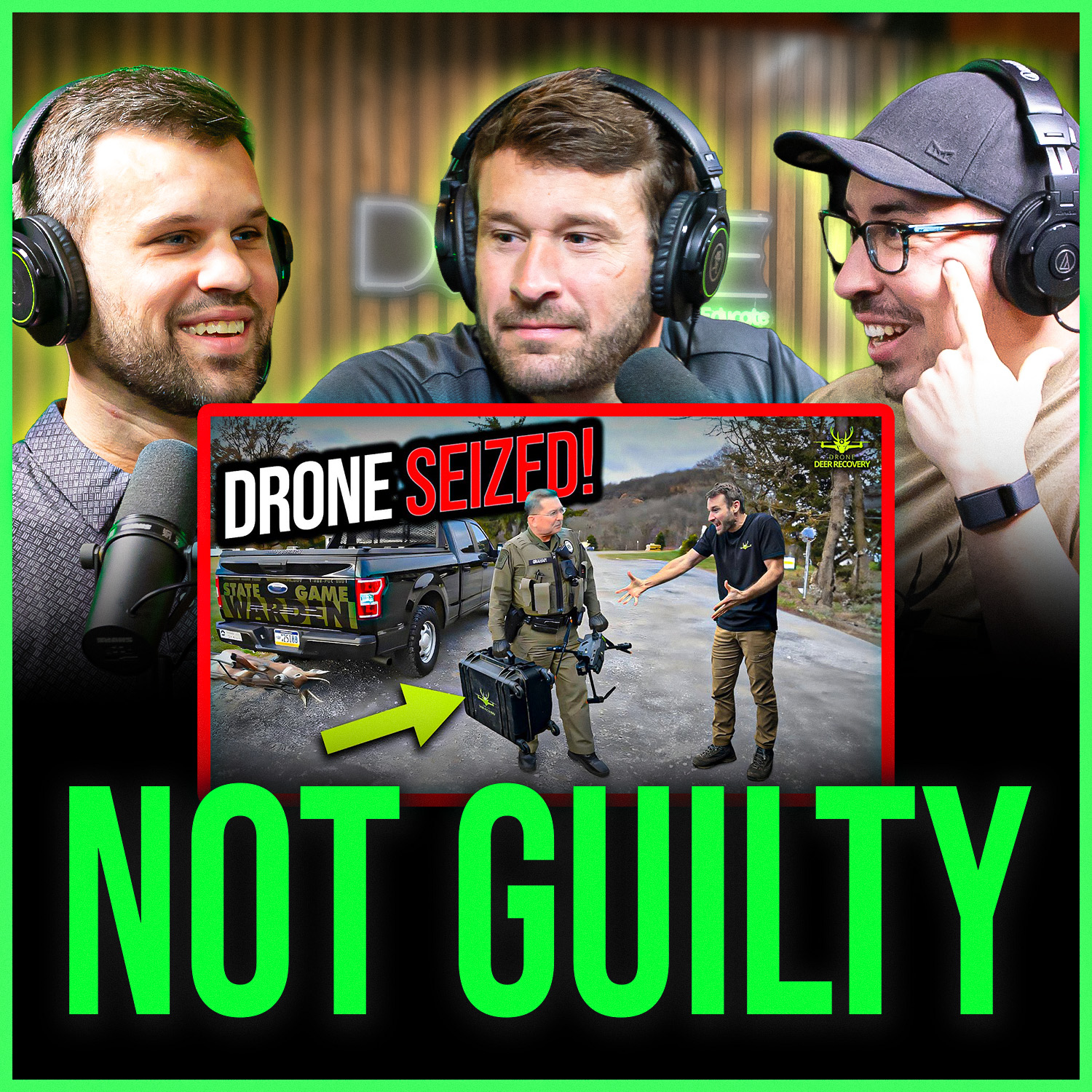
[00:03:00] Speaker A: I didn't even think of that. Yeah, see, you were thinking on a different level. I was just like, the hunt land that we have has the. You know, the city sewer go through it, and sometimes they go in there to check that stuff. But sure enough, Doggone it, guys, I don't want to give the complete story away. We are going to have a video come out on the Drone Deer Recovery YouTube channel, and Kurt will also have it in his video. But this guy, he was a lawbreaker. No doubt about it.
[00:03:26] Speaker B: Yeah.
[00:03:26] Speaker A: Hunting with no orange.
[00:03:27] Speaker B: We find the truck. Okay. And we go. You drive around to it. It wasn't parked where we were parked, obviously, because you found it with the drone.
[00:03:34] Speaker A: Yep.
[00:03:34] Speaker B: We go around to it, and there's. We pull up to it, and there's a yeti sticker on the back glass. I. I see.
[00:03:41] Speaker A: You were like.
[00:03:42] Speaker B: I was infatuated. Is that the right word for that?
[00:03:45] Speaker A: I don't know.
[00:03:46] Speaker B: I was obsessed. That sword.
I was obsessed with the yeti sticker because I was like, dude, Mike is still at this point, believing it's utility worker.
I was like, they don't put yeti stickers on, like, and it's opening day of gun season. This dude is a hunter, like, no questions asked.
[00:04:03] Speaker A: Yeah, you did convince me. And then we were debating, like, am I going to be able to find him with. With the drone because of having very thick clothes you had said your buddy was trying to find.
[00:04:13] Speaker B: Yeah, yeah. So we were just out, you know, he was flying the drone over. Over me while we were looking for deer, and he noticed that I had a thick layer of clothes on, and he's like, dude, like, you couldn't.
[00:04:23] Speaker A: You're.
[00:04:23] Speaker B: You weren't glowing nearly as much as when you looked up and then you could see your face. Then you were glowing strong because that skin was exposed.
[00:04:31] Speaker A: Yeah.
[00:04:31] Speaker B: So it's like a. It's almost like you got a layer of insulation around you, and so you're not putting off as much body heat now. You still are, as we learned.
He was sticking out good.
[00:04:40] Speaker A: Yeah.
[00:04:41] Speaker B: He may have actually been pretty cold because of how thin it apparently was. He was glowing on.
[00:04:45] Speaker A: Yeah, he was glowing. So we're processing this, and I. I found a neighbor that's allowed to hunt on the back corner, and I was like, dog on. That's showing up.
[00:04:54] Speaker B: Yeah.
[00:04:54] Speaker A: And so you were like, mike, keep looking.
[00:04:56] Speaker B: Yeah, Mike was getting discouraged.
[00:04:58] Speaker A: Yeah, I was. I was.
[00:04:59] Speaker B: Yeah.
[00:04:59] Speaker A: But it was just. I was in a hurry.
[00:05:02] Speaker B: Right, right. You got a million things going through.
[00:05:04] Speaker A: Your well, and the sun was coming up.
[00:05:05] Speaker B: Yeah.
[00:05:05] Speaker A: And once that sun hits the ground, it gets very difficult to find thermals.
[00:05:09] Speaker B: Right.
[00:05:09] Speaker A: But you got quite a bit of drone. Thermal drone experience. Now, this.
[00:05:13] Speaker B: This.
[00:05:14] Speaker A: This drone right here is actually yours. M4T.
[00:05:16] Speaker B: The 4T.
[00:05:17] Speaker A: Yeah. And you're in West Virginia. Last year, it was still kind of a gray area if you could use it to do recovery. But you had talked to a federal warden about flying a thermal drone in West Virginia, and he was basically telling you that.
[00:05:30] Speaker B: Yeah. So what he told me was, you just can't fly and hunt the same day. It was their interpretation. Now, it didn't specifically say that in the law, but that's just kind of how they addressed it.
[00:05:41] Speaker A: Yeah.
[00:05:42] Speaker B: And you know, nothing about recoveries, though. They, you know, was still at that point, according to them, illegal to do recoveries.
[00:05:48] Speaker A: Huh.
[00:05:49] Speaker B: But as far as just flying a drone, because I was curious, just in general, as far as like, taking video for my YouTube channel and stuff like that. Are you allowed to fly, like, the same day or does away if the weapons on you. Can I fly for video, or does the weapon need to be at home? Like, there was just a lot of.
[00:06:05] Speaker A: Yeah, I asked you that because we got a Mavic 4 Pro, dude. The thing is insane. The footage is insane. And then I had asked you about coming down during bear season because you put out some sick bear hunting content. I was like, if you'd have a drone just showing you guys, like, going through the trails and stuff that you are.
[00:06:26] Speaker B: Yeah.
[00:06:27] Speaker A: It would just give another perspective for your viewer to see, you know, the rugged terrain that you guys are in and how you're navigating. And I asked the. I think it was the colonel, whoever the warden was, that I'd go to West Virginia.
[00:06:41] Speaker B: Yeah.
[00:06:41] Speaker A: I think it's the colonel license signed. Because you have to have a license. What is that thing that we had to have?
[00:06:47] Speaker B: It's an outfitter license. Yeah. Yep.
[00:06:48] Speaker A: Outfitter license.
[00:06:49] Speaker B: Be able to do recoveries this year now that it's legal.
[00:06:51] Speaker A: Yeah. Yep. Went down there and then I asked him that specific question, like, can I go film you? I'm not aiding in the hunt whatsoever. It's just wanting to get those cool shots.
[00:07:00] Speaker B: Yeah.
[00:07:00] Speaker A: And he didn't know, and so he had to go ask a higher up. And then that's when he came back with that. You wouldn't be allowed to use a drone to record a hunt that is in process.
[00:07:13] Speaker B: It's taking place. Right. So it's funny, though. I called.
This was years ago, like five. This is before, I mean, I think drone deer recovery. I had just a small. What Mike would call a baby drone. Little, teeny, tiny, just filming. Drone.
[00:07:26] Speaker A: Yeah. Yeah.
[00:07:26] Speaker B: I don't know what it was. Like a mini or something.
[00:07:28] Speaker A: Yeah.
[00:07:29] Speaker B: And I was. I'd always wondered if I could fly it once the bear. Like, because we. We hunt bears with dogs, and so the dogs will tree the bear. Once the bear is treed, can I then fly the drone? Because we've kind of got him. Yeah. But he could bail out any second. But still we've got him. So I called and asked about that, and the game warden at the time, this is just calling into my local district, getting their opinion on it, said, well, the hunt is considered over at that point. Or he. He. I think the way where I would consider the hunt over at that point. But, yeah, still. Yeah, that's like, to me, without that being in writing or something, I still don't think I would try it. Because then they'd be like, oh, well, that's. You know, I didn't have any evidence that he told me that or whatever. So it's like.
[00:08:07] Speaker A: I think a lot of. A lot of this technology in the hunting space comes down to each warden of how he wants to look at the scenario.
[00:08:16] Speaker B: Right.
[00:08:16] Speaker A: It was just like the wardens that showed up for the trespasser that you and I caught. You know, we started asking him some questions about can you do this or that? And literally, it's kind of up to their discretion on how they think that you're using it.
[00:08:30] Speaker B: Right. And then I guess, let's say they decide to charge you with something, and then they would take it to, I guess, the court process, and then it's up to the judge to decide if that like if the law.
[00:08:40] Speaker A: Yeah. Yep.
[00:08:41] Speaker B: You know, the way they interpret it.
[00:08:42] Speaker A: Yeah. So basically it's their discretion of what they want to try to write you for, but it doesn't necessarily mean that it's something that'll stick.
[00:08:49] Speaker B: Right. But it's just like. I wish. And we're. We're. Obviously this is the beginning of it.
[00:08:55] Speaker A: Yeah.
[00:08:55] Speaker B: Of the drones, the recoveries. Each state's doing this. This state's doing that scouting with it. Like, where are the. You know, where. Where the gray areas? Where is it black and white. It would be easier for all hunters, game wardens, judges, everybody, if it was just specifically wrote out, said, and addressed. Every little.
[00:09:12] Speaker A: 100%. Yeah. The filming, obviously. You got a big YouTube channel and you're growing rapidly. How long have you been filming?
[00:09:21] Speaker B: So. I've been filming since I was a kid.
[00:09:23] Speaker A: Oh, yeah?
[00:09:23] Speaker B: Yeah. Like, just literally my. I remember making videos in my backyard with my brother with a Motorola razor. Like, I got a razor. You remember this? Yeah, yeah, yeah, yeah.
[00:09:32] Speaker A: Karen had one.
[00:09:33] Speaker B: Yeah. Thought it was a big deal. I got straight A's in school. My mom got me one, so I remember. Oh.
[00:09:39] Speaker A: Oh, that's what you got to get, straight A's.
[00:09:42] Speaker B: Yeah, yeah, yeah.
[00:09:42] Speaker A: She.
[00:09:42] Speaker B: She. I guess my reward was for being a good student or whatever. I got some.
[00:09:46] Speaker A: That's awesome. What were you filming in the backyard?
[00:09:49] Speaker B: Sasquatch videos.
Yeah. Like, I would, like, pretend to be. Oh, my gosh.
[00:09:54] Speaker A: I almost spit my bower up.
[00:09:57] Speaker B: Just dumb stuff. Just dumb stuff. And then we, like, upgraded. Eventually I. I got my parents, like, camcorder that, like. Yeah. Like cassette tape.
[00:10:06] Speaker A: I had one.
[00:10:07] Speaker B: Yeah. And then we would ding dong ditch my neighbors. And so I would get up in the tree with, like, some of the neighborhood kids in my. Out of my backyard, and they would run up and ding dong ditch it and I would film it. I would pay to find those tapes.
They'd get. My neighbors come out, look around so confused.
And I was up in a tree.
Yeah. So that's kind of.
[00:10:27] Speaker A: Did any of that stuff ever get posted? Oh, no, no.
[00:10:30] Speaker B: I didn't even know, like, upload it to YouTube. I had. I didn't know.
[00:10:33] Speaker C: I just.
[00:10:34] Speaker B: I'd watched it on YouTube, stuff like that. Wow. I was just a punk little kid, dude.
[00:10:38] Speaker A: But you would have.
[00:10:39] Speaker B: Oh, for sure. Yeah. We were hilarious and didn't even know it. I didn't care. I just thought it was funny. Like, we'd go back and watch, like, look at them.
Just. Just dumb kid stuff. But that's how I got Just filming. Like, I was just drawn to cameras as a kid, so. And then I liked hunting more than anything, so then the. The world just kind of combined.
[00:10:58] Speaker A: Yeah. Your YouTube channel that you have now. There was another YouTube channel that you had started prior.
[00:11:02] Speaker B: Yeah, yeah, yeah, yeah. So I started one prior and then sold it. Sold my portion of it to my partner and then launched on my own.
[00:11:10] Speaker A: And what made you want to do that? Don't want to go into it.
[00:11:14] Speaker B: No, not really. I mean, it's not that. It's just numerous factors.
[00:11:18] Speaker A: Okay.
No, that's good. I'm glad that you started your channel that you did.
[00:11:23] Speaker B: Oh, me too. It's the best thing I've ever done. The best decision ever, you know? 100%. Yeah. Like, I am. I just get to do whatever. It's just called Kirk Price, which is like. I don't.
I mean, you probably. I mean, you understand this, you know, with, I guess, Drone Day recovery website, like, I mean, your YouTube channel, you kind of feel like, of course you do a little bit of everything, but, like, your content's more towards, obviously, drones, your business.
[00:11:47] Speaker A: Yeah, it's a specific niche.
[00:11:49] Speaker B: Yes, yes, yes. So whenever, instead of like, making it, like, some, like a hunting channel. Yeah, it's making it like. I used to have a hunting. Like, my first, like, hunting video group was called Whack and Track.
[00:12:03] Speaker A: Okay.
[00:12:04] Speaker B: Whack and Track Outdoors. Yeah. So, like.
[00:12:06] Speaker A: Yeah. And so then that would be kind of fenced in with still.
[00:12:09] Speaker B: I'm still just in. Yeah. Like, whack and, like, whack them. Track them. I guess I wasn't worried about finding them, but.
[00:12:17] Speaker B: Whack Tracking Drone.
[00:12:20] Speaker B: But it was called Whacking Track, and that was my first one, and then, you know, then the second one, and then I just didn't want.
I saw guys out there like Kendall and Braden.
[00:12:32] Speaker A: Kendall Gray.
[00:12:33] Speaker B: Yeah. Kendall Gray and Braden Price, both of my cousins.
They.
They. They just. I was just kind of scouring the Internet getting ideas, and I honestly felt like at the time, like, I think the Something, something outdoors, something. So everybody had something called something something outdoors, you know?
[00:12:50] Speaker A: Yeah. Yeah.
[00:12:51] Speaker B: And so I was like, I think that's going. I think the group outdoors thing is going to slowly phase out. And I see these guys that are just doing it kind of on their own under their own name and just kind of building their personal brand with the personal audience. Because, like, I noticed whenever I was part of, like, group YouTube channels and stuff like that, like, there are obviously people that kind of led the direction of the channel. And so there would be other people and there'd be comments like, we want to see such and such. We want to see this. And so with my YouTube channel, you get me every time. So like when they click on the video, they know exactly what they're doing.
[00:13:24] Speaker A: Yeah.
[00:13:24] Speaker B: And then I had just had. With my channel, I just had complete creative control as far as, from the videos I was uploading to holding a certain standard for every video. Like when I upload a video, I do not want to disappoint.
[00:13:38] Speaker A: Yeah.
[00:13:39] Speaker B: Like when you're watching a Kirk Rice video, for instance, I want every single one to. That's why some, sometimes I upload two videos a week. Like, I'll pay him. Bam. Upload it. Because I was like, man, those are two great videos.
[00:13:50] Speaker A: Yeah.
[00:13:50] Speaker B: And sometimes I've went three weeks, four weeks sometimes without uploading a video because I'm not happy with the video. Because I never want to disappoint.
[00:13:58] Speaker A: What's surprising to me is I've obviously I'm subscribed to the channel and if you guys aren't, you should definitely check it out. Kurt Price on YouTube and subscribe. But like, for me, my, my YouTube channel, if I don't upload very consistently, then the algorithm to me feels like it doesn't push my content. But it doesn't seem like that's the case for content because I've seen you not upload for three, four weeks, then you upload and the thing's still a banger then gigs 300,000, 400,000 views.
[00:14:26] Speaker B: Right.
[00:14:26] Speaker A: Why do you think that is?
[00:14:29] Speaker B: I definitely. Because I was worried about that too. I had the same thoughts as far as the algorithm and all that. And I think if you go long enough without uploading, then you could see. But I think YouTube recognizes quickly by just the success the video click through rates having right out of the gate. And then the average view duration, which we're just kind of. I'm nerding out on you. But getting into the analytics, YouTube is like, he's back. Let's push this video out there.
[00:14:53] Speaker A: Yeah. You know, and YouTube's goal is to keep people on their platform watching. And if they're skipping through stuff, they might, you know, be like, the heck with it, let's go to Facebook.
[00:15:02] Speaker B: Right.
[00:15:03] Speaker A: And that's what YouTube doesn't want. So if guys are watching your content, you know, for 30 minutes and you put a 45 minute video up. Yeah. They're like, dude, let's send this to more people.
[00:15:13] Speaker B: Right? Because I think I don't know what it is now but at the time, like years ago, the average YouTube video got viewed for like four minutes. Four minutes.
[00:15:20] Speaker A: Oh my God.
[00:15:21] Speaker B: And my videos crushed that average. I don't that that might be higher now. I can imagine it is because it seems like people are uploading more longer format. So that average is going to go up. But still, yeah, YouTube. And then you got to watch because like, let's just say like oh, I'm going to get them with a clickbait title and thumbnail but then they, and so a bunch of people clicking on it but then they get in there and like this video.
So then YouTube will quickly figure out and stop recommending that video. Even though it has a good click through rate, it has a good thumbnail but the video itself self stinks. So then they're going to stop pushing that video out. So the views are, you know, it'll, the algorithm will, will set you straight. Yeah, So I try to perform on all ends from an interesting video title, an interesting thumbnail and then the content delivers.
[00:16:04] Speaker A: Yeah, you're definitely hitting it. And another thing I, I noticed watching your content is it's, it's obviously it's unscripted and not a lot of B roll. It's just clip after clip just like it happened. Yeah, that's so good.
[00:16:17] Speaker B: Yeah, I just film everything. Yeah, I try to film everything and then you know, condense it into an entertaining video. But yeah, there's no, I'm just like. You're just seeing exactly what happened. Like there's not. I'll think of an interesting idea that is like, well sometimes like I'll think of a good video idea and then go film that specific video based off like what I can come up with for a thumbnail and all that. But in hunting season, like I'm after big bucks and so like I'm not trying to make a certain video or a certain.
I don't know, I'm just, I don't know, I don't know really how to describe it. I'm just hunting and filming it and it's like at this point I love hunting so much that if you don't like the video, it's okay with me because I'm still out there. Yeah, yeah. Hunt.
[00:17:00] Speaker A: Did you get known for bear hunting first? Because yeah, that was definitely when I would say something about Kurt Price, people would say, oh, the guy that bear hunts. Right.
[00:17:08] Speaker B: So there's so many people out there putting deer hunting videos on YouTube. Right. Like that's so saturated. Turkey hunts, you Know, same thing. And then of course I was into bear hunting and that definitely set my channel apart from others. Was the. The pair. The bear hunting content.
[00:17:25] Speaker A: Yeah. And you use dogs to bear hunt. This is not over bait, like.
[00:17:29] Speaker B: Nope.
[00:17:30] Speaker A: They do.
[00:17:31] Speaker B: It's illegal to.
[00:17:33] Speaker A: Cannot do it in West Virginia.
[00:17:35] Speaker B: Correct. West Virginia is illegal to Bay bears are most states.
It varies state to state. Like Maine. I'm pretty sure you can bait them. Yeah. Maine, Canada, which I know is not. It may be the 51st state. We'll find out. Just.
[00:17:50] Speaker A: Maybe.
[00:17:51] Speaker B: Maybe. But you know, it varies state to state, but. So dogs are like the primary way in West Virginia that most bears get killed. I mean, of course guys shoot them when they're bow hunting or rifle hunt and just, you know, when they're deer hunting.
[00:18:04] Speaker A: Whatever.
We can always cut this section out. We want to do a video in West Virginia, but we were told we can't. Because you can't fly a bear out using a drone.
[00:18:15] Speaker B: Yeah.
[00:18:15] Speaker A: Tell me how dumb that is. I mean.
[00:18:17] Speaker B: Yeah, it's just something that needs to be addressed because. And it's not something that's been thought of like Mike.
[00:18:24] Speaker A: Exactly.
[00:18:24] Speaker B: Mike, in my opinion is like, you are the pioneer for drone deer recovery. And we're all just on the drone bandwagon, you know, as far as recoveries go. So you're going to be the guy that pioneers this if you know, someone doesn't steal your idea by listening to this podcast.
[00:18:39] Speaker A: Well, no, we've. We've talked about it before. I've shown it. I mean, right. You've probably seen the video of me flying a deer. Of course. It's like, dude. And there's practical use for it down in some of those ravines that you guys are in. Or hollers. I don't know what you guys call them, but dude, it could work.
[00:18:56] Speaker B: Right. And imagine like a handicap hunter shoots a big bear. 400 pound bear goes down into a big holler. Okay. There's no way he can get it out.
[00:19:05] Speaker A: Yeah.
[00:19:05] Speaker B: Just like he would call a drone guy to help find it. Then it turns into a drone retrieval.
[00:19:11] Speaker A: Yeah. So you see, that's what doesn't make sense.
[00:19:13] Speaker B: So you have someone operating the drone. Probably. I would say minimum two people is what it would take. You have someone operating the drone and you have somebody hooking the bear up to the drone.
[00:19:22] Speaker A: Yeah.
[00:19:22] Speaker B: That's all you need.
[00:19:23] Speaker A: Yep.
[00:19:24] Speaker B: So instead of having. And then, you know, it's just the handicap hunter, like it gives him a way to feel comfortable shooting an animal in a certain Spot because there might be somebody that's not hunting a spot because they're like, I'll never be able to get that out.
[00:19:36] Speaker A: Yeah.
[00:19:36] Speaker B: And in the future, that's not going to be like, actually, you just call.
[00:19:39] Speaker A: Yeah.
[00:19:40] Speaker B: Drone fly out recovery.
[00:19:41] Speaker A: Yeah.
[00:19:42] Speaker B: You know, just.
[00:19:43] Speaker C: Just for the people that don't. That don't know or aren't familiar, give us the definition of holler. Like what. What is that?
[00:19:49] Speaker B: I guess a hollow. Is that the correct H O L L O W? A hollow is what the actual. Oh, yeah. A holler is like what I live in.
No, it's like.
[00:20:04] Speaker B: It'S like.
[00:20:05] Speaker A: It sounds like you're in a den. I live in it.
[00:20:09] Speaker B: Well, you do. You live in a holler.
[00:20:11] Speaker A: Tell me more.
[00:20:12] Speaker B: Well, that's what it's like.
West Virginia, of course, you got the Appalachian Mountains, which they're not just in West Virginia. I think they go from Maine to Georgia. But yeah. Anyways, there's in West Virginia, eastern Kentucky and stuff. You'll hear it often called holler. It's just like what a hollow would be or a drainage would be.
[00:20:32] Speaker A: What makes it a holler. Because I wonder if we read hollers around here because, like, isn't it just.
[00:20:37] Speaker C: We don't. We don't use the term very much. And so I'm just asking for a little bit of clarification because Mike and I have had conversations about it before and I remember you. You gave a definition to it previously in South Africa.
[00:20:49] Speaker B: Yeah.
[00:20:50] Speaker C: And so I just want you to tell the audience what your definition of a holler is.
[00:20:54] Speaker B: Yeah, it's just like, basically you got a ridgeline. A ridgeline. And then you got low elevation, typically a creek down there in the bottom of it, whether it's just a runoff water creek or maybe there might be a spring flowing. I don't know. But yeah. And so like, in West Virginia you'll have like, most people live on a holler. Like, like in a holler one. Because the wind is not as bad as is up on the top of a mountain.
[00:21:16] Speaker A: Yeah.
[00:21:17] Speaker B: And of course, the most utilities and stuff are down there. So most people, at least the part of West Virginia I'm from live in, in hollers, I believe.
[00:21:25] Speaker C: And we're going to. We're going into Meat eater. Clay Newcomb on the Bear Grease podcast, I believe he was describing a holler as in up in the. The top.
Most part that was livable kind of in that. In that section, usually with a creek.
[00:21:39] Speaker B: Yeah.
[00:21:39] Speaker C: And then he was describing how usually they use they would put the dogs out by the creek, and it's kind of in that top, upper part, not in the valley, but kind of up.
[00:21:48] Speaker B: Oh.
[00:21:48] Speaker A: So it really does kind of get specific where. Where the holler is.
[00:21:52] Speaker B: Well, that's.
[00:21:53] Speaker C: That's coming from Clay Newcombe.
[00:21:55] Speaker A: Okay.
[00:21:55] Speaker C: Beargries podcast from one of the ones that I listened to from him.
[00:21:59] Speaker A: Nice.
[00:22:00] Speaker B: Yeah.
[00:22:00] Speaker A: Maybe one day I can live in the holler.
[00:22:02] Speaker B: Yeah.
[00:22:03] Speaker A: I am looking for land down there, so if you come across it.
[00:22:06] Speaker B: Yeah.
[00:22:07] Speaker A: Anybody that's listening that has a bunch of land they want to sell.
[00:22:10] Speaker B: West Virginia.
[00:22:10] Speaker A: Yeah, In West Virginia.
[00:22:11] Speaker B: In West Virginia.
[00:22:12] Speaker A: Or Northern Kentucky.
[00:22:15] Speaker B: Okay.
[00:22:15] Speaker A: Is it kind of, like, rugged there, too?
[00:22:18] Speaker B: Yeah. I mean. And. Yeah, in parts. I mean, especially east or northern.
[00:22:21] Speaker A: Talking about land, you were a realtor.
[00:22:24] Speaker B: Yeah.
[00:22:24] Speaker A: Or are you still. Can you lose that?
[00:22:26] Speaker B: I mean, I keep my license, but I'm not, like, using it.
[00:22:30] Speaker A: Yeah.
[00:22:30] Speaker B: Yeah.
[00:22:31] Speaker A: What made you want to do that?
[00:22:32] Speaker B: So when I sold my other YouTube channel, I was kind of like, what am I going to do with my life?
And I thought when I, like, got out of that, I was kind of just done for.
[00:22:41] Speaker A: Oh, you thought you were done with filming?
[00:22:43] Speaker B: Yeah.
[00:22:44] Speaker A: Well, I'm glad you didn't.
[00:22:45] Speaker B: Yeah.
I tried to, like, launch under my own name, and it did. It went well. Like, I was having success, but it's so hard whenever, you know, like, my wife was in school at the time, and so I've got. I just, like, I didn't want to give up my other YouTube channel, basically, but it was in my best interest, too.
[00:23:03] Speaker A: Yeah. Yeah.
[00:23:04] Speaker B: So I then was in a tough spot. It's like, do I try to risk it? Like, majorly? And, like, my wife is in school making $0. It's just us and going in debt. Going in. Yeah. Massive debt from, you know, her.
[00:23:20] Speaker A: Like, dude, tell us what she does. I. I think it's amazing.
[00:23:23] Speaker B: Yeah, it's a. It's a CRNA is the definition. It's a. I can't say it.
[00:23:29] Speaker C: She.
[00:23:30] Speaker B: It's a nurse.
Oh. I think that's how you say it. Yeah. Yeah. So they're the ones that put you to sleep. It's commonly confused with an anesthesiologist, but they're similar, but different. She actually does have a doctorate through her program.
[00:23:41] Speaker A: Wow.
[00:23:41] Speaker B: So long story short, lady. Yeah. Way smarter than me.
[00:23:47] Speaker B: Yeah.
But she.
Yeah. So we. We had that going on, and then I'm there I am with no career. Like, literally, like, I started taking insurance classes, and I was like, dude, insurance classes? Yes. To become an insurance agent. Oh, yeah, yeah.
And then I was like, I actually had a cousin that was like, man, you should look into real estate. And I was like, I don't know anything about real estate. And I didn't, I mean, nothing at all. And I knew I wanted to work for myself. I have learned that already just because I like the. As much as I like to hunt, I just like to be flexible with my schedule and be able to hunt as much as I want. So then I was. He was like, look at Whitetail Properties. And I was like, okay, yeah. So I just got on their website and then I was like, I'm going to apply to work at Whitetail Properties. I know nothing about it. Nothing. I just applied and then they called me back. They called me and then we kind of went from there and I got my real estate license and how hard is that? You have to study for it. Yeah, I mean it's not, you know, it's not that hard.
[00:24:48] Speaker A: Is it like a multi choice test or.
[00:24:51] Speaker B: Yeah, yeah, yeah. It's multiple choice and there's a state and then like a federal exam. There's like two exam, like two parts. You got to pass your state and then the. The nation test.
[00:25:01] Speaker A: Is it similar to like Getting your part 107 remote pilot's license?
[00:25:05] Speaker B: Yeah.
[00:25:06] Speaker A: Where it's like this is the, the question. And then you have.
[00:25:09] Speaker B: It's harder than. I think it's harder because I watched a two hour video on my way to get my part 107 and pass the test.
[00:25:16] Speaker A: Holy smokes. I literally sound like Kevin.
[00:25:18] Speaker B: I literally. I watched a. Put a YouTube video up in my like set my phone up on the glass and had a two hour drive to the testing facility, like pulled in, finished the video and I was like. Because I was going to go to just take it like winging it. Oh, definitely. I was like, I'm just gonna kind of get a feel for the test, you know.
[00:25:34] Speaker A: Well, that's encouraging for somebody that's listening that's thinking about getting their remote pilots license.
[00:25:38] Speaker B: Yeah, yeah. I passed it first try and the only studying I did was on the way there.
[00:25:44] Speaker A: I don't know that that would have worked for me.
[00:25:47] Speaker A: You must be pretty smart too. Obviously. Yeah. Huh. So you started real estate. You did that for how many years?
[00:25:55] Speaker B: I guess like two and a half maybe. Yeah. Somewhere in there and towards the half there, I kind of was doing mainly YouTube.
[00:26:03] Speaker A: Yeah.
[00:26:03] Speaker B: You know, but I got my part one of seven because I needed for real estate. Oh yeah. So I had it early on I see. Yeah.
[00:26:11] Speaker A: So you didn't even get it to fly?
[00:26:13] Speaker B: Nothing to do with thermal drones? No, I just got it for. Because I needed it to be able to, like, use the photos on my website because, like, yeah, it gets involved or whatever. You're going to have your part 107.
[00:26:23] Speaker A: Did whitetail properties tell you to do that?
[00:26:25] Speaker B: Yeah, they want you to have it. They. They want. They want to see your license. You know, everything's to a T. Nice. Yep.
[00:26:31] Speaker A: Well, that's cool. That's how you take it.
[00:26:33] Speaker B: Serious.
[00:26:34] Speaker A: And. But you've been flying drones before that?
[00:26:36] Speaker B: Oh, yeah.
[00:26:36] Speaker A: As well.
[00:26:36] Speaker B: Yeah. I mean, just for, like, little. Right.
[00:26:39] Speaker A: Baby drones before that.
[00:26:40] Speaker B: Yeah, just for YouTube videos and stuff.
[00:26:42] Speaker A: So you travel and hunt a lot?
[00:26:45] Speaker B: Yeah.
[00:26:46] Speaker A: Your wife stays back and you're going to have a kid soon. We'll talk about that. But your relationship with your wife must be pretty good.
[00:26:53] Speaker B: Yeah. Yeah. We've been together since we were sophomores in high school.
[00:26:56] Speaker A: Okay.
[00:26:57] Speaker B: Yeah. And so I kind of set the standard early as far as what works for me as far as hunting goes and.
[00:27:04] Speaker A: What are you laughing about?
[00:27:07] Speaker A: Landon's.
[00:27:08] Speaker C: I think it's great. I'm just. I'm just listening.
[00:27:12] Speaker B: I mean, like, she. I mean, since the second we. We started dating, I've hunted a lot, you know, and it could progress as I've gotten older. But she's awesome. Like, you gotta have someone in my position as far as how much I hunt. You've. Cause, like, I hear. Hear of guys, you know, their. Their wives are like, you know, you need to come home or they don't want you, blah, blah, blah. Like, I'm not. I'm a. I feel like I'm a good husband. So, like, I take care of it, I provide for our family and I'm there. But she knows, like, this is what I do for a living too. And I've, like, work my butt off to get to this point as far as being able to continue doing it, you know, provide for our family. So she knows. Yes, I am hunting, but the whole reason for the YouTube channel, the whole reason for videoing and stuff, dude, I would much rather just go out there and hunt, to be honest with you, because I just love hunting. It's not about for me. Like, I do enjoy the YouTube side of it because I've kind of figured it out a little bit. It's always changing and adapting and I could lose it tomorrow. But the business side of YouTube is. Is interesting for me, but I just have a. Like, the whole. My motivation behind it Is just because I love hunting.
[00:28:19] Speaker A: Yeah.
[00:28:20] Speaker B: So, you know, back, I guess, on her. She's super cool with me just being out. Like, I leave, and she'll say, when are you coming home? And I'm like, you know that answer? I don't have a clue.
[00:28:30] Speaker A: Yeah. That's like, you came up here to Ohio and you weren't sure when you're going back.
[00:28:35] Speaker B: Yeah, no, I shot a big one.
[00:28:37] Speaker A: Last night, so she's pumped because I'm coming back. Nice.
[00:28:40] Speaker B: Like, she's more excited than anybody when I kill something. Not because I killed something, because I'm coming out.
[00:28:44] Speaker A: Yeah.
So is she a hunter?
[00:28:47] Speaker B: No.
[00:28:47] Speaker A: No.
Never shot anything.
[00:28:49] Speaker B: A bear.
[00:28:50] Speaker A: Oh, yeah.
[00:28:51] Speaker B: Yeah, she killed a bear. She goes. She's big into the dogs. Like, she loves our dogs, our hounds that we have, because they're just like. I guess if you're not familiar with hound hunting or stuff, like, sometimes people have the preconceived notion that, like, hunting dogs are just, like, tools, and, like, the hunters don't care about them and stuff. And that's, like, the furthest. That's, like, not true at all. For me, I can't speak for everybody. There might be bad apples out there. Just like, there's bad apples and deer hunting and everything else. But for me, like, my hounds are, like, you said, like, what I was. I kind of got known for my YouTube channel. Like, they are that. They're my bread and butter as far as my YouTube, my life. Like, I spend every day with them.
[00:29:29] Speaker A: Yeah. I think it's cool that you all gave them names.
[00:29:32] Speaker B: Oh, yeah.
[00:29:33] Speaker A: And it's like, where's Ding Ding? I don't know. For some reason, I like Ding Ding, but I don't even know which dog it is. I just like, dang.
[00:29:40] Speaker B: Dang. You like Ding Ding?
[00:29:42] Speaker A: How'd you come up with Ding Ding.
[00:29:43] Speaker B: Man, His name was supposed to be something else because, like, you don't name something Ding Ding from the start, Right? He was supposed to be something else, and he was just a wild man. And I was just like, ding Ding. Like, he's just. I don't know. But that, to me, it just. It fit him, you know, A lot of times I come up with a name I like. I'd like to name that dog. Like, I'll punch in my notes in my phone, like, oh, that's a cool dog name. I'm gonna use that one day. And then I, like, start calling him that. I'm like, it don't come off the tongue. Right. That dog doesn't Feel like. So, like, a lot of times, they'll start off with the name and then end up with another name, and that's what will stick. I kind of got to get a feel for them.
[00:30:16] Speaker A: Interesting.
[00:30:17] Speaker B: Yeah. Like, I've got one now. It's a puppy that's out of bliss. Her name is Betty, but I call her Gertrude a lot. For some reason, she.
[00:30:24] Speaker A: What do you call it?
[00:30:25] Speaker B: Gertrude.
[00:30:26] Speaker A: Gertrude.
[00:30:26] Speaker B: Yeah.
[00:30:27] Speaker A: Okay. And that'll just evolve. It just.
[00:30:29] Speaker B: Yeah, I've been calling her both.
[00:30:31] Speaker A: Okay.
[00:30:32] Speaker B: Yeah.
[00:30:32] Speaker A: So did you grow up with dogs? Like, did your mom and dad?
[00:30:35] Speaker B: No, no, we had. We had, like, labs. Like, house dogs.
[00:30:39] Speaker A: Okay. So. But not hounds. Like, hunting?
[00:30:41] Speaker B: No, I had never, like, zero, which is strange. Normally. Yeah. There's, like, a rich tradition in the hound. Like, normally, Yeah, a lot of times. Not every time, of course. Like me. There's people that. It's just. It's part of their heritage, their family.
[00:30:55] Speaker C: Yeah.
[00:30:55] Speaker A: Yeah.
[00:30:56] Speaker B: Somebody around them, their uncle, somebody got them into it. And I just went with Trace, invited me to get my buddy Trace.
[00:31:02] Speaker A: Yeah.
[00:31:02] Speaker B: And then from there.
So.
[00:31:05] Speaker A: So Trace had hounds.
[00:31:07] Speaker B: He had one.
[00:31:08] Speaker A: Okay.
[00:31:08] Speaker B: And we just hunted with the group of guys I was hunting with now, and they all had dogs, and I was just like. He invited me to go, and. This is hilarious, actually.
It's a full. Comes full circle here with Amish again.
[00:31:20] Speaker A: Oh, boy.
[00:31:20] Speaker B: Yeah.
So the first time I ever went, I took. I took. Landon, you'll appreciate this. It's just the first Sony A7s. Just, like, it had no embody stabilization, nothing. And. And I was just taking photos. I was just there to. I was going. I didn't know what was going on. And I was into photography and video and stuff, so I was just taking photos, and I went. And I was like, well, anyways, the first tree, the first bear tree ever went to. We got one tree. We're walking up. I have no idea what's going on. It's the loudest. Like, the dogs are barking. It's overwhelmingly loud. Okay. And it's like, something I forgot. Now it's normal to me, and I'm desensitized to it. But then I remember it being like, whoa. Like, this is. Wow. These dudes are nuts. Like, how do they know what's going on? I was amazed by. Like, now, of course, I do it. They know every little nook and cranny where the dogs are at, what holler they're in. They know the roads better than any other outdoorsman out there.
[00:32:14] Speaker A: Wow.
[00:32:14] Speaker B: They, like, houndsmen are underappreciated. As far as, like, what their actual woodsmanship and skills are. I've learned more about animals and stuff by hound hunting in some strange way, you know, just being out there because you'll end up walking into places and stuff that you've never been before because you would never walk in there. But the dogs are treed there. So.
[00:32:34] Speaker A: Yeah. So talking about treed, I. My uncle years ago was into coon hunting. And what I could never understand is he would let his dogs loose and then they're like barking. Like they're running, barking, but it just sounds like a bark to me. And then all of a sudden he's like, yep, they're treed.
[00:32:51] Speaker B: Yeah.
[00:32:51] Speaker A: I'm like, wait, wait, wait. Like it doesn't sound any different than what it just did a little bit ago.
[00:32:56] Speaker B: You just have to have a keen ear. That's so wild. That's only something you learn with experience. You don't learn it by studying, reading about it, talking about it. You just have to know your dogs. And you don't have to know your dogs. You can just tell.
I know I can. Literally, you'll sometimes hear my videos. I'll say they sound treat. They may not be. And I'm trying to figure out, is it bait up, Is it on the ground? No, it's on the ground. Listen. Listen to them. And I can tell.
[00:33:19] Speaker A: Yeah, that's why I'm so interested. Like, when you're doing a bear hunt, I'm like, how do you know? You know what would be really cool is to have a drone, a thermal drone at that time, find what is going on. Not, you wouldn't know what, you know, that the drone is there. And then you say, oh, I think he's in a tree. And then you would have real time data, right? Oh, yeah, he's in a tree.
[00:33:41] Speaker B: Right. Like, yeah, yeah. Like you're flying independently, Nothing to do with the hunt.
[00:33:45] Speaker A: Yep.
[00:33:45] Speaker B: Right. And I don't see how there would be an issue with that. But we. I guess that's something we'd have to address, you know? But back on the. My first tree. So we get there, I get up there, and we had a. There was an Amish guy there who wanted to kill the bear. And we're just kind of standing around like they're tying the dogs back. And I don't know what. What was going through his head or what, but bam.
Just out of nowhere. Okay. And these, these are like, very controlled. We take safety extremely serious. And not saying that he didn't. I don't Maybe he just didn't know or wasn't explained to him well enough, but he just got excited and just shot it out of the tree. No one knew he was going to shoot. No idea. He smoked it, bear falls out or whatever. You know, everything's all good.
[00:34:31] Speaker A: But what if that thing would have landed on somebody?
[00:34:33] Speaker B: There you go. And there was actually, I think, a deal in Virginia, I think, last season, where a guy had a bear fall on him. I don't know the details at all, and I'm not gonna. I don't know if it was shot or if it just. Sometimes the bears will literally fall down the tree. Like, they'll lose their grip or something, or they'll just come out fast. But there was a guy who actually passed away from that, so it is. That's why you got to take it serious.
[00:34:54] Speaker A: Yeah. Yeah.
[00:34:54] Speaker B: You know, it's a serious.
[00:34:56] Speaker A: Yeah, because I've. I've watched in your videos. You'll put a camera close to where you think the bear will come down.
[00:35:02] Speaker B: Yeah.
[00:35:02] Speaker A: And that thing smacks.
[00:35:04] Speaker B: Yeah. Especially if you shoot it out. And it's way out on a limb. And you got to look. We're. We're in, like, some of the nastiest, steepest Appalachian mountains. You can find it straight up and down. So you got a tree on that hillside, and then that bear is out here on a limb, and then by the time he falls. Dude, he's fell, like, 100 foot.
[00:35:20] Speaker A: Yeah.
[00:35:20] Speaker B: And just. But most of the time, like, we. Unless the shooter is not comfortable with the headshot, because obviously it's a smaller target. We shoot the bear in the head that way. It's lights.
[00:35:30] Speaker A: Yeah. Yeah.
[00:35:30] Speaker B: Because I'm shooting with a lung. A long shot. They will. I mean, they just. Like a deer will run 20, 30, 40 yards, whatever. Yeah. And then pile up.
[00:35:38] Speaker A: Yeah.
[00:35:38] Speaker B: The bear will kind of hang out in the tree for a second, run out of air, fall, and die. But we prefer, in the safest way, is just clean headshot. It's over. Hit the ground dead.
[00:35:47] Speaker A: Yeah.
[00:35:47] Speaker B: Lights out immediately.
[00:35:48] Speaker A: So lots of dogs around.
You get them tied up. Have you ever had a dog get hurt, Killed from bear hunting?
[00:35:56] Speaker B: Yes.
[00:35:57] Speaker A: Yes. Like, from the bear or the bear?
[00:35:59] Speaker B: Yeah.
[00:36:00] Speaker A: How's that happen?
[00:36:01] Speaker B: The bear just. You know, people are. I always get asked this, like, because I took my dog Bliss one time out west and treed three mountain lions with her, and, like, she treated them by herself. 3. And they're like, why don't the. The mountain lions? And one of them was a booner like a giant cat. And they're like, why, why don't the animals just turn and fight? Like a mountain lion could easily kill her. She's a 40 pound female. Right. But it's like I don't really have a really good answer for why because I'm not one. So I don't exactly know for sure. Of course I have theories and I guess other people do too.
[00:36:32] Speaker A: Yeah.
[00:36:32] Speaker B: But like, I just think it's like they're the baddest animal, especially mountain lion. Like they're the baddest animal in the woods and something is running at it full speed, barking.
[00:36:41] Speaker A: Oh, they're like, it's like, holy.
[00:36:43] Speaker B: That's, that is not natural. Like I'm getting out of here. Like anything that's that crazy I'm getting away from. So like that's kind of what I think going on there. But occasionally a bear will get caught and there's just like sometimes a, like I say, a big, big bear will get in a tree real easy and you're like, ah, okay, you thought that bear was going to be a fight fighter because typically the bigger they are, they don't want to go in trees. Sometimes they easily do though, for no reason. Just like with people, okay. You could be walking down the street and you see some guy, he's, you know, he's 5 7, 130 pounds and you think like, ah, that dude, you know, like you're much bigger than him, you'd whoop his butt. Well, it turns out he's a UFC fighter, you know, and if, and so what I'm getting at is there might be a small bear, but they all have different attitudes and different ways they carry themselves. Some bears are just bad to the bone and mean business.
Now it is rare, super rare for a bear in my, in my circumstance for a bear to kill a dog. And I haven't personally had a, a bear kill a dog. I have seen it happen to other people's dogs. But there are ways you can help control that as far as getting the bear killed quickly. And, and so that's why I always save my tags and I never shoot treed bears or anything like that. I'm not saying I wouldn't in the right situation. If it's getting towards the end of season that I may, if I'm personally wanting to take a bear.
[00:38:09] Speaker A: Yeah.
[00:38:09] Speaker B: But I save my tags. We get two, two bear tags and I save them for situations where it's not safe for someone. Like we'll have shooters like, say, you want to come Shoot a bear, okay. If it's in a tree, you shoot it. But if it's on the ground fighting dogs, that's not a situation that you should go in there and shoot the bear because dogs all around it and you shoot that bear, that bullet most likely is going to exit. And so if there's dogs behind it when you shoot it and it's intense, it's the. I can only imagine it's the most intense situation. Like, I love deer hunting, obviously, but like when it comes to killing a bear on the ground with dogs around it, it does not get any more intense than that.
[00:38:43] Speaker A: I bet the noise, the sound, the.
[00:38:47] Speaker B: Overwhelming, you don't know what's going to happen. The bear can grab you, the bear could grab a dog. You're trying to save a dog because a bear's got dog down.
There's like, they're dogs that I care about. They're literally my family. And people are like, well, how could you. If you care about them so much, then how could you put them in that situation? Right, yeah. That's what kind of.
[00:39:04] Speaker A: The dogs love doing it, dude.
[00:39:06] Speaker B: They love it. That's what they are like literally put on this earth to do. And you like, won't convince me otherwise because they'll get like, they'll get. They get bit all the time by the bear. No big deal. Wow. They're still going at them balls to the wall. Like that does not affect them at all. Wow. Yeah. Yeah. So like, and they love it so much. It's just like to me, whenever somebody gets a. And this isn't, you know, at anybody specifically, but let's say you get a working dog, like a German short haired pointer that is bred and meant to point birds. You know, it wants to be out there hunting or a lab even, that's retrieving like it's a retriever, it wants to be doing that. But then you get it and then put it in your backyard and then never do anything with it. Yeah. That it was meant to do.
[00:39:49] Speaker A: Yeah.
[00:39:49] Speaker B: You know, and that dog would love to be out there doing that. It doesn't want to live in your backyard. He wants to be out there living like a dog is like they're supposed to. So that's how I look at it. Like every time I turn a dog loose on a bear, I know that could be the last time I see that dog alive. And that's terrifying to me. Yeah, terrifying. Like I would be lying to you. I'm not one of these hunters that just like, man, you know you know, if they get killed, it is what it is. Not me. Not me at all. And most guys, most houndsmen aren't. It's impossible if you are, like, a caring, reasonable, just a decent person.
[00:40:25] Speaker A: Yeah.
[00:40:25] Speaker B: To not get attached to them.
[00:40:26] Speaker A: Yeah.
[00:40:27] Speaker B: I mean, how can you, you know, how can you not. Yeah. I take care of them every single day. Like, they're great pets.
[00:40:33] Speaker A: How many hounds do you have?
[00:40:35] Speaker B: Eight or nine. I have to go through and count.
[00:40:38] Speaker A: So eight or nine hounds and then one house dog.
[00:40:41] Speaker B: Lucy. Lucy, just a mutt I adopted from the pound, Was my first, like, my first dog outside of, like, my family. Dogs growing up.
[00:40:49] Speaker A: And what's the. The Russian.
[00:40:52] Speaker B: Yeah, Genghis.
[00:40:53] Speaker A: Genghis.
[00:40:54] Speaker B: Yeah. He's a witch. Siberian.
[00:40:55] Speaker A: Like, would you consider him a hound? No, no, no. So he's not one of the 8 or 9.
[00:41:02] Speaker B: I was probably throwing him in.
[00:41:03] Speaker A: Okay.
[00:41:04] Speaker B: I mean, you know, he's one of the boys.
[00:41:06] Speaker A: Yeah. Dude. He's acting like a hound, though, isn't he? Like, sometimes he's running with them.
[00:41:10] Speaker B: Oh, yeah, yeah. No, he does.
[00:41:12] Speaker A: But then I watched one of your videos. They are trained to hunt differently.
[00:41:17] Speaker B: Differently. Totally different style. But I'm incorporating it because I think they're fascinating dogs. I can take him out by himself and tree a bear with just him, especially now that he's older.
[00:41:26] Speaker A: That's so cool.
[00:41:26] Speaker B: Yeah. But they are silent until they catch it. So they sneak up on the bear. Whereas a hound is like, imagine somebody chasing you, okay. And they're screaming the whole time.
[00:41:39] Speaker B: So not only are they tired, like, this is. This is why a hound that's silent, especially a fast one, is deadly, because if they don't bark a lot or any at all, they're deadly. Because you got to think if you're running and you're screaming, dude, not only you're tired from running, you're tired from screaming.
[00:41:54] Speaker A: Oh, yeah.
[00:41:55] Speaker B: And then I didn't even think on top of that. And this is just the way I think about it. I don't know if it's right on top of that. You got the. The bear is like.
You hear that?
Okay. It's getting closer. It's getting closer versus, like, is silent. And they're super quick. Look at them. More of like a cheetah. They don't have the lungs or the stamina versus a hound can run and run and run. And that's why, you see, I don't know much about it, but, like, the. What's it called where they have the sled dogs.
[00:42:26] Speaker A: Oh, yeah. People Just ask these.
[00:42:27] Speaker B: Yeah. They're not just huskies.
[00:42:29] Speaker A: Oh, they're not.
[00:42:29] Speaker B: They've got hound in them. Oh. For that endurance. Right. I could be wrong, but I'm pretty sure I was listening. What's that big race called that they do in Alaska? The I did her. Yeah. If you look it up. Landon, you may want to check this fact. Check me, but I think they've got. Some of those guys have hounds mixed into their dogs.
[00:42:47] Speaker A: Huh.
[00:42:47] Speaker B: For that endurance. So those. A hound is, like, going to run and just tire you down until it catches you. Yeah. And the.
[00:42:55] Speaker A: Like, the yelling at the bear as they're running.
[00:42:58] Speaker B: Yeah.
[00:42:59] Speaker A: Just adds more like lost air in.
[00:43:03] Speaker B: Their lungs, you would think. It has to, but that's also how they communicate with each other. Like, my dogs. Let's say they're running. Let's say my buddy's running a bear, and he's on the other side of the mountain, and my dogs are on this side of the mountain. He can hear. My dogs can hear his pack. I'll cut him off the truck. They don't have to smell anything. They don't see anything. There's nothing here. Those dogs and they run into each other. Boom.
[00:43:23] Speaker A: You think that they're communicating to the.
[00:43:25] Speaker B: Other dogs, like, well, they're not specifically, like, hey, we're over here. You know, not like, that type of commute, but they're like, those dogs are smart enough to, like, if they hear those dogs barking, they know they're running something. So, like, I'll cut into races that my dogs can't see, smell nothing from a distance, especially.
[00:43:39] Speaker A: Oh, dude, this is starting to get me fired up because it almost sounds like a team workout with CrossFit when I did that.
[00:43:46] Speaker B: Yeah. Like, oh, it's definitely like, think of the hounds as a team.
[00:43:50] Speaker A: Yeah. So do you think they're like, you know, they're pushing this bear, and then they hear their buddies coming across the. The ridge, and they're like, okay, yeah, you pick up the trail. I'll take a little break. And then they keep running.
Do you think they think that way?
[00:44:05] Speaker B: Oh, I don't.
[00:44:07] Speaker A: Do they get pissed when you take them off the track?
[00:44:09] Speaker B: Oh, for sure. Like Bliss, for instance. She'll try to, like, she'll give me one of these when I try to. Like, she's cutting and I pull up in the road and I'm about to be able to catch her. She would do everything she can to slip around me. They're irritated.
They're like, are you kidding me? You know, and sometimes I'll catch them.
[00:44:24] Speaker A: I was so close.
[00:44:25] Speaker B: We'll put fresh dogs in, so I'll catch my rear. The dogs that, like, let's say they're running down the mountain, the bear is 100 yards out ahead.
[00:44:32] Speaker A: Yep.
[00:44:32] Speaker B: My buddy pulls up, dumps his dogs. Yeah. So now all them dogs are out ahead of mine.
[00:44:36] Speaker A: Yeah.
[00:44:36] Speaker B: And we're going to be hunting the whole month of December, or it's early, early season. Whatever. I'll catch my dogs to save them, because then there's dogs ahead of them. Well, my dogs at this point are basically just cheerleaders. Now, they could help if they catch the bear on the ground and then help it get up a tree. Sure. But then I'm like a manager or a coach of my pack, and I'm trying to. I'm like, well, is this the only bear we're going to run today? If it is, then I'm probably going to let him go. But let's say we got Mike and Landon there that wants to kill a bear. Well, Mike's shooting this bear. Landon's shooting the next one. I need to save some dogs so we can go find another one.
[00:45:10] Speaker A: Dude, this is good.
[00:45:12] Speaker B: Yeah. And the whole time, I'm, like, producing a TV show.
[00:45:15] Speaker A: Yeah.
[00:45:16] Speaker B: While making all these decisions and doing it and making sure my camera guys are in the right spot. And, like, so it's every day for. It's the whole month. It's exhausting. I love it. But it's literally like, I'm like, I feel a ton of pressure every time, especially in hound hunting, because I'm, like, trying to make the best possible videos, trying to make sure my dogs are safe, trying to make sure we get the bear killed. You know, like.
[00:45:38] Speaker A: Like you were saying earlier, the woodsmanship that houndsmen have, like you said, completely overlooked. I believe that now just listening to the decisions that are being made and then being able to hear, oh, he's two hollers over instead of me, you know, if I know nothing, I'm going to go up this. Well, shoot, they're not here. They're actually. Now I got to go back down, get my side by side to drive to the next one.
[00:46:03] Speaker B: Right.
[00:46:03] Speaker A: That's wild.
[00:46:04] Speaker B: Right? The stuff you learn is from hunting with dogs is just completely overlooked. And especially as we move forward into deer hunting, that's becoming like, me and Mike have been joking because I've been giving him a hard time about one of his properties, telling him he needs to put a box blind in there. Okay. And Mike's like, no, I want to be out in the elements, which. I respect that. I respect that. You know, I appreciate that when you go hunt, you want to really feel like you're hunting because maybe when you're box blind, you don't quite get that same welling.
[00:46:29] Speaker A: You could put a TV up. I mean.
[00:46:31] Speaker B: Right. And so as we're moving. What I'm getting at is as we're moving into a world where deer hunting is becoming so, like, that strategized. I mean, like one of your neighbors, for instance, and his. His. He's got his whole property designed to where, like, he's got a tunnel. This is wild.
[00:46:48] Speaker A: No, I was true, Curtis. Yeah. This.
[00:46:50] Speaker B: I respect it. First off, let me.
Yeah. So I'm on both ends of it. Like, I. I'm a serious deer hunter that has box blinds on my property, but I'm also a houndsman. So, like, I love being able to talk about it because I take deer hunting and management, like, my properties and stuff, very seriously. And. But then I'm also on the other. Because, like, normally you don't have a houndsman and that in that situation, like, I. I try to do it all.
[00:47:13] Speaker A: Yeah.
[00:47:14] Speaker B: So what I'm getting. What. But on Mike's neighbor, I'm fascinated because, like, the amount of work and stuff that goes into this is impressive. He's got a wall, let's say, like, 8 to 10 foot maybe on both sides.
[00:47:26] Speaker A: Landon doesn't even know about this.
[00:47:28] Speaker B: On both sides of his property. And, well, all almost like three quarters of his property. He's got a fence.
[00:47:34] Speaker A: Yeah, it's like a black plastic.
[00:47:36] Speaker B: It's like a half inch, but it's not a high fence. It's open. But it basically keeps the deer on his property and keeps it from crossing over on his neighbors and stuff, but goes a certain direction that he wants them to. It is wild.
[00:47:47] Speaker A: It is wild.
[00:47:48] Speaker B: I appreciate the hustle. As long as it's legal, you know, go for it. But then he's got a tunnel going to his box blind. Okay. And then. So, like, you can slip in there without being seen. And then the front of the box blind, where you get up in it is closed off, so you can get in there without being seen.
And then I don't know if you noticed this, but the picture you sent me of it, you could see stepping stones over the last 50 yards.
[00:48:11] Speaker A: Oh, I noticed that. Yeah.
[00:48:13] Speaker B: So things don't crunch, so it's quiet, no matter, you know, you're not stepping in leaves or whatever. So then he's got like literally a patio pavers stepping where you get in there. Like it's so detailed and so specific. Then you get in your sealed up box blind and then you're sitting there and you're putting zero presence basically on your property. It's never completely zero, obviously because like he could be sitting there, you know, he's probably got a TV in there and he like knocks his coffee over and then it spooks a deer out in the field.
But so what I'm getting at is that we're in a world where things as far as deer hunting goes are getting more and more and more like that. And like what woodsmanship do you have?
[00:48:54] Speaker A: True, I didn't think about that.
[00:48:56] Speaker B: Yeah, versus a houndsman that's out there in it every single day because like we hunt entirely different.
[00:49:01] Speaker A: So that being said, are you running dogs where you would whitetail hunt?
[00:49:05] Speaker B: Oh, yeah. Well, how, all the time.
[00:49:08] Speaker A: How's that work? Doesn't it blow out all the deer?
[00:49:11] Speaker B: So I mean it probably would like in Ohio because of just way you all have farms and stuff like that and such small tracts of land. First we're hunting like giant 10,000 acre tracks and bigger. And so like yeah, you might bump a buck off of there, but like the chances of us immediately going back through there and bumping that same deer and doing the same situation again are slim to okay.
[00:49:33] Speaker A: So you think the, the buck might get bumped and he's like, okay, those guys weren't after me. I'm, I'm headed back.
[00:49:38] Speaker B: Right. And the guys that are, you know, you'll hear big buck hunters say this. There's actually a strategy on like guys that hunt, they call it a bump and dump, I think maybe is what it's called where they'll be walking, jump a big buck up and then hang a stand right there real close. Because that buck knows like, oh, that was a great spot to bed. I got out of there safely if once I got bumped. So they'll keep using it. But if they say if you bump them again, then that deer is like, okay, there's too much pressure. I'm leaving that first time's not that big a deal. Yeah, so we, we, we hound hunt where we deer hunt. And then you know, it doesn't affect the deer hunting at all. And I've got a perfect example of that. I had a deer on in December last year that I was hunting that we called Geronimo, which is actually on my YouTube channel. Trace just killed him. This year I was hunting him and he daylight it like it's December bear season and deer seasons into he daylighted one evening, okay. And we were the next evening. I was going to go hunt him after we got done bear hunting. I was going to hop in a blind ground. Blind and not a box blind tunnel.
And.
[00:50:39] Speaker B: Which I think is cool.
[00:50:42] Speaker B: But then the deer.
This is literally never happened. This is so funny. And this is like tells you like I've killed three bucks, you know, I think they're all probably in the 150s this year.
[00:50:53] Speaker A: Dude, you had a killer season so far.
[00:50:56] Speaker B: Yeah, I've been extremely blessed. But last year I hadn't killed anything, like nothing. And I was only hunting this deer. I was obsessed with him, okay? Like it was him or nothing. I could have killed other probably. I know I could have. Like, I mean, lord willing, I made a good shot and everything. I could have killed 150 inch deer, maybe even bigger than that. But I was obsessed with him. He was like 175 inch deer, the biggest deer I've ever hunted. I actually shot at him one time on the ground.
[00:51:21] Speaker A: You were after him.
[00:51:22] Speaker B: He was. It was him or bus for me. I didn't care and I don't regret doing it because I learned a lot from it. But that deer daylight at the day before, we're in their hound hunting the next day and I was going to hunt that day, that evening. Dude, we have never treat a bear right here ever, any time of the year, whether training dogs, nothing for whatever reason.
[00:51:40] Speaker A: What?
[00:51:41] Speaker B: We ran a bear way out and dude, they treat it 20 yards from where I was hunting the buck and just had him on camera and I had him coming to feed. Like it's legal to bait deer in West Virginia, of course. And I had him coming to feed and so like he was betting right there hitting the feet and he just daylighted. And dude, I couldn't. Like I was listening on the radio. I wasn't in the chase. I was separate. I was listening to where it was going and I was like, all right, I'm starting to get nervous.
You know, it's like this is. This is getting interesting. And then it keeps going. And I was like, Trace knew where I was hunting, I think. And I asked him. I was like, hey, is it. You're pretty, dude. I check my camera and literally there's kids that we had with us in my corn pile, throwing it in the air like LeBron James does his powder before the game.
It was the funniest thing ever. I was dying. I was like, I'm not Killing this deer. This is not meant.
[00:52:34] Speaker A: Yeah. I would say it was not meant.
[00:52:36] Speaker B: Yeah. So like that happened. And then here's what also what I'm getting at. He didn't show up that evening. Of course.
Right. He. Then I lost all like, I was like, that's it.
[00:52:47] Speaker A: Yeah.
[00:52:48] Speaker B: He didn't, he didn't show up the next night. The next night he daylighted same spot.
[00:52:54] Speaker A: Huh.
[00:52:54] Speaker B: And I know we blew him out of there that day, but he came right back because he knew.
[00:52:59] Speaker A: Yeah.
[00:52:59] Speaker B: Like that was a one time deal. That's never happened before.
[00:53:01] Speaker A: Yeah.
[00:53:02] Speaker B: And I should have been there, but I just got in my own head.
[00:53:05] Speaker A: Oh, oh, okay. So you got in your own head. You're like, we completely screwed it up.
[00:53:09] Speaker B: Yeah.
[00:53:10] Speaker A: Shocks.
[00:53:11] Speaker B: Yeah. And I hunted him to the very. Like there was only like two days left. And I hunted course both days to the very end and didn't kill him.
And then this year it's. I was like, I wasn't done with it. Like I had spent, invested so much time. I was once again, I'm going to kill this deer or nothing. Is what my. Actually towards the end of season, I was discouraged and I was like, I'm shooting a first one 50 I get a shot at. But then I was like. As season got closer and we, we had, you know, had all my tacticams deployed. Looking, looking, looking for this deer. Can't find him anywhere. And I'm like, like he was a big old mature deer. And I was like, maybe he died. Rarely do they just disappear. I mean they can. But I knew he had survived because we picked up a shed off of him. So I know he had made season.
[00:53:53] Speaker A: Yeah.
[00:53:53] Speaker B: But then this year we put cameras out. Never got the first photo of him. Where I had photos of him in the summer in previous years. So I was like, he's dead.
[00:54:02] Speaker A: Huh.
[00:54:02] Speaker B: So I killed another buck. Two days later he popped up on camera.
[00:54:06] Speaker A: Then trace goes in there and Trace.
[00:54:07] Speaker B: Goes in there and does what Trace does. But you're great, dude. I was. I mean you can watch video. I'm tickled to death.
[00:54:12] Speaker C: Him.
[00:54:13] Speaker B: There's just. It was just not meant for me.
[00:54:15] Speaker A: Oh, dude.
[00:54:16] Speaker B: But I learned a lot from the getting to hunting. And those deer are just different. Like there's deer that are just in a different league.
Intelligent, smart.
[00:54:25] Speaker A: Yeah.
[00:54:25] Speaker B: Just like there's bears that are just different and mean. And for whatever reason they could be £150 and be the baddest thing on earth. Some bucks are just so much smarter than other bucks. And that's the reason they get big and old.
[00:54:36] Speaker A: Yeah.
[00:54:36] Speaker B: And live.
[00:54:37] Speaker A: Yeah.
[00:54:37] Speaker B: You know.
[00:54:38] Speaker A: So you do some deer recovery down there with your drone.
[00:54:41] Speaker B: Yep. Yep. Not like commercially. So don't call me. Please don't. Please don't call me and ask my buddy Reuben Browning does it.
[00:54:48] Speaker A: There you go. Shout out Reuben.
[00:54:50] Speaker B: Shout out Ruben. Call him.
[00:54:51] Speaker A: There you go.
[00:54:52] Speaker B: Yeah. Because people, I get a ton of messages and stuff that like, want me to do it and I just send them Reuben's way. So we're just getting ahead of that.
[00:54:58] Speaker A: Nice.
[00:54:59] Speaker B: Yeah.
[00:54:59] Speaker A: How's it helped you like, you shoot a deer? You're not even. You're not even getting on the trail.
[00:55:05] Speaker B: Yeah. I'm not even beginning to look now. Yesterday when I shot that buck, I felt.
[00:55:10] Speaker A: You seen him go down. Didn't know. Oh, you didn't know.
[00:55:12] Speaker B: I had to walk up there, but I was. I walk. Of course I'll walk up there and make sure I got blood because I thought I hit him good. I was shooting off a tripod, dude. 100 yard shot.
[00:55:20] Speaker A: Like 100 yard shot.
[00:55:21] Speaker B: Yeah. But I was shooting through some brush, so anything could have happened. Like it was a little brushy, I'm sure. I'll show you the video in a little bit because I filmed it with the scope camera. Yeah.
[00:55:29] Speaker A: Yeah. What gun was it?
[00:55:31] Speaker B: It was a 400 legend straight wall cartridge.
[00:55:33] Speaker C: 400.
[00:55:33] Speaker B: Which is legal for of course, Ohio.
It's a newer caliber, but it's did great. So anyways, I walk up there and I was like, there's no way I didn't smoke that deer. And I looked 20 yards to the left and he was dead.
[00:55:45] Speaker A: Nice.
[00:55:45] Speaker B: But where I shot him was on the edge of a thicket. So as soon as I shot, I just saw nothing.
[00:55:49] Speaker A: Yeah. Yep. Yeah. Because he just. A couple bounds, he was out of here.
[00:55:52] Speaker B: So gone. Maybe one.
[00:55:54] Speaker A: Yeah.
I've been seeing you use your drone in your videos though. Like, yeah. If the. If you shoot an arrow in one, it's just, you gotta.
[00:56:02] Speaker B: I mean, dude. I mean, this is not a. Of course a sales pitch because I am now selling them on my website For Mike Kirk price.com Kirkbrights.com but they're shipped directly from Drone Deer Recovery if you have any customer service related issues. Drone Deer Recovery.
[00:56:15] Speaker A: Yep.
[00:56:16] Speaker B: So Mike and I have kind of teamed up there because I like the drone so much and I think they're such a fascinating tool and are going to actually save deer because you're able to find deer that people in the past couldn't find and so they shoot Another deer when their deer was actually dead. Like, they're just great, great tools for recovery. But as soon as I shoot a buck, even if I know I smoked him, because we've all been there. I mean, and if you haven't, you've heard stories, you'll have your buddy call you, dude, I smoked him. It is a great shot. And it wasn't for whatever reason. Maybe the arrow deflected when it hit a rib, did something weird. So now, like, if you have the ability to go buy a drone, it is crazy not to have one. If it's legal to recover in your state.
[00:56:58] Speaker A: 100%.
[00:56:59] Speaker B: Because I shoot a deer with my bow. And if it's. It doesn't even matter if it's questionable. The first thing I do. Go get my drone.
[00:57:07] Speaker A: Yeah.
[00:57:08] Speaker B: I'm going to check the situation. Why would I walk the blood trail? Yeah, why would I. I mean, why would I do anything? Like, I will go up there and look at the arrow and get an idea, but then I back out immediately, get the drone.
[00:57:18] Speaker A: Which actually, there's going to be guys that give you shit. It's like, oh, you got to learn how to blood trail.
[00:57:23] Speaker B: Okay, I have.
[00:57:24] Speaker A: Right.
[00:57:25] Speaker B: Exactly right.
[00:57:26] Speaker A: It's like, no, this is the next era of hunting.
[00:57:30] Speaker B: Yeah, I see. I wouldn't even entertain that, Mike, because those guys are just ignorant. I mean, that's the truth. That's. That's.
[00:57:35] Speaker A: Yeah.
[00:57:36] Speaker B: They just have no idea. I know how to track a blood trail. Actually, the second deer I killed because there was such a heavy fog on, like, there. There are, of course, I guess the downsides to recover with the drone is if there's a heavy fog on, it's tough to see.
[00:57:49] Speaker A: Yeah.
[00:57:49] Speaker B: And so the second deer. I did it the old school way.
[00:57:52] Speaker A: There you go.
[00:57:52] Speaker B: Followed the blood.
[00:57:53] Speaker A: And he kept pushing.
[00:57:54] Speaker B: Yes.
[00:57:55] Speaker A: There's a slight chance that he could have jumped if.
[00:57:58] Speaker B: Dude. I was nervous about it, but Trace was telling me, and I trusted his opinion. Like, there's no way, because this deer was. The arrow looked great, and I knew I hit him back, but the way the arrow exited was right behind the shoulder. I ended up getting both lungs, and it was a great shot. The deer ran downhill and piled up, but. And he was. You know, the blood was out both sides far. He's spraying like the.
[00:58:24] Speaker A: Yeah.
[00:58:24] Speaker B: It was like, okay, we can keep going. Yeah, we can tell. The arrow didn't stink like guts. And so I knew, like, well, he's either dead or going to live, because this is not a gut shot. Like, I initially Thought it was.
[00:58:35] Speaker A: Yep. Yeah, that. It sounded.
[00:58:37] Speaker B: It sounded great.
[00:58:38] Speaker A: Yeah.
It was like you could literally hear it smack.
[00:58:42] Speaker B: Yeah, yeah. And so I didn't recover that. But the first one I shot, I didn't go get my arrow. It didn't do anything. We just went and got the drone.
Look, dude, bam.
[00:58:51] Speaker A: I did the same thing with a doe I shot this year with my compound. I was like. It went into the thicket. Why would I walk in there?
[00:58:59] Speaker B: Right.
[00:58:59] Speaker A: Like, she could still be alive for a little bit, but.
[00:59:02] Speaker B: Right.
[00:59:02] Speaker A: Went back to the truck, put away my gear, got my drone. There she is. Yeah. Now, instead of walking, you know, through the thicket that she went. Yeah, I just come in from the backside and took her out like that.
[00:59:15] Speaker B: Yep.
[00:59:16] Speaker A: It will become an extraction tool. So learning where your deer is to best extract the deer so you don't disturb other deer.
[00:59:25] Speaker B: Yeah, yeah, absolutely. I mean, there's just. There's just so many benefits. It's unbelievable. And what's also amazing is it's a tool that. What I've learned is people are intimidated by a lot. Like, everybody that talks about buying one to me, they're like, man, you care to, like, show me how to do it? And I'm like, man, I can. But you're going to be amazed by how easy I know. They're so intimidated by it. And it's not that hard, I promise.
[00:59:50] Speaker A: It really is not. Like I tell people this. This drone is not okay. If you think about, like, a remote control airplane, you are in full control. You need to keep it going up, down, left, right. The drones are not like that. If you. If you push up and then you panic, just let go of the remote, lay it on the ground, and the drone will stop.
[01:00:10] Speaker B: Yeah.
[01:00:10] Speaker A: And it will hover exactly where you let off.
[01:00:12] Speaker B: Yeah.
[01:00:13] Speaker A: Yeah.
[01:00:13] Speaker B: And let me tell you what I think is going through their head, because we probably all grew up with RC planes, for instance. Or like, I had a drone, like, as a child that was like the one that you flew around the living room, like. Yeah, yeah, dude, it was so hard to fly. Like, you're just. Bam.
[01:00:28] Speaker A: Yeah.
[01:00:28] Speaker B: Like two seconds, you're hitting something. Yeah, dude, these things are censored out the wazoo. They got sensors everywhere. You know how your car beeps and stuff like that when you're about to hit that pole? Dude, these things have sensors all over them. Like, you got. If I wreck my drone, for instance, it's just pure negligence on my part.
[01:00:46] Speaker A: Yeah.
[01:00:46] Speaker B: Because there are accidents that happen, of course.
You know, there are things but there's. They got so many sensors on it. They're so.
I mean, they're easy to fly.
[01:00:55] Speaker A: Yeah.
[01:00:55] Speaker B: And then with experience, you'll get better at. Let's say you have less than ideal conditions, picking out deer with a thermal. But that only comes with experience. Yep.
[01:01:03] Speaker A: That's. Yeah. Couldn't sit in any better myself. I mean, reading the thermal image takes a little bit of time.
[01:01:09] Speaker B: Yeah, yeah, yeah.
[01:01:11] Speaker A: Dude. I think we could. I feel like I could keep asking you more questions about the dogs because I find that super interesting because I know nothing about it.
[01:01:18] Speaker B: Yeah.
[01:01:19] Speaker A: But I think we just got to have you back on the podcast and we'll talk about some more dog stuff. But thanks so much for hopping on.
[01:01:26] Speaker C: I got a little bit yet. Oh, it's probably because I want breakfast, but.
So when you go after these bears, do you take the meat home with you?
[01:01:34] Speaker B: Oh, yeah. Right. Yeah.
[01:01:35] Speaker C: So what's your favorite cut and what kind of meals do you make?
[01:01:39] Speaker B: Okay.
[01:01:39] Speaker C: With this bear meat? Because your average person is going to be like, ain't no way people are eating bear meat, but people are do. Yeah, but I want to hear what your take is and how you make it.
[01:01:49] Speaker B: Yeah. So I find that. I find it's fascinating to me that people. It gets this weird, weird, weird, bad rap.
And like, if I. If I may be mistaken, but just through listening, just gathering information, various podcasts and stuff, I discovered that whenever we were settling the west and moving westward, actually bear was like the delicacy and like the desired food. And I think a lot of has to do with the fat on a bear because you don't get that with a white tail. It's so lean. You don't get that fat. So that probably played a large role in that, but now it's reversed entirely because we're all fat and GLP ones.
[01:02:34] Speaker B: And now the bear gets a bad.
[01:02:38] Speaker A: Rap because he has the fat.
[01:02:40] Speaker B: Yeah, you'll hear they're greasy, all this stuff, but it's all in preparation. Like, you can't expect to make it the same way as you do your ribeye steak or stuff like that.
[01:02:50] Speaker A: So do you have, like, bear burger?
[01:02:52] Speaker B: Yep. So one of my favorite ways is just simple bear burger. Right. And then I will literally throw, like, you get Hamburger helper from a store, like a quick, easy meal. Boom. Just throw in the bear burger meat. It's delicious.
My favorite way, though, is we've got like a instant pot or crock pot. Give a crock pot. We use the instant pot a lot of times. So we'll just take the roast from the bear and Riley's one that does it. I'm not much of a chef, but she's always finding creative ways to use our game meat. And this is one of my favorite ways. Drop a roast in an instant pot, add some vegetables in, and it comes out falling apart. It's delicious.
[01:03:31] Speaker A: Wow.
[01:03:32] Speaker B: Like, if you like beef roast, there's no way that you don't like bear roast. If you cook it properly, it is delicious. I mean, it just falls apart. It's tender. So that weird bad rap that bear meat gets is just fascinating to me because it comes down to. To me just being lazy, not really even trying to find a creative way to eat it because it's delicious. There's no way I. Every time I eat it, I'm like, there's no way that someone doesn't like this. Yeah.
[01:03:59] Speaker A: And aren't most of the bears that you're hunting, like, vegetarian? Like, they wouldn't eat, like, trash and stuff.
[01:04:05] Speaker B: They could, but, like, from mine sites and stuff, they could get in a dumpster for sure.
[01:04:09] Speaker A: Okay.
[01:04:10] Speaker B: But for the most part, like. Yeah. What.
[01:04:13] Speaker A: What are they eating? Acorns.
[01:04:15] Speaker B: Acorns. Just general browse, whatever. You know, Beechnut, they'll have their, like, grapes, wild grapes, you find various. I often find it interesting to eat a ton of fawns. People give.
[01:04:30] Speaker A: No way.
[01:04:30] Speaker B: Oh, dude. I think how they catch them, do they just run them down? They have. Bears have amazing noses. Better than deer, better than dogs, but, like, amazing noses. And a fawn doesn't put off much scent. But I feel like if a bear gets pretty close downwind when they're dropping fawns left and right. I think it was Penn State, and I could be wrong. Penn State did a study in Pennsylvania that there were more black bears eating fawns and coyotes.
[01:04:56] Speaker A: Wow.
[01:04:57] Speaker B: And then. But everybody makes out the coyote as the bad day. Shoot him, shoot him, shoot him, whatever. And I'm not. I mean, I trap goats I'm going to this year, and I hunt them with thermals too. But I also, like, have a ton of respect for them and think that they get like this weird, negative, like, kill them all type. Like they're feral hogs and a helicopter in Texas or something.
[01:05:16] Speaker A: Huh.
[01:05:17] Speaker B: You know, But I think they're, you know, I think they're cool. And I like having some around, actually, because I enjoy watching them. But right now at my farm, I got way too many, so I'm going to thin them out.
[01:05:25] Speaker A: Dude, I gotta ask you. You had a Video go viral. No, no. Arms bear.
[01:05:31] Speaker B: Yeah.
[01:05:32] Speaker A: Is he still around?
[01:05:33] Speaker B: He's still around. I had photos of him last night.
[01:05:35] Speaker A: No way.
[01:05:36] Speaker B: Yeah. Actually on my tacticams, baby.
[01:05:39] Speaker A: Did you give him a name?
[01:05:40] Speaker B: No, I won't give him a name on purpose. There's the thought process behind that because there was that New Jersey bear everybody called Petals that ran around on his hind legs too. And.
And so it kind of adds this like human type human sentiment that gets attacked. Yeah, yeah.
[01:05:58] Speaker A: Okay.
[01:05:58] Speaker B: Where then he gets a name and stuff and it drives. When it went viral, I was on like Dateline, I think, and I turned down like huge news agencies. Huge. Because I was, I didn't, I didn't. I was like, every time I'd go into an interview, I was making sure they knew, like, you're. You're not setting me up. Because I was worried they're going to try to set. Because if you go through my YouTube channel, of course I hunt and kill and eat bears. Yeah.
[01:06:21] Speaker A: Yeah.
[01:06:22] Speaker B: So I didn't want them to try to like I get in some crazy left wing loony reporter that's like, it's a setup type deal. And so I was very cautious about who I talked to and how I talked just because of. Yeah, I knew. I was just worried that was going to be their agenda because there were people saying that there was. The bear got in.
If you don't know, the bear stands up, walks around his hind legs. No front legs. I have seen him as close as me to Mike. I know firsthand exactly what the bear looks like. And the reason I know that is because my dogs originally caught him. And I walked in there in the summertime and there he was. And I was like, oh, my goodness. Now, we had had trail cam pictures of him and stuff, but had no idea he was in that area. And my dogs got after a bear and know what it was and then it was him. So that's kind of what got the ball started. And then last year I hung trail cameras up and got some just awesome, awesome Instagram if you want to see them on my, on my.
So I got some amazing videos of him. It goes mega viral. Like 50 something million views that I could calculate on. I'll. I mean, there's more than that because that doesn't include like, it was literally the front page of like Yahoo News when you pulled it up. Wow. It was huge. Wow. Which is great because I think. And I won't, I won't kill the bear. I need to reference that. Like, I will not shoot this bear. And because, I mean, I could have like, we. We could probably kill the bear. But I don't. Like, he's so fascinating. He's a survivor. Like, why would that.
[01:07:43] Speaker A: Yeah. So why do you think he doesn't have.
[01:07:45] Speaker B: Oh, yeah, yeah. I need. I need to talk about that. So part of the reason I was worried about these news agencies or something is that like a hunter did this to him some way. Dude, there's no way. They're perfectly clean nubs. And apparently there's people out there that had trail camera photos and videos of this bear. Of course, before I did that. Say they have. They've seen him since he was. Tiny little guy.
[01:08:04] Speaker A: Oh, so he was born that.
[01:08:06] Speaker B: Walking around like that. He was born that way. I mean, and you gotta think, like, how would a bear. It makes sense that a bear could adapt like that if he was born from that point versus a bear that gets his arms cut off somehow. I heard people saying it was in a. I didn't heard. I read it. He lost him in a trap, like a foothold for a coyote. How would that. I mean, like, think about that. Yeah, no, I mean both of them. And they cut off up to here.
[01:08:30] Speaker A: What?
[01:08:31] Speaker B: But that's like. Of course non hunters. Like that doesn't make sense. And then I heard I got him shot off.
How would he. I mean, how would he adapt? Like, if that bear wasn't. He would be like digging his face in the ground. Like, there's no way he would.
[01:08:44] Speaker A: Oh, yeah. It seems like he gets around just fine.
[01:08:46] Speaker B: He does. You should seem right now maybe. Okay, I'll post some pics of him. Want like updated pics of him since we're doing this and we're talking about him? Dude, he's so fat right now. It's incredible.
[01:08:55] Speaker A: How old do you think?
[01:08:56] Speaker B: Huge? He's 8 or 9, my estimate.
[01:08:59] Speaker A: And he's a male?
[01:09:00] Speaker B: Male, yep. And I've seen him ward off other bears. I've seen him like.
[01:09:05] Speaker A: So do you think he can breed like that? He probably won't give offspring because I'm just trying to think, could he give an offspring that also has no arms?
[01:09:14] Speaker B: Maybe.
[01:09:15] Speaker A: That would be wild. You have a whole herd of no arm bears?
[01:09:19] Speaker B: Yeah.
[01:09:20] Speaker A: That's interesting.
[01:09:21] Speaker B: Yeah.
[01:09:22] Speaker C: Kirk, do you do any reading?
[01:09:24] Speaker B: Are you a reader? Just the Bible. Okay.
[01:09:26] Speaker C: All right. Have you heard of the book Wild Sports in the Far west by Frederick Gerstocker?
[01:09:32] Speaker B: I have not, no.
[01:09:33] Speaker C: I picked it up from Clay Nukem Berg, podcast German that travels to the US and he writes book is A compilation of the. Of the letters that he wrote back home. And he has some really interesting stories. Yeah, he does a lot in Missouri, Arkansas area.
[01:09:50] Speaker B: Okay. Yeah, I would definitely be interested. I. I guess I need to read more and I have read books before.
[01:09:56] Speaker A: I. I am not a reader. I will listen.
[01:09:59] Speaker B: Added to podcast.
[01:10:01] Speaker A: Yeah.
[01:10:01] Speaker B: Or audiobooks.
[01:10:02] Speaker A: Yep, usually podcasts. But yeah, if I would read a book, it would be listening to it.
[01:10:07] Speaker B: Yeah. And a lot. I guess if I read something it's more so like not as many, I guess stories for me. I guess it's more so just like general knowledge knowledge stuff. But no, that is interesting. I would, I would like to check that out.
[01:10:20] Speaker C: Really good book. Yeah, I read it about three years ago now I think. But definitely I just saw it on Instagram. Instagram served it up to me.
[01:10:28] Speaker B: Yeah.
[01:10:28] Speaker C: From one of those book fluencers type of thing.
[01:10:32] Speaker A: Fluencer. Never heard, never heard of that.
[01:10:34] Speaker B: I like it.
[01:10:34] Speaker C: But yeah, really incredible book. And it ties fully into, you know, mountain lions, bear hunting stuff.
[01:10:41] Speaker B: Yeah, that sounds right up my alley. It's actually interesting, I guess for me, I don't consume a lot of hunting information outside of my stuff because I do it so much and from like, like from filming the videos to actually hunting to then working on the edits for the videos, photos, all that stuff. So when in my free time I actually like watch a lot of sports and stuff like that.
[01:11:02] Speaker A: Okay.
[01:11:03] Speaker B: So it's just because it's like it's so much of my life that I don't want to go and then watch another hunting video after I've just done nothing.
[01:11:09] Speaker A: Yeah.
[01:11:10] Speaker B: So it's like kind of a something else. Yeah. So sports.
[01:11:13] Speaker A: So you're into. Yeah, they call it college or so.
[01:11:17] Speaker B: You know, I don't, I'm not as much into college, like college basketball. If I, if I was like an Ohio State fan or something, then I would be more into it. But like unfortunately my Mountaineers, West Virginia Mountaineers, like with nil and all that, we just don't have the funds and the money. So I don't, I'm not. There's people that get all into like bowl games, you know, and they're like wanting their teams to win ball games. I'm not interested in ball games. It's national championship or bust. Other. Everything else is just runner up. So like in like West Virginia, I feel like with the big dance and basketball we could actually pull off a miracle versus football. It's going to take a straight up like wow. I mean it's not going to happen.
It's just not going to happen. Okay. And so I don't invest a lot of my time and effort and get off because there's guys that, like, have their day ruined if WV football stinks. Which guess what? They're probably going to again next year. They're not. You know, so, you know, spoiler alert. Didn't see that one coming. Right. So I get. I'm more into pro. It's kind of weird, but I was born into my teams. I like the Celtics, Boston Celtics.
[01:12:14] Speaker A: Okay.
[01:12:15] Speaker B: Larry Bird. My dad was a Bird fan, so I just grew into the Celtics and then Dallas Cowboys. Troy Aikman, Emmett Smith. I know they're different cities and you're supposed to whatever, but West Virginia, we don't have any professional sports. Like, I get a pass for. I don't have to be a Browns fan. And I'm definitely, Definitely not a Steelers fan.
[01:12:34] Speaker B: Definitely not a Steelers fan. But I'm a Cowboys fan, so I get. I'm more into pro sports.
[01:12:39] Speaker A: Okay.
[01:12:39] Speaker B: Yeah. And baseball too. Boring. I played baseball, but don't like watching it. I go to a game.
[01:12:45] Speaker A: Have you watched Savannah Bananas?
[01:12:46] Speaker B: So I've seen all their stuff on social media, but I've never. Never watched it. Yeah. Yeah.
[01:12:50] Speaker A: I. I gotta get Dr. Meadows on here. He reached out to me.
[01:12:54] Speaker B: He really.
[01:12:54] Speaker A: He's their center fielder.
[01:12:55] Speaker B: Yeah.
[01:12:56] Speaker A: And he DM me and he wanted me to fly him to an at bat with a drone.
[01:13:02] Speaker B: Dude.
[01:13:03] Speaker A: So I would take him from center and fly him to home plate.
[01:13:08] Speaker B: I got a feeling you're gonna get some phone calls after that from a certain organization.
[01:13:12] Speaker A: But we can do it. I told them we can do it in a dome, and they. They are playing in some domes, so.
[01:13:17] Speaker B: Dude, you got to do it. That would be amazing. Yeah, that would be. That's. See, that's what I appreciate about this. They're. What they do is the creativity is awful.
[01:13:27] Speaker A: Dude. It's wild.
[01:13:28] Speaker B: Yeah. I mean, if you would have told me that idea for baseball and that was going to draw the crowds and doing the numbers they're doing, I would have been like, yeah, they have. It's incredible.
[01:13:38] Speaker A: It is incredible. Yeah. Maybe we'll get him on and we'll talk about it and then we'll make it happen. Yeah.
[01:13:42] Speaker B: If anybody can make it happen, it's Mike Yoder.
[01:13:45] Speaker A: Appreciate that, Kurt.
Alrighty. That's all we got for this. This podcast. Thanks for being on, Kurt. Before you. Before you go, let everybody know where they can find all your stuff.
[01:13:55] Speaker B: Kirk Price, baby on everything. Just search it on.
[01:13:59] Speaker A: Actually, are you searchable on Instagram?
[01:14:01] Speaker B: Sometimes. My account's not recommended on there, so. And I've got, like, my old real estate one. A lot of people end up following that one, even. There's no photos, no nothing in the bio. It literally has, like, arrows point. Like, this is my account. I just have a backup Instagram that I used to do real estate on. Yeah. So you should be able. Yeah, it's just at Kirk Price underscore on Instagram if you want to specifically type it in. Yeah, yeah. K I R K. Not K U R T or whatever. Other way. It's Kirk.
[01:14:28] Speaker A: Sounds good. We'll close with that.
[01:14:30] Speaker B: All right.