Episode Transcript
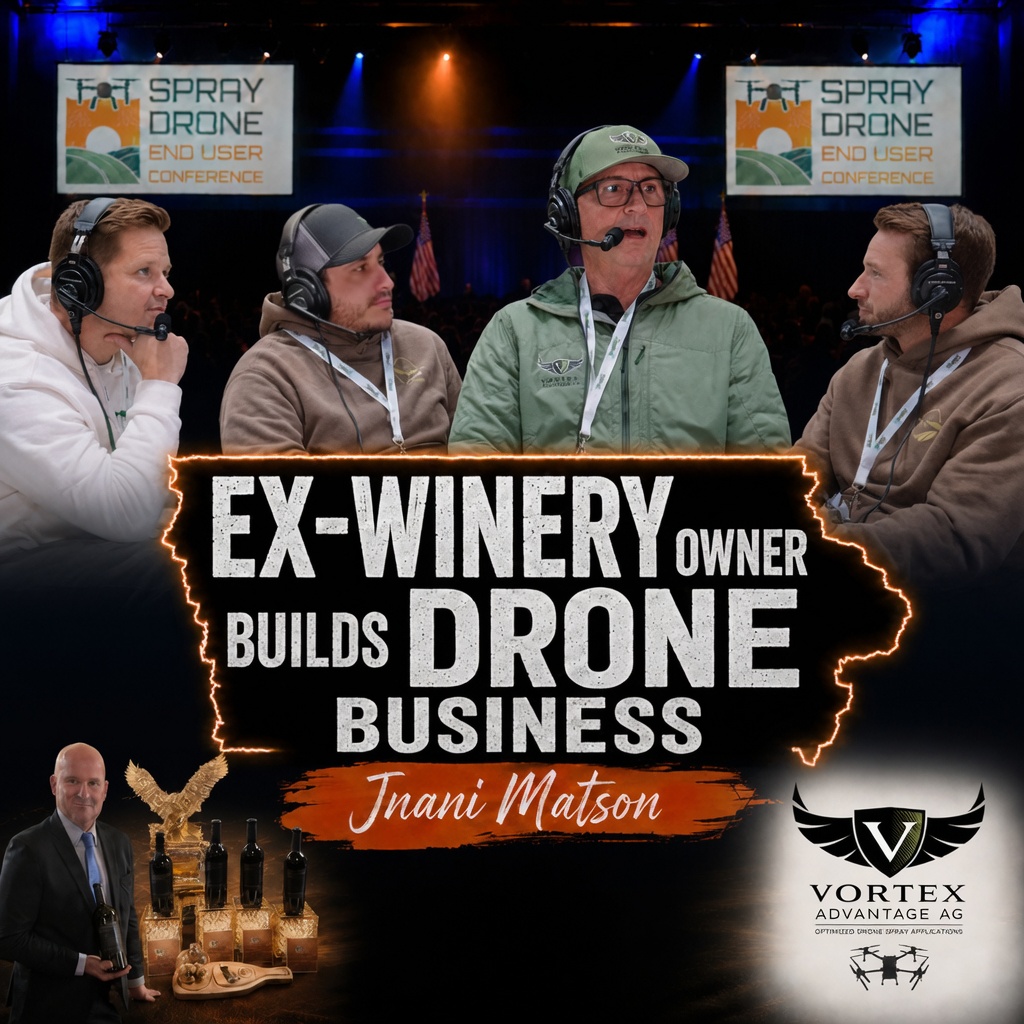
[00:00:00] Speaker A: Alrighty, guys, welcome back to another drone on show. We got Yanni Texas spraying. Let's get into it. It's been one year since we had you on the podcast.
[00:00:10] Speaker B: Yes.
[00:00:11] Speaker A: Things have been growing down their way. It looks. You're always evolving. I remember you meeting you the very first time at Alabama, I think it was.
[00:00:21] Speaker B: It was Mobile two years ago. There was the. I believe it was the second end user conference, wasn't it?
[00:00:26] Speaker C: Gulf Shores?
[00:00:27] Speaker B: It was, yeah. Did I say that or.
[00:00:29] Speaker A: No, he's at Mobile.
[00:00:30] Speaker B: It was Gulf Shores.
[00:00:31] Speaker A: Yep. Y. Yeah, yeah.
[00:00:33] Speaker B: Tell us how things have been going down in Texas.
[00:00:36] Speaker C: Good.
[00:00:36] Speaker B: You know, we're growing as a brand. I think the awareness getting out there, trying to kind of level up on, you know, putting out more content, we're still struggling with that. It's. It's difficult because when you're out doing the spraying and doing what you're doing and trying to be the editor and get your Steven Spielberg on and everything else, it's not exactly easy.
[00:00:57] Speaker A: Yeah.
[00:00:57] Speaker B: But you know, we've got a lot of really big irons in the fire this year and I'm. I'm hoping 2026 is going to be a kind of a groundbreaking year for Vortex. And, and what I mean by that is, you know, we're. We're not one of these companies that goes around saying, I've sprayed 40,000 acres. We just don't do that kind of volume of acres. Our acres are different down in Texas.
[00:01:19] Speaker A: Oh, dude.
[00:01:20] Speaker B: At least where I'm at.
[00:01:21] Speaker C: Not all Texas here in gnarly stuff.
[00:01:23] Speaker B: Yeah. I mean, for the most part we, I'm not saying we don't get some open stuff. We do. But like my buddy up in Witchita falls, he sprayed 37,000 acres this year before he went and did another 20 in Nebraska, Iowa, in the corn run. So different acres in. In kind of north Texas, way far north. It's a lot more wide open and a lot more letter RIP type territory. But where we're at is, is, is definitely a little more chopped up and a lot more obstacles and field planning takes longer and such.
[00:01:53] Speaker C: Like you're doing mostly rangeland.
[00:01:54] Speaker B: Yeah, yeah. I mean, I would. I keep saying 95% of what we do is pasture and rangeland, but I mean, it's really all of what we do.
[00:02:02] Speaker A: Yeah. And.
[00:02:03] Speaker B: And almost exclusively we. I am surrounded by tens of thousands of acres of row and field crop. Corn, wheat, some cotton further south, a lot of cotton, but I do very little of it. And I think it's a, a price
[00:02:17] Speaker A: Point thing, I, I was just going to ask you why, why do you think you're not doing that much of.
[00:02:23] Speaker B: Well, because quite frankly, I mean, the farmers that are working row and field crops are working on what I appear to be a lot tighter margins. They're, they're, they're paying eight, ten dollars an acre to have an airplane come do it. So when I approach them and say I'm 17 an acre, they're going, you know, and up from there, depending on whether it's 2, 3, 4, 5 gallon work. I think it's a price thing. I don't think I know that they're going to, if I were to I think go into it and be in that $10 range, I bet you I would be doing more.
[00:02:52] Speaker A: I was going to say, if it's easier acres, can you still make the money?
[00:02:56] Speaker B: Yeah, you know, there is an opportunity there. I think I've just kind of found my, my niche and I kind of, I'm kind of staying with it, you know.
But I do think there is opportunity to grow and not be so one dimensional in the range and pasture game and, and potentially put together rigs, you know, more like your new way trailer. That the Vortex Rover is not going to be as, as suited for row and field crop type applications. I mean, it can certainly do it, but yeah, I think you're more efficient on a trailer that can run two drones effectively.
[00:03:25] Speaker A: I will say, the first time I seen your brand, I could tell that the guy already had a business prior.
Did you, you thought this out before you just, you know, Yanni's drone spraying. Yeah, it's not Yanni's drone spray. Yeah, yeah, there's a reason.
[00:03:41] Speaker B: Yeah, well, thanks for saying that. I mean, I, I'm glad it's noticeable because I, I feel like, you know, I'm 55, I'm not a spring chicken. So I've been around the boat.
[00:03:49] Speaker A: Every time we, we hear ages, we always look at Dennis, we give him a hard time.
[00:03:53] Speaker B: I'm always the old guy. How old are you?
[00:03:55] Speaker C: 42.
[00:03:56] Speaker B: 42. Okay. So, yeah, I'm, I'm kind of like, it was funny. I was talking to Taylor Moreland a couple, few weeks back and we were on the phone and, and I, my age and everything. I'm like, I'm kind of the O. I said, taylor, you're the OG in the business. I said, but I'm, I'm kind of like the old older dude, you know, And I'm like, you can call me. I said, call me your drone Daddy. And he's like. He's like, drone daddy. He's like, that's gonna stick. And I'm like, oh, no, don't. Don't say that. I don't, I don't want that to stick. But anyway, I'm kind of the old dude.
[00:04:23] Speaker A: Well, you just, you just said it.
[00:04:24] Speaker B: It's all good, brother. I don't care.
[00:04:29] Speaker C: Vortex.
[00:04:29] Speaker B: Yeah. But, you know, I've had. This is probably my fifth go in the industry, in business. I, you know, right out of. Of the military being, kind of went to college, played college baseball. I'm just going to give you the speed dating quick rundown. And I don't know if we went into detail. I was just talking to Landon about some of this stuff that we did last that, that I've done in my past, but I'd love to hear it.
[00:04:49] Speaker A: That. That's, that's what I like to talk about.
[00:04:52] Speaker B: It's kind of cool.
[00:04:53] Speaker A: I have a.
[00:04:53] Speaker B: A bit of a story.
[00:04:54] Speaker A: 100%. Yeah.
[00:04:56] Speaker B: Yeah. So, you know, right out of high school, army, four years airborne, Gulf War vet, you know, spent six months in Iraq in 91.
[00:05:04] Speaker A: Can I slow you down? Because I like to talk about this. Airborne. Did you jump out of airplanes?
[00:05:08] Speaker B: I did, yeah.
[00:05:09] Speaker A: No way.
[00:05:09] Speaker B: Yeah. So military airborne. And I chalked up probably about, I don't know, 40 or so skydives afterwards. So I got to the point where I bought my own rig and, you know, packed my own shoot, and I'd be out at the drop zone every weekend.
[00:05:21] Speaker A: Wow.
[00:05:21] Speaker B: Jumping. Because it was. I was a bit of an adrenaline junkie.
[00:05:25] Speaker A: Okay.
[00:05:25] Speaker B: Funny story. I used to jump with down in Southern California, out in the desert at the drop zone. It was. It was. Was so hot because it was out by Bakersfield and it was freaking blazing in the summer. So I would wear my Tiva sandals, which were like, you know, nowadays, like tree hugger kind of sandals. I'd wear sandals, board shorts, no shirt, and just a pair of goggles. And. And I'd be.
[00:05:45] Speaker C: Parachute.
[00:05:46] Speaker B: Oh, yeah, And a parachute.
[00:05:47] Speaker C: Oh, my God.
[00:05:47] Speaker B: And because it was so hot and everyone's like in these like, jumpsuits and stuff, and I'm out there you know, with just bare back in it. Cuz I don't know. So maybe it was just the alpha male and me wanting to kind of be whatever, you know, I can jump.
[00:05:59] Speaker A: So you started jumping in military, but you were doing it civilian as well.
[00:06:03] Speaker B: Yeah. So at 101st Airborne Division, they had a command parachute demonstration team on the base, which was, if You've heard of the Golden Knights?
[00:06:11] Speaker A: Oh, dude, I love the gold.
[00:06:12] Speaker B: Yeah. So the U.S. army parachute team, right?
[00:06:15] Speaker A: The scar right here always reminds me of the air show. We were literally getting ready to go to the air show to see the Golden Knights. To see the Thunderbirds.
[00:06:24] Speaker B: Yeah.
[00:06:24] Speaker A: Slip and fell on the van, running board, smacked my face and, and got this big scar going to the air show.
[00:06:30] Speaker B: Wow.
[00:06:31] Speaker A: That was when I was like maybe seven.
[00:06:33] Speaker B: I always wonder what that was. I thought maybe he was a tough guy in his past life and got locked up with some dude in a bar or something, you know, just a running board.
So not, not as cool of a story.
[00:06:48] Speaker A: Somebody else was asking me about it. They, they were hoping it was like maybe from a drone propeller it would be. Yeah, maybe cooler.
[00:06:55] Speaker B: I'd like, I got a big old, I broke my arm real bad side story. But no, I got like a 10 inch scar on my arm right here. It looks pretty bad when I see when people are like, damn, what happened to your arm? I'm like, shark attack.
[00:07:05] Speaker A: Fiji, you know, and they're like, no way.
[00:07:09] Speaker B: And I'm like, come on, you're that gullible.
But so yeah, the, the 101st was where I kind of took up sport parachuting after being armies parachuting. And that's where 5th Special Forces Group is based. And so I was being groomed, I was elevating really quickly through the sport parachuting thing. And they tried to pick me out of my unit on a special duty assignment to be part of what they called the 101st Command parachute demonstration team. This team was the junior kind of Golden Knights team. And the Golden Knights, actually I knew several guys that got picked off that team to the Gold Knights. And so you go jump into like Texas State Fair and into the 50 yard line, bringing a football and the American flag in, in on the 50 yard line, doing stadium jumps and stuff. Long story short, I ended up not. My first sergeant wouldn't let me go. He's like, old Vietnam vet was like, matson, why you want to go skydiving? The military needs you. We're shorthanded as it is. So that was the start of the end of my military. I really got disenfranchised and started thinking, man, I'm good at something here. This is a chance for me to elevate myself in the military because it's a very prestigious position.
And I was going to say they held me back and I was like, screw it, I'm getting out. So that's when I got out and pursued college baseball, played a couple years
[00:08:28] Speaker A: and I was going to say, you look like you'd be like a baseball player.
[00:08:32] Speaker B: I was a pitcher, had a live arm my whole life. Mid, low, low to, you know, high 80s in junior college, low 90s and low to mid in, in college. Had a good curveball. But I was old because of my military, four years. So all the scouts liked me. But they were like, how old are you? And I'm like, you know, 25 or whatever it was. And they're like, well, we like them young. So I ended up hanging up the cleats and got into the hardwood flooring industry. It was kind of a family business through my sister's husband and learned that trade and built a very successful hardwood flooring company in Southern California in the LA Basin. Working for movie stars, celebrities, you know, normal people too. But it was very hard work. Not that I'm scared of it, but after the old timers always told me, get out now while you can, because this thing will you into it and you'll be in this business for 30 years and you'll have no knees, no body, no back when you're done.
[00:09:25] Speaker A: Wow.
[00:09:25] Speaker B: Same like your tree business, right?
[00:09:26] Speaker A: Oh, dude, I'm over here.
[00:09:28] Speaker B: Yeah, yeah. So I got out of the flooring business and ended up transitioning into the mortgage business, believe it or not, selling houses. I got the gift of gab and you know, doing loans. So I ended up having, over a two, three year period, built up a company with 20 plus loan officers and we were killing it.
[00:09:48] Speaker A: And what year was it this been about?
[00:09:51] Speaker B: That was pre 2007. It was like 4, 5, 6, 7 or 5, 6 just before.
[00:09:56] Speaker A: Yeah.
[00:09:57] Speaker C: You were one of those guys that was giving out loans to everybody.
[00:10:00] Speaker B: No, I wasn't actually, but. But yet it kind of was like that, that was the environment, I mean, boiler rooms of guys with telemarketing, you know, calling cold, calling people.
[00:10:10] Speaker A: Wow.
[00:10:10] Speaker B: And I do pride myself in not, you know, making people aware of what they were getting into. There's a difference between selling some somebody a product, like a negatively amortized loan was, was what was getting people into trouble.
[00:10:23] Speaker A: Okay.
[00:10:23] Speaker B: As long as the values were going up, you were still okay.
[00:10:26] Speaker C: Yeah.
[00:10:26] Speaker B: But when the values leveled off and then started coming down, you're negatively amortizing because you're only paying the interest on the loan. You're not even paying the interest on the loan and it's adding to your loan balance every year and you get upside down in your house. So the thing is that people want getting too much into that business because it was boring and, and it sucked. But you know, if they, if you don't give them that loan, they're going to go down the street, they see their buddy in their million dollar house. It has a $2,000 a month payment. They're like, I want what Joey has. And they're. And if you don't give it to me, I'm going to go over here and get it. So you know, you advise them, this is the, this is the deal. And sell them the product.
[00:11:02] Speaker A: So, so to get in a mortgage, do. Were you just like, you looked at the houses, I want to sell houses or did somebody like approach you at first?
[00:11:10] Speaker B: It was a good buddy of mine who owned the mortgage company and he said you would be really good at this. And it wasn't selling houses, it was selling loans and mortgages. So it did transition. After the 07 crash, I basically transitioned into helping all those people that were in that situation. In short, selling their houses.
[00:11:28] Speaker C: Okay.
[00:11:28] Speaker B: So now I became the master negotiator with institutional lenders. Getting them to accept that They've got a $650,000 loan on this property or note on this property that. And I'm gonna, I'm gonna sell it for 350 and they're gonna have to accept it and accept the loss. And that was hard at first, but I was savage with it. I mean, and I just got really good at it and I got. So I was representing homeowners that were risking losing their houses and helping them short sale and helping them get forgiven the debt that they, the discrepancy in what they owed versus what it sold for.
[00:12:01] Speaker C: Wow. So people actually were given like forgiven the debt that they.
[00:12:04] Speaker B: Yeah, not all, but, but if it was done properly you would get. I forget because it's been years since I've been in the business.
A basically a sign off that the lender would do that would alleviate them from having to be responsible for that debt.
[00:12:16] Speaker A: Was that like government funded or the, the company, the company that gave the loan is just out the money.
[00:12:22] Speaker B: They're just out the money. I mean, I'm sure they're insured for that or what have you. I think it was called a deficiency judgment if I'm not mistaken. But again, it's been. I don't even think about it anymore, so. But anyway, on to more interesting stuff.
Then I segued into.
[00:12:36] Speaker A: How long did you do that?
[00:12:37] Speaker B: It was a few years, I would say probably five years.
[00:12:42] Speaker A: Maybe made good money. While it lasts.
[00:12:44] Speaker B: Oh, yeah, yeah, yeah. It was really good. It was. It was good. I had it. I had, you know, a big 30 foot boat. I was going to Lake Havasu every other weekend.
[00:12:52] Speaker A: Turns you into a millionaire live.
[00:12:53] Speaker B: No, I wasn't. I mean, I made a lot of money. I probably made it. I didn't keep it, you know, being, you know, young and dumb and you
[00:13:02] Speaker C: were living in California.
[00:13:03] Speaker B: I was.
[00:13:03] Speaker A: Oh, geez.
[00:13:04] Speaker B: Yeah, yeah.
[00:13:04] Speaker C: So that was the problem.
Yeah.
[00:13:07] Speaker B: I. I ended up segueing into, you know, when the part of that. At the same time as I was doing the short sale thing, I was doing a lot of mixed martial arts training. Big John McCarthy, the referee from the UFC.
[00:13:21] Speaker C: Oh, yeah.
[00:13:22] Speaker B: He opened up a place about two miles from my house. A big old, like 30,000 square foot MMA training facility.
[00:13:29] Speaker A: Wow.
[00:13:30] Speaker B: And I always loved to box, but I never really had any formal training. I was good at it, but it was just instinct. Boxing, not train boxing. And in fact, in the army, I bought gloves, two sets of gloves and two sets of headgear. And I would challenge anybody. And I got guys today that I keep in touch with that we still talk about it. We would just throw down in the day room or whatever.
[00:13:50] Speaker A: Did you ever get knocked out?
[00:13:51] Speaker B: Once. I didn't get knocked out cold, but I had a guy who was a Golden Gloves guy turned, ended up trained, and he lit me up. But most of the guys, most of the guys I got, I got the best of.
[00:14:02] Speaker A: You probably have a decent reach the way it looks.
[00:14:04] Speaker B: Yeah, six, nice. 6,000, 263, you know, back then, 185 ripped, you know, so chisel, stiff jab. But I ended up getting into the personal protection industry. So my first gig was doing like event security for this large. This was like a fallback. I was like, oh, the whole real estate. Sorry if I'm swearing there. The whole real estate thing was. Went to crap. I really. The short sales was. Was not what I really wanted to do. I knew I could. I was. One of my jiu jitsu training partners was Will Smith's bodyguard.
[00:14:35] Speaker A: Okay.
[00:14:36] Speaker B: And he was a purple belt. I was a white belt, but I was a strong, athletic, big white belt that was getting pretty good, almost blue, but wow. And we would roll. And he would be telling me, as we're wrestling full speed, you know, we're talking, because that's what you do. And not always. But he ended up kind of mentoring me along and telling me what I needed to do in order to get to the level to Be able to be a high level bodyguard. And so I went out right away and just fast forward. Within one year I was interviewed and worked for the top firm in Beverly Hills, which is called siss Screen International Security Services. They're. They're out of Beverly Hills and they.
[00:15:14] Speaker A: Wow.
[00:15:14] Speaker B: They had Tom Cruise, Salma Hayek, Anthony Hopkins, Steven Spielberg, you know, all Nicholas Cage, all the big wigs.
[00:15:22] Speaker A: Yeah.
[00:15:23] Speaker B: And so I got groomed. They liked. I had the look, you know, in a sport coat.
I had the height, the size that looks like the guy that could be just part of your entourage, but also the guy you probably don't want to mess with.
[00:15:36] Speaker C: He kind of looks like the guy that plays Hitman.
[00:15:38] Speaker B: Hitman, yeah, kind of, you know.
[00:15:39] Speaker A: Yeah.
[00:15:40] Speaker B: Got the bald head, kind of fit. Fit the profile. So I ended up getting.
[00:15:44] Speaker A: Would you have any pictures of that? That would be sick if we could throw it up.
[00:15:48] Speaker B: I will. I feel like when I tell these stories, people are like, this guy's so full of like he's got too much, too many different really cool things.
[00:15:56] Speaker C: Love it.
[00:15:56] Speaker B: I bring receipts, baby.
I got. I'm like Trump. I bring receipts, man.
Anyway, so yeah, no tax bills.
[00:16:05] Speaker A: No tax bills.
[00:16:06] Speaker B: I got some great. I got some great pictures that I'll be glad if you want to share. Oh yeah.
[00:16:10] Speaker C: It's kind of fun.
[00:16:11] Speaker B: It's fun. So I ended up on the Spielberg detail and you know, protected his daughters, Destry, Micha, Michaela and I would drive him to school and you know, wow. You know, armed.
[00:16:22] Speaker C: Sounds like super sounds out there, man.
[00:16:24] Speaker B: Yeah, it was a different life. You know, there's what they call rst resident security teams. So all these big celebrities have, when they have their estate properties, they usually have estate security. So you're cut, you're a security guard. But a much. They got high caliber guys like me in their guard towers. Not just slap dick people. Like they're hiring really qualified, you know, I'm not going to just shine somebody
[00:16:46] Speaker A: with my friends,
[00:16:49] Speaker B: you know, you gotta, you gotta actually be able to do something.
[00:16:52] Speaker C: Yeah. Yeah.
[00:16:53] Speaker B: So.
And by the way, as a side note on that. Holy crap, like the DOC 3 or something, I was gonna ask you, how
[00:17:00] Speaker C: much would that have been?
[00:17:01] Speaker B: It's actually I had one of my, my guys I worked on the Spielberg detail with reach out to me because he started an international personal protection firm and he was looking for that type of technology. And I said, well, I got the perfect unit for you. And he never pulled the trigger on it. It was some customer out in Tennessee that had like a 500 acre ranch and they wanted security and they want. And I thought it would be so good for patrol.
[00:17:22] Speaker A: Yeah. So I haven't released content on it yet. But like that who.
Using the dock system just for security and surveillance is going to be my point.
[00:17:32] Speaker B: I think it's got a lot of use cases out there that have just yet to really see that. See how well they will.
[00:17:38] Speaker A: Exactly. Yeah. No, so you're. Go ahead.
[00:17:42] Speaker B: No, I was gonna say I'm just at Spielberg doing my thing and then, you know, I, I got the fortune of, you know, being pulled off and going to work for Robert Downey Jr. And Guy Ritchie. And I've, you know, flown in private jets from London to Rome. What, what, what they do is they do these press junkets. They'll do like a two or three week press tour for. In this case it was like Sherlock Holmes. Game of Shadows was the movie and I believe it was a Warner brothers thing. But RDJ, Robert Downey Jr. Everyone's got their, you know, nicknames or what have you, aliases. But RDJ was the main star. Guy Ritchie was the director. I'm a huge Guy Ritchie fan and I got, I got actually put on Guy Ritchie for that detail.
So it's, you know, la fly to London, hit the ground running. You go straight to the premiere. They have a red carpet premiere. We've got advanced guys there. We use same tactics as like Secret Service where you leapfrog. You've got advanced guys already there. So when we hit the ground, I haven't been to this venue. I don't know where the restrooms are, I don't know where the nearest hospital is. I don't know anything. So I got a guy leading me, he knows where all. He's been there for two days, advancing everything and he knows exactly where to go, where the guy's gonna sit, where you're coming in, where you're going out, where you're going to stage the vehicles, all this really cool stuff.
[00:18:54] Speaker A: Yeah.
[00:18:55] Speaker B: And you end up, you know, so we did that and we'll hop on a private jet. You know, you're staying at the nicest hotels, Claridge's of in, you know, in, I think it's in Mayfair in London. And we're staying at the Hassler of Rome at the top of the French of the Spanish Steps in Rome. And wow, walking the streets.
[00:19:10] Speaker A: So when you're doing that type of work, you're single.
[00:19:13] Speaker B: At that time I was married.
[00:19:15] Speaker A: Oh, you were married?
[00:19:15] Speaker B: Yeah.
[00:19:16] Speaker A: I mean hard. I was going to say how your schedule would fluctuate.
[00:19:21] Speaker B: That's what ended up kind of getting me out of it. You know, I, I, after that tour, rdj, I didn't talk to him much. He had his number one guy. I was on Guy Richie for that tour and he one day came right up to my face and this is how he is. Robert Down Jr. He came walking like this close to my face. He's like, so. Because I was the, I was making waves.
Everyone was talking about me because I was the new guy on the detail and he, and they, they all really liked me. And Jimmy, who since since passed was RDJ's right hand man, they met in NA, in Narcotics Anonymous and Jimmy was the guy that kept RDJ on the straight and narrow for years and they became his like it was basically Jimmy was in RDJ's back pocket. Everywhere he went, Jimmy was by his side. Jimmy really liked me. And so word started spreading. Jimmy must have said something to rdj. RDJ comes walking up to me right before we were going back to New York and he was like, so been hearing good things about you. He's like, are you coming to New York? And I was like, actually no, I, I'm not licensed in New York so I'm actually going to go back to la. And he's like, well, we'll talk soon, you know. And so I ended up getting an offer to work full time for him afterwards. It didn't end up working out. It was a long story, but I would have had to use the firm to go through and they were low balling me and I said no, not doing it for that. I need more money.
[00:20:34] Speaker A: Yeah. So you would have been working for the firm. Not necessarily like your paycheck would come and.
[00:20:39] Speaker B: Correct. And they were trying to, I mean it was stupid. They were trying to give me like
[00:20:42] Speaker A: half of what I normally would make. And dude, that lifestyle just sounds from.
Say you're a single guy. Sounds like that's about as cool as it could get.
[00:20:52] Speaker B: Single guy, yes. There's a lot of, you know, like this industry here, drone industry. I try to maintain a real humble. I'm confident, don't get me wrong. I'm a, I'm an alpha personality. I'm very confident. But I try to not bridge that confidence into arrogance, you know, I really try to, I hope that's what I put off, you know, I really do. I, because I try not to be arrogant, but I am confident. And 100.
[00:21:15] Speaker A: I'm, I'm the same way you are. I'm Confident. But to this, to the wrong person, they're like, Mike's being cocky and he's arrogant.
[00:21:23] Speaker B: Yeah. I think that we're both probably perceived that way sometimes. And that, and it is what it is. You can't please everybody.
But for.
[00:21:30] Speaker A: So for a young guy, you were saying.
[00:21:31] Speaker B: Yeah, for a young guy, it's, it's, there's a lot of power in the position, in the, in the role. Because when you're a talent's right hand man and because you could become very close to that person, you're, you have a lot of power. So if you're married and you're all that you got, you know, women are kind of throwing themselves at you because you're the big bodyguard guy. That's a, there's some appeal there, you know. But yeah, so I could see guys that were single would probably have a fun time with that. But I never did, you know, obviously.
[00:21:59] Speaker A: So when you're on a trip like this, like, is there any off time at that time like, or you are always on guard, you're always watching them while you're in a different country or whatever? Or is it like, okay, at 9 o' clock you can go home and you know, lay in bed or you
[00:22:15] Speaker C: can go, yeah, go to the hotel and the other guy takes over.
[00:22:18] Speaker B: Yeah, that's mostly. No, in fact on that, that was my first international tour. And I told him, I said, you know, I asked the guys, I'm like, hey, do I need to bring like civilian clothes or whatever, just regular clothes and because we wear suits most of the time and they're like, no, no, you won't need, you're not going to have any time off. So all I brought was like a tracksuit. Like, because if I'm going to travel, I want to be comfortable when I'm, when I'm flying there, you know, I'm business class, I'm flying Warner Brothers all out. You got the, you know, the bed and the whole nine and pinkies out with.
Pinkies out with the champagne glasses. I'm like, this is the life, bro. You know, $7,000 ticket or whatever it was.
[00:22:55] Speaker C: Yeah.
[00:22:55] Speaker B: But, you know, all I have was this funny story. All I have was a tracksuit. Well, one night we're in London and they're like, all right guys, you're off. Until Tom, we, we don't have anything going on. All the talents lock, locked up for the night. And I'm like, oh, wow. And everyone's like, we're going out for beers to the pub And I'm like, well, all I have is my tracksuit and I. I look like a Russian mobster, man.
[00:23:15] Speaker C: They were.
[00:23:15] Speaker B: They were giving me so much. They're like, dude, you look. You look like a total mob guy, man. Cuz, you know, they all wear their tracksuits. But. So anyway, that segued into last. Last part of that whole bodyguarding piece was I got. I got put. Pulled out to a detail for a retired coal billionaire. And that coal billionaire. I would go 10 days a month into Vegas and fly in. He had a number one guy, he would fly me from LA to Vegas. He was retired there in Vegas, lived there full time.
[00:23:41] Speaker A: And a coal guy. Yeah. Is he from West West Virginia?
[00:23:45] Speaker B: He actually was from Ohio and.
[00:23:48] Speaker A: And wonder if he had like Columbus Rosebud Mining, maybe? No, it's big enough.
[00:23:56] Speaker B: I'll tell you. Boich Boych companies. Boich B O I C H. They're actually. Actually how I ended up into the next profession, which was the winery. Yeah, but so are you the same
[00:24:05] Speaker C: guy that was helping with Biden? No, no, we had talked to somebody and I forget who it was.
[00:24:11] Speaker A: Oh, it was Eric the helicopter guy.
[00:24:14] Speaker C: That's who it was. Yeah.
[00:24:15] Speaker B: Yeah.
[00:24:15] Speaker A: So the helicopter guy that introduced me to Acres in Indiana, he was. He would fly.
[00:24:20] Speaker C: He was security for Biden.
[00:24:21] Speaker A: Yeah.
[00:24:21] Speaker C: Air Force One back when he was vice president.
[00:24:23] Speaker B: Yeah, yeah.
[00:24:24] Speaker C: Said it was the most arrogant piece of crap ever.
[00:24:27] Speaker B: I was gonna say. I'll just go out and say it. I think you'd find. Be hard pressed to try to help. Have me helping.
I'm sorry.
[00:24:36] Speaker A: But.
[00:24:36] Speaker B: Yeah.
[00:24:36] Speaker A: So this coal guy, like. Or coal company.
What was his name?
[00:24:41] Speaker B: Wayne. Boy, she passed.
[00:24:43] Speaker A: Okay, so Wayne. You're protecting Wayne? Yeah. While he's going to Vegas to Campbell or what?
[00:24:48] Speaker B: Yeah. No, no, he was just a retired guy and.
[00:24:51] Speaker A: Oh, that's just where he lived.
[00:24:52] Speaker B: Yeah, he just, you know. Yeah, we. You know, this is stuff I can talk about now, but it's like stuff. Then I probably would. You wouldn't. I wouldn't be dropping names and stuff.
[00:24:59] Speaker A: Yeah, yeah, yeah.
[00:25:00] Speaker B: But you know, it's basically. It was. He was one of the most generous business savvy, incredible humans, like very tough. 6 foot 5. Had like a hip replacement. So he had a little hitch when he'd walk, but I had so many. One on one, really good. He would just be in your face and him and I would chop it up. Whether it's driving, you know, I would drive him. He had really nice cars. I got to drive Porsche Panameras. And BMWs, you know, Twin Turbo BMWs. He had a Scaglietti 612 Ferrari that he'd throw me the keys and go, Yanni, go air it out. It needs to be driven, you know.
And, and so I ended up working with him for a couple of years and then they got to an age where they needed more medical, a medically trained bodyguard around. So I ended up kind of going to work for his son John Boych out in, in San Francisco. And that was a right hand man kind of position.
Low, low level security, but looking after the family. And that spawned into, hey Yanni, I didn't realize you have such small business experience. I'm looking at ending my 30 year finance career and segueing into a, maybe a winery, you know, are you interested? And I said sure. And so he printed me out a couple page word doc of like things that needed to get done to start a winery. And I just saw an opportunity and I just frickin blocked and tackled and ran with it. And within three months I had like most of it done.
[00:26:24] Speaker A: Wow.
[00:26:24] Speaker B: He was like, man, he's like, you're like the Nike guy, you just do it. And so he gave me ownership interest in the company that by the way, hadn't even produced a bottle of wine yet.
Right. So I had 10% ownership in this winery. And he said, let's go make this thing worth some money. Now I've got a billionaire son, you know, who is very, also generous, nice guy and treated me very well. Treated me like family. Very, very, very nice guy. We became like brothers and you know, we built this company together. And so 14 years later, you know, you got a 14, $15 million company that is doing wine dinners at Mar a Lago. I mean, yours truly has actually been a guest at Mar a Lago. I've stayed the night by the way. I'll send a picture of that as well.
I've got a picture of me in the salon in the main entry in front of the golden eagle with the, with the first page of the constitution. We the people in the talons of this gold eagle. It's just badass.
[00:27:20] Speaker A: This makes you feel American.
[00:27:22] Speaker B: It does. And, and accomplished too. I mean like they do four wine dinners a year at Mar a Lago and I did two in three years.
[00:27:31] Speaker A: Wow.
[00:27:31] Speaker B: The first one I did was out on their famous courtyard outside and I just got done speaking, doing my presentation at the beginning and all of a sudden everyone starts applauding and stands up and I'm like, dude, what's going on and sure enough, Trump comes walking out and walked into my tasting and was like, so you got some wine, dinner. You know, it was the coolest thing.
[00:27:51] Speaker A: How old would Trump been?
[00:27:53] Speaker B: This was right when he got out of office the first term.
[00:27:55] Speaker A: Oh, no way.
[00:27:56] Speaker B: Yeah.
[00:27:57] Speaker C: Wow.
[00:27:57] Speaker B: So.
[00:27:57] Speaker A: Well, he was a president.
[00:28:00] Speaker B: Yeah, he just had already been. Yeah, he just got out. And why I know that is because they had a TFR over his over at Mar a Lago while he was president. And then I guess they got rid of it because West Palm Beach Airport departure, they made me use a microphone, which I hate. I like, I have a pretty boisterous voice and I like to command a room with just my voice. The mic screws me up for some reason. I don't know why, but they made me use a mic because airplanes every once in a while would take off and be flying over the property. So anyway, that was kind of the. I exited out of the wine business, got bought out of my interest.
[00:28:34] Speaker A: Okay. I was going to say, did the. Did the company sell to like a bigger company or. He just bought. Your business partner bought you out.
[00:28:40] Speaker B: We had since brought in another partner who owned 30%. He bought me out.
[00:28:44] Speaker A: Oh, okay.
[00:28:45] Speaker B: So I was looking to get out. So, you know, he so left on good terms. Yeah.
[00:28:49] Speaker A: Oh, yeah, yeah. Awesome.
[00:28:51] Speaker B: You know, and he bought me out. And I'm kind of invested in the drone business. So that's kind of my long winded. That wasn't version.
[00:28:58] Speaker A: That's very interesting. So, okay, so you get bought out and at what point were you introduced to drones?
[00:29:04] Speaker B: That was.
Let's see.
Oh, gosh. I moved to Texas. I was winding down on the wine side of things, and I really started looking into ways that I could. I wanted something aviation related. Being a pilot, I was, you know, I thought about maybe opening like a flight school or buying a couple airplanes and trying to, you know, I don't know, I just wanted something to do with aviation.
[00:29:27] Speaker A: So somewhere along the lines here from, you know, everything you just shared, you got your private pilot's license. Yes. Where. When did that happen?
[00:29:35] Speaker B: That was at the. At the. That was. I think it was. Gosh. It was in. I'm so bad with years. 2000.
Hold on. I got it. It was like 13, 14, maybe 15 in that range. I got my private.
[00:29:47] Speaker A: So it was when you still had the winery. It wasn't before the winery.
[00:29:52] Speaker B: Funny story. Cool story to add to it. John, my business partner, we're driving one day. I drove for him on a. You know, a lot. He goes Man, I had this wild idea. I want to buy a Pilatus PC12.
[00:30:03] Speaker A: Oh yeah.
[00:30:04] Speaker B: Which is.
[00:30:04] Speaker A: Dude, for some reason that, for some reason that airplane, I feel like it's my dream. It is.
[00:30:09] Speaker B: It's every. I think it's just so badass. It's like the thing will take off and land on gravel roads. But he's like. And I, I want to learn how to fly and I want you to learn with me. And so he actually generously paid for my flight training.
[00:30:22] Speaker A: That's cool.
[00:30:23] Speaker B: And so got me through private. And then I paid for my instrument after that and got my instrument and didn't go on to commercial because I really didn't have a need for it. But.
[00:30:31] Speaker A: Did you guys acquire a Pilates?
[00:30:34] Speaker B: No. He, you know, I, for whatever reason halfway dozen or so or two hours into it, he, he just. I don't know if it wasn't him or what. He just lost interest and decided not to. And, and we never. Yeah, never. Never happened.
So I was stuck in the little system.
[00:30:52] Speaker C: You got a plane now, don't you?
[00:30:53] Speaker B: I just sold my diamond DA40 which was a really nice sexy airplane and I bought a brand new 20, 2026 pipistrel verus SW. It's a two seater. A lot of people say ramp appeal wise it's a step down. The diamond is a much sexier airplane and you know, but it's 17 years old. It was an 08. It only had 200 and some odd hours on it. It was a hangar queen. But I bought a brand new airplane with a ballistic parachute and it way more economical.
[00:31:20] Speaker A: Yeah, those things are so efficient. What are you cruising at? 150, 160, 175.
[00:31:25] Speaker B: It'll do. It'll do. 147 true with the prop that it's got a 2 blade MT constant speed prop. I'm putting. I bought a Duke Helises, they're French made but it's a three blade tiger black carbon fiber with a carbon spinner. It's going to be badass. And so that's supposed to make constant speed. Still constant speed. But it basically lowers the vibration. It makes it much smoother. It's supposed to give you three or four knots on cruise. It's supposed to climb better.
[00:31:51] Speaker A: Wow. Because isn't a. Is it a Rotax in there?
[00:31:53] Speaker B: It is a 912.
[00:31:54] Speaker A: 912.
[00:31:55] Speaker B: It's the smaller one. It's 100 horse fuel injected.
[00:31:58] Speaker A: That's insane.
[00:31:59] Speaker B: So you don't have a mixture.
[00:32:00] Speaker A: You got. If you'd See this airplane? You should show it to them. Yeah. What the engineering behind that thing is to get it sleek and have an engine that doesn't consume a lot of fuel but still goes fast.
[00:32:11] Speaker B: That's right. It's the Slovenians.
[00:32:13] Speaker A: It's.
[00:32:13] Speaker B: They're made in Slovenia. In fact, it just got put on a boat. It'll be here Feb. It'll be in Utah on February 26th or something. And they're gliders originally, so they've got these. Even though it's the SW is the short wing. They have the virus. They have the weird names. Verus. Like, it's spelled like virus. And then they have sinus. Spelled like sinus. And the sinus has virus and sinus.
[00:32:34] Speaker C: Yeah.
[00:32:35] Speaker B: Weird names. But. But I kind of like it the Verus sw. But it's. I'm a big guy, so it's kind of. It's a cozy airplane.
[00:32:42] Speaker A: Does it sit side by side?
[00:32:43] Speaker B: Yeah, yeah, side by side.
[00:32:45] Speaker A: It's like, really nice. The canopy goes like this, right?
[00:32:48] Speaker B: So you're thinking of the. The diamond did that.
[00:32:51] Speaker A: It.
[00:32:52] Speaker B: The diamond fold folded like that mine. It's a high wing. That was a low wing. This has got the windows go up, the doors go up like this and they. They snap into the lower.
But.
[00:33:01] Speaker A: Oh, yeah. Then I don't know what you're talking about.
[00:33:03] Speaker B: Yeah, this one's different. I'll show you.
[00:33:05] Speaker C: Huh?
[00:33:06] Speaker A: Okay. So did you go fly it over there or.
[00:33:09] Speaker B: No, I flew it in. In Utah. Their distributor is in Heber City, Utah, outside of Salt Lake. So I took a flight out there and they test flew one of the. I flew a tail dragger just to see what that was like.
[00:33:21] Speaker A: Oh, dude, I want to see this airplane because I'm also looking.
[00:33:24] Speaker B: It's. I'll show it to you after the thing. And it's. I mean, for. I mean, I'm not a rich guy, dude. So, like, I. I really am very fortunate, you know, like, own this airplane and own it like, without a note. I don't have a. You know, I own it outright, which is a lot. Largely due to my buyout in the winery. You know, that was the financial moment that made me able to do this. It's not. I don't make the money to do this from the drone spraying industry, you know, I mean, I'm doing well with that, don't get me wrong. But it's. This is.
[00:33:50] Speaker C: Is that more of a hobby for you or do you use it for work?
[00:33:53] Speaker B: I do use it for work. And. And that's the Goal is to, you know, Texas is a very large state and there's crap, tons of airports everywhere.
[00:34:01] Speaker A: Yeah.
[00:34:01] Speaker B: So I can pop into a rancher's airport locally. They can pick me up. We can go check out the pasture, scout the job. 100.
[00:34:08] Speaker A: Dude, the guy in Florida is doing that 100. He is doing it with his cub. Well, actually just sold his cub.
Take a break and put that back.
[00:34:17] Speaker B: There we go.
Nothing.
[00:34:24] Speaker A: Just Yanni fidgeting a little bit. So.
So Newt is doing that. He had a little cub and now he sold it and got himself a mall.
[00:34:33] Speaker C: Oh.
[00:34:33] Speaker A: And he literally said, no. That's how I go and see if the corn or the pasture is ready to spray. And he'll literally land it in the field.
[00:34:41] Speaker B: Wow.
[00:34:42] Speaker A: Yeah.
[00:34:42] Speaker B: That's cool.
[00:34:43] Speaker A: Yeah.
[00:34:43] Speaker B: Yeah. I mean, what a way to weave in aviation into this industry. You know, I mean, if, if you can use it, use it. But, you know, I think it's. It's for me, I just enjoy flying. 90 of the time I'm by myself.
[00:34:57] Speaker A: Yeah.
[00:34:58] Speaker B: That's why 86 the four seater. I just don't need a four seat aircraft. It's my wife and I or a friend and I or me most of the time. So.
[00:35:06] Speaker A: Do you have children?
[00:35:07] Speaker B: I do. I have twin girls. They're like 28.
[00:35:09] Speaker A: Okay, let's talk about Vortex. How did you come up with this logo?
[00:35:13] Speaker B: Like, so great question and thanks for noticing. I get a lot of compliments. It's so there's like Air Force a little bit. So there's a story behind this, actually. So the, the guy that did it, his name is Pete von Prague. M2 Studios out of San Francisco. He did like the staples, Easy butt. He did the think outside the bun campaign for Taco Bell. Remember when they went away from that stupid Chihuahua? Yo, kiddo. Taco Bell. Anyway, he's a marketing guy at a very high level. He did our winery brand.
[00:35:39] Speaker A: Okay.
[00:35:40] Speaker B: And he's very expensive. I mean, we spent like with the boy. With the winery brand. It was like $150,000 over, you know, a year and a half. And that was, that was on the cheap. I called him and said, hey, I need a logo and some brand standards for a drone business. I've got some ideas.
[00:35:54] Speaker C: Yeah.
[00:35:54] Speaker B: Will you, will you do it for me, bro price? Because, you know, I was like, I got 10 grand at most.
[00:36:00] Speaker A: Yeah.
[00:36:00] Speaker B: And so he's like, if you can be really efficient, I will do it. And he goes, but the minute we tip over into inefficiency, I'm gonna. I'M gonna tell you just quick anecdotally, fast forward. He told me at the end, him and his team said they've never created a brand new as efficiently and as fast as this one. And he said they were just blown away. It was like three weeks, start to finish. Boom. So, Vortex. This logo, if you've ever seen Air Assault Wings on, you know, being airborne. Air Assault. When you're in the military, Air Assault Wings is the front of a Huey, uh, one helicopter with the blades and then the rotor. The rotor vortex coming off the side and curling up.
I originally wanted. In fact, I even formed the LLC and everything. I wanted to call it Aerial Assault ag. Kind of playing off the Air Assault thing.
[00:36:47] Speaker A: Yeah, yeah.
[00:36:48] Speaker B: Because I knew that the drones flying produced this vortex. Right. So he hated Aerial Assault Ag. He was like, we're changing the name. And I was like, I love it. What do you mean, no? So we fought a little bit, and then I listened to him, and we finally. He came up with some names, or actually, my wife came up with Vortex. She's like, what about the Vortex? And I'm like, actually, that's pretty genius. And so I. I gave him the name Vortex and I wanted to call it Vortex Precision Ag. He came up with Vortex Advantage Ag. Because you're getting the Vortex advantage. Right. And I really. Now I'm thankful that I went and leaned on his guidance, but he took that Air Assault badge that I earned in the military and turned it into this. And it was the first shot. I mean, the very first shot. He nailed it with the wings, and it kind of plays off Texas Horns, too. He said is in there. Which it does kind of look like a little bit. Although I don't really think of it that way.
[00:37:42] Speaker C: Didn't think of it, but now that you say it.
[00:37:44] Speaker B: Yeah, yeah.
But masculine. Not too overstated, but just why?
[00:37:50] Speaker A: What's in the middle? There's a badge with a V and
[00:37:54] Speaker B: just a V with some fins in green that fade. I don't know if you call them fins or lines that fade. Nothing. No real meaning to that. Just wanted to tie in a green color to the brand standards. So, you know, when you're creating a brand, they give you not just the logo, but the brand standards. Right. What kind of font, what your colors are? You know, how does everything look?
[00:38:16] Speaker A: Yeah. And so with that experience, you know, for a young entrepreneur that's watching or listening, what would you tell them if they're wanting to get a business started as far as building a brand versus just getting out there? To start ripping.
[00:38:31] Speaker B: I think you and I are kind of really good examples of why it's important to build a brand from this. From the outset, I realized tell them why. Yeah. So I mean, for me, it's association with not only a service, but a person and a company.
So by building the brand and creating something that people can attach to and relate to, you're creating something that is a magnet for people. And even with the limited stuff I do on social media, YouTube, whatever, it's amazing how much traffic I get from the brand.
[00:39:08] Speaker A: Yeah. And so, yeah, I'm just gonna add. Add to that. For a young entrepreneur, it's like think as the business that you're wanting to start, Right. You're wanting to start it maybe to change your life or make a living flying drones. But think of it that you're building a business that maybe someday somebody wants to approach you to buy. Buy.
[00:39:28] Speaker B: Yeah.
[00:39:28] Speaker A: And it's really hard to have somebody approach you to buy a business name that is not a brand, meaning, you know, Dennis drone spraying service or something like that.
[00:39:39] Speaker B: That's a really good point. And I didn't quite get that. That's the angle I think you were looking for there with the question. But you're right. It's, you know, there's a great book if any young entrepreneur. And I don't care if you're from rural farm country, you know, whatever, this book is fantastic. It was referred to me by a very successful person that was like on the COVID of like not Time magazine, but they created some heart valve or whatever. It's called the E. Myth Revisited and it's by Michael Gerber. It's an easy read. It's only like 250 pages.
Yeah, it's, it's. Don't. It's about, you know, the genesis of the book is, you know, don't work on your business. Don't work on. In your business. Work on your business. And what they mean by that is, you know, 80% of or so of American businesses fail because just because you're the best spray drone operator operator on the planet doesn't necessarily mean you're going to be a good business. Spray drone operator meaning own a business like New Way Ag or Vortex or whatever, and they call it the entrepreneurial seizure. Right. Where you. Just because you think you're a badass drone operator that you're going to be a badass drone business operator. Well, nope, it doesn't relate. And most of the times it doesn't 100 because you don't have those Skills that it doesn't mean you can't develop them. But this book really focuses in on that and I think is important read for youngsters and it's only a couple hundred pages. Fairly quick read.
[00:40:53] Speaker C: I agree.
[00:40:54] Speaker A: Did you read it, Dennis? Oh, yeah.
[00:40:55] Speaker C: Oh, yeah.
[00:40:56] Speaker B: Love it. Yeah, I read it three times. Multiple times. Yeah. And it's. It's hard, I'll be honest. It's hard to apply. Yeah. I mean, it's hard to apply.
[00:41:04] Speaker A: Yeah. And I. I guess I read it first and like paper and then I did it on audiobook a few times. Just. But it's a lot of times when you go back and it reinforces things. But yeah, fantastic for anybody. Look, looking to start.
[00:41:20] Speaker B: He's got another one that followed up called E. Myth Mastery. And it's a big old thick book and it's like a playbook for how to structure a business. And to your point about building it to sell? Because, I mean, absolutely, that is. That is my end goal with Vortex. I mean, I'm not saying it's tomorrow, but.
[00:41:38] Speaker C: Yeah, right.
[00:41:39] Speaker B: You know, and when I get revenues up to a certain point where I believe the multiplier will justify an exit, I'm 55. I mean, I don't, you know, if I'm 60, 65, I'm probably looking at doing that. But again, kind of coming back to that book, he talks a lot about Ray Kroc and McDonald's and how developing that shake maker and making multiple shakes at once, building every business as though you're going to build 5,000 of them. So it's almost like a franchise. You know, you're building one Vortex or one new way because you want all of the individual operations to be so tight. Sops. And that's the part I'm talking about that's really hard because you got a percent.
[00:42:16] Speaker C: 100%.
[00:42:16] Speaker A: Yeah, because that's what I'm referring to is a young entrepreneur. All he wants to do is make money, get his, you know, return back. Right. But he's not thinking about those things that you're pointing out. Is future.
[00:42:28] Speaker B: Right.
[00:42:28] Speaker A: What does it look like in the future?
[00:42:30] Speaker B: That's right.
[00:42:30] Speaker A: Sops. Like, when I started my first business, I didn't even know what that meant. Like.
[00:42:34] Speaker B: Yeah, yeah.
[00:42:35] Speaker A: Standard operating procedure. It's like if you get this all dialed in to where somebody can just come in and it's all laid out for them. Like, this is how we. Whatever your scheduling is. Well, it's easy to schedule my cruise.
[00:42:47] Speaker C: This is.
[00:42:47] Speaker A: They can see it on an app. Or whatever it might be. It's easy to buy that.
[00:42:52] Speaker B: I think you're right. I mean, that's one of my previous business partners and business partner with Vortex. Silent, but just one of my mentors. Really, really, really good guy. He made his fortune in real estate and stuff. And he told me. He's like, yanni, when you can make this thing on autopilot and valuable without you, that's when it starts becoming really valuable. So I'm kind of in that phase right now where I need to.
I've proven concept, and now I'm trying to scale it. And, you know, it's hard because I'm. I'm not a control freak, but, like, dealing with customers, I want to be the guy that's talking to everybody. So I need somebody that can fill my shoes and do what I do, what I do, how I do it,
[00:43:32] Speaker C: you know, you need somebody that cares as much as you do.
[00:43:34] Speaker B: That's right. And. And so there's a cost for that 100. Not only financially, but, you know, sometimes giving some ownership interest.
[00:43:40] Speaker A: 100 right here. Jim's a perfect example.
But it was like, I believed that he will bring everything. I. I do.
[00:43:49] Speaker B: Yep.
[00:43:49] Speaker A: And he does. But it cost me, but it's totally fine. Yeah. Because it elevates the company.
[00:43:54] Speaker B: I always tell people that work for me, the more I will not hold you back, the faster I can get you. I don't care if you're swapping batteries, the faster I can get you to fly in that drone with and then the faster I can get you to fly in that drone without me here, the faster I can get you to fly in that drone without me here. And you're planning all the missions. You're doing everything.
[00:44:11] Speaker A: I'm gold.
[00:44:11] Speaker B: I'm going to get you there as fast as I can, because you just took that off my shoulders, and you're more valuable to me, and I'm going to pay you more for that. So. Yeah, this is all great stuff, man. I think.
[00:44:21] Speaker C: How many people do you guys have working for you now?
[00:44:23] Speaker B: We've got. I've only got two firefighters right now, and I've actually leaned on them really good. In fact, they were supposed to be here. I was bringing the crew, my wife, the two. My two guys, myself, Steve, the gentleman you met earlier, he was out with me last summer, apprenticing for about four months. Great young kids, but labor is the hard part. And then being able to keep them busy all year round. Right. Because there are lulls in the. In the calendar. Even though the topic of the chair, I'm chair of the range and pasture session here at 3:30 today. Extending the spray season is our title for that. And I'm talking about how can you make your season longer, you know, outside of the standard window, whether it's fungicide or herbicide. And even having said that, I like the last couple of months for us have been kind of slow on the spraying side. You know, November, December are typically slower. But there's work to be had out there and I'm aware of it just again, kind of coming back. It's on me to go get it.
[00:45:14] Speaker A: Yeah.
[00:45:15] Speaker B: And that's what I'm going to try to articulate to young folks out here today.
[00:45:19] Speaker A: Obviously you got running, you had trailer setups or whatever as you got going, just like I did, right. I had this trailer set up and was running. And when we're out there and we have this little thing in our brain, we're like, we got to get more efficient or accessibility for you. You started figuring out, okay, like, trailer doesn't work for me. And so incorporating that into your business. I feel like every spray drone pilot as of right now, because we're so new into the industry, we all have an idea that we can make it even better. Yeah. And you came up with your. Do you call it a pickup truck unit or.
[00:45:54] Speaker B: I call it a flatbed skid. It's the Vortex Rover. Flatbed skid. Yeah.
[00:45:58] Speaker A: Okay.
[00:45:58] Speaker B: That's what I call it.
[00:45:59] Speaker A: So do you see your company expanding more into that type of stuff or are you going to be a service based business?
[00:46:06] Speaker B: Business man, It's. I'm seeing where it goes. I haven't taken the full leap to mass produce the rovers yet. Tanner Morton up at Top Notch Trailers is building them for us now. And you know, he's done a great job elevating the, the making them more polished, more, more of a deliverable good. Right. The ones I had done before were, you know, not as refined. I'm seeing they're an expensive unit, so I realize they're not the cheapest. So, you know, everyone getting into this is looking at the bottom line. They're looking at all the dollars that have to go out the door.
So, you know, there are guys that are like, I don't care. I like what you're doing. I want to, I want to go do it right from the beginning. And they're putting up the money to do it. And it takes sometimes figuring it out and going and doing it. You know, like I told you, I spent like 60 grand on my first trailer and ended up. That thing went away right away, you know, like, I totally wasted my money.
[00:46:53] Speaker A: Yeah, I don't.
[00:46:54] Speaker B: Wait, I didn't waste my money. It was a learning experience. So it made me better at what I am doing today. But I think it's going to be a mixed bag, Mike. I think it's a. You know, I look at it as channels of revenue. Revenue. I've got my drone sales, you know, equipment side of sales. That's one bucket. I've got my service side of spraying, which is the backbone of the industry or of our brand. I believe that's what justifies us being able to sell things. Because if you don't have. If you can't walk the walk, you can't talk to.
[00:47:21] Speaker C: It's much better buying something from somebody that has the experience and the knowledge of using it.
[00:47:26] Speaker B: Totally. And then it's up to that person. You know, you guys do things the way you do them and you do them well. I do things differently sometimes. Sometimes I'm doing the same thing. But it's up to the audience who they're, you know, they see you, they see me, they see Taylor. They're seeing other people out there on the Internet when they're new. You Google drone spraying and just all this stuff comes up and they're consuming it and then they decide who they want to work with, you know, and maybe they called multiple and then they say, I like that guy better or whatever. I don't even know. But I'm trying to. My goal is to refine my presence online a little more, tighten it up, bring in, you know, a little more professional appearance and structure to the. To the videos. And in a more consistent matter, I'm totally guilty of waiting sometimes two, three months and not posting anything, you know, and that's got to stop. Because YouTube is a number one driver for me as far as business.
[00:48:18] Speaker C: Yeah.
[00:48:18] Speaker B: I get calls all the time from
[00:48:19] Speaker A: it, you know, that's so cool. So you said you, you sell equipment. How are you dealing with the service side of that? Because, like, guys. Guys say, oh, I want to sell the equipment. Not realizing the after sales support that it takes to. Yes, it's easy to sell a drone.
[00:48:34] Speaker B: It is.
[00:48:35] Speaker A: It can become very difficult to support when you're flying a spray drone and you're out working and the customer's calling you and he's having problems because not train following or whatever the problem might be. How are you dealing with that?
[00:48:46] Speaker B: Well, that's a good. That's a great Question. And it's something that I've struggled with because, you know, let's say you're, you're running XAG or you're running DJI or you're running EA Vision and you bring in that particular drone and then how many, how much parts do you want to support? We're not a full shop like you guys are that have, you know, pallets full of stuff. So for us, we have to ask ourselves, you know, do we employ the kind of drop ship model? It's very rare, Mike, that I have somebody that comes to me and said in Texas that says, I need this today. It's just very rare. So in fact, I could count on one hand how many times I've been called I need a drone right now. So let's start with a drone. All right, so am I going to inventory a crap ton of drones? I don't have to. This is the struggle with distributors because they want you to, they want you to buy 10 of them or six of them or four of them or whatever it is and then start selling them off. For me, that creates a couple of problems. One, I got out cash out outlaw, right? So I'm putting up a bunch of money to have this stuff sitting in my inventory until I can move it. Two, it skews my neutral stance on what drone I'm trying to sell somebody.
So for me, I kind of like that I don't have a bunch of drones in here because I don't have any motivation to try to sell you what I've got. I'm going to, I can have that drone to you in three days anyways. So if I'm selling you a J150 or a XAGP150 or P150 max, you place the order with me, you're going to have that drone just as fast as if you were to come out, you know, from California or wherever and pick it up.
[00:50:14] Speaker A: So that type of program, the other folks, are they just calling that a wholesale program or they still calling it a dealer program?
[00:50:21] Speaker B: I think, think it, it varies with, with different ones. And, and you know, I'm, I'm fortunate enough to move enough drones to where I might get a little different treatment around the, around the, around the campfire. But, but the goal is to, is to get behind a, a certain drone that I'm running. Like obviously the drone I choose for my operation is going to be the one that I'm going to feel comfortable. You know, I'm not trying to shoehorn somebody into a Particular drone. If they come to me and say this is the type of acres I'm spraying, maybe that particular drone that I'm running or that I like isn't the right drone for them.
[00:50:51] Speaker A: Yeah.
[00:50:52] Speaker B: Now If I got 10 of them in the shop, you know, is my motivation to try to move One of those 10, nine out of 10 guys are going to be trying to move one of those nine out of ten.
[00:50:58] Speaker A: Yeah.
[00:50:59] Speaker B: So I understand. So that's the drone sales side of it. But the parts and support, you know, I do have people that drop off drones and I'll repair them for them. That's my least favorite part of the business. I know you do repairs and stuff too or you maybe in the past. Yeah. But you know, I'm not a big, big. Eventually I'd like to get to a point where I have somebody that does that, but I don't now that's a very small part of our business. So most of the guys that, that buy drones from us are very self sufficient. They want to work on their own drones. So if they crash, they just need the parts.
[00:51:27] Speaker A: Yeah.
[00:51:27] Speaker B: And I'll get them the parts overnight and they'll, they'll work on it and fix it. There are a few that say I, it's a bit above my head. I crashed it really bad. I'd rather you do it.
[00:51:36] Speaker A: Yep.
[00:51:36] Speaker B: And then I'll just park on.
[00:51:37] Speaker A: So you're not, you're not taking. Yeah. You're not focusing on one port on your business specifically either selling drones or selling your. What do you call it? Rover.
[00:51:47] Speaker B: Yeah.
[00:51:47] Speaker A: You're just kind of, I'll do service, I'll sell drones and I'll sell the rover. Or do. Would you say you do focus more on trying to line up customers for those acres?
[00:51:57] Speaker B: I'm very focused on customers for acres now because I have, I've got some very big solar opportunities.
[00:52:04] Speaker A: Okay.
[00:52:04] Speaker B: Very big solar projects that are in the works. I'm supposed to hear any day on a really big one that's going to be like add 10,800 acres this year.
[00:52:13] Speaker A: Is that pretty lucrative pricing?
Yeah, I mean, because, because that's like a niche types.
[00:52:18] Speaker B: It is, it is. It's also risky, you know, when I mean risky is if you were to have some sort of mismanagement of battery out in the, in the, the array and the drone has to set itself down, there's very little room to land.
[00:52:30] Speaker C: So you're actually flying over top of solar panels, correct?
[00:52:33] Speaker B: Yeah, yeah. We usually fly parallel and there's all kinds of Guys online, for those of you watching this that say, I'm doing it wrong, I don't care. Do it how you do it.
I don't. You just tell them, I just don't care. You know, I mean like I, you
[00:52:46] Speaker A: know, I freaking love it.
[00:52:47] Speaker C: Everybody's got their opinion.
[00:52:48] Speaker B: Yeah, you do it your way. And I've had guys chime in and I try to be respectful. I'm not trying to be a dick here, but it's like basically I, it's my belief that you cannot spray solar panels without spraying the solar panels. You're gonna spray on the solar panels and so use products that are, you know, we mix that product with water. It's herbicide. When it rains, it washes off. It's not going to hurt anything. It's not caustic, like, you know, fertilizer or something. You know, it's chock full of nitrogen that's going to corrode. So you get some solar companies that push back on it and want some sort of assurance and you get some that don't even ask and they're just like, spray it. And then they're super happy with the results. Yeah, Eric, the guy you talked to earlier, he, he came down and helped me. I put him on 800 acres of a big 2,400 acre job we did. So got to work with him a little bit down there and he's great, super efficient and good to work with, reliable, so.
[00:53:36] Speaker C: And this year you were using mostly XAG?
[00:53:39] Speaker B: Yeah, P150s. I've since sold both those and we're, we're moving into. I don't know yet. I've got a series air at the house, part of the super user program. I've got a Black Betty stacked at the house that I'm going to be running. I just got that about a week and a half ago.
[00:53:50] Speaker A: Man, I hope that thing's reliable. You know, I just, I really, I really hope it's reliable. Yeah, yeah, it might be where we're going.
[00:53:59] Speaker B: It's a 40 gallon big sucker, man.
[00:54:01] Speaker C: What the price tag is on those?
[00:54:02] Speaker B: I think it's about 58 all in. For the package.
[00:54:06] Speaker A: I thought it was 63,000.
[00:54:08] Speaker B: Yeah, no, it, it was 58 last I checked. But it, it, maybe that's for the spreader. If you want the spreader, I think that's an additional. But for the three sets of batteries, two chargers, remote drone, liquid payload, it was 50, 58, 6.
[00:54:24] Speaker A: The chargers on those, is that a, like a 10,000 watt charger? A 12,000 watt charger.
[00:54:28] Speaker B: Well, the prototypes that we've got are less, which I'm kind of thankful for because I didn't have a three phase generator which is going to be required for the larger.
[00:54:36] Speaker A: Oh, it is going to be 12:5
[00:54:37] Speaker B: I think is what the new ones are.
But it's been great working with them. You know, Steve Lee's kind of heading up the Super User program and we're, we're, you know, I'm one of the nine guys that got one of those up front and I intend on putting it out there and seeing what it can do. And I'm excited as you are to see what it will do because it's got capacity. I have to be very fair about it because we do have the prototype. Right. So the batteries that the general population will get are going to be more powerful. They're. I don't quote me on this, but I think they're 38,000 milliamp, not 34 times 2 times 2.
[00:55:12] Speaker A: Correct.
[00:55:12] Speaker B: And the chargers are big.
[00:55:14] Speaker A: Power battery.
[00:55:15] Speaker B: It is a lot of battery, but that's a lot of payload. They lift 397 pounds. I mean it is a lot.
[00:55:21] Speaker A: That's a big drone.
[00:55:21] Speaker B: It is a massive drone.
[00:55:23] Speaker A: It sounds like a little helicopter. And you haven't heard it yet.
[00:55:26] Speaker C: I have not heard it fly. Oh man. I wanted to go over to Vermont.
[00:55:30] Speaker A: Yeah.
[00:55:30] Speaker B: With you guys, but that sucker thumps, dude.
[00:55:33] Speaker A: It does.
[00:55:34] Speaker B: It thumps. It's, you know, even flying it without payload, it thumps like.
[00:55:39] Speaker C: So you've flown it quite a bit already or.
[00:55:40] Speaker B: No.
[00:55:40] Speaker C: Really?
[00:55:41] Speaker B: No. I went up to Vermont and Mike, I saw Mike up there. But we, we saw it fly there, but I saw it fly in the. I'm sorry. I saw a flight in Vermont and then I launched it at my house the other day just to, just to get it up in the air and
[00:55:53] Speaker C: make sure everything software like on that thing.
[00:55:55] Speaker B: So I'm learning it. It's much like, you know, so now I've got experience in dji, xag, EA and now the series Air and those four platforms all have similarities. You know, they're all. The hierarchies are very similar but they all have their differences in naming things that kind of, it takes you a moment to kind of figure out, but it seems intuitive just like everything, you know, my transition from DJI to XAG was very easy in terms of the software.
[00:56:21] Speaker A: Yeah.
[00:56:21] Speaker B: The hard part there was the, the connectivity with all the different devices and that was causing problems. But with regard to Sirius, it's very much. Kind of like DJI or like EA where you just have the remote and the drone and you just turn it on and pretty much ready to fly. It was very easy to set up from a new user perspective, and I think it'll be fairly easy drone for somebody just getting in to get into. I don't know that it's going to be a good drone for the first drone for somebody, you know, because it's so damn big.
[00:56:48] Speaker A: It's a giant, you know.
[00:56:51] Speaker B: Might want to play around with a little Mavic first.
I don't know.
[00:56:55] Speaker A: T25P dude. Yeah, dude, I feel like we should do a whole nother podcast because you went through some health stuff, so maybe we, if we find the time, we should do another one. But we've been going for an hour. Yeah.
I appreciate you coming on. It is fun.
It up. My pleasure.
[00:57:15] Speaker C: Absolutely. Thanks for coming.
[00:57:16] Speaker B: Hey, it's glad to be here, man. I'm glad to, you know, be able to share the story and hopefully we can motivate other guys to. Other guys and gals to get into it and. And hopefully take the right path, you know, and make. Make. I guess my biggest thing is helping people make less mistakes, learn from the mistakes we've made. Right?
[00:57:33] Speaker C: Yep.
[00:57:34] Speaker A: Been there.
[00:57:34] Speaker B: Pass. Pass on the. The info.
[00:57:36] Speaker A: Yeah.
[00:57:36] Speaker B: Cool. Thanks for having me.
[00:57:37] Speaker A: Yeah, no problem. All righty, folks. Thanks for tuning in. We'll catch you guys next week.